

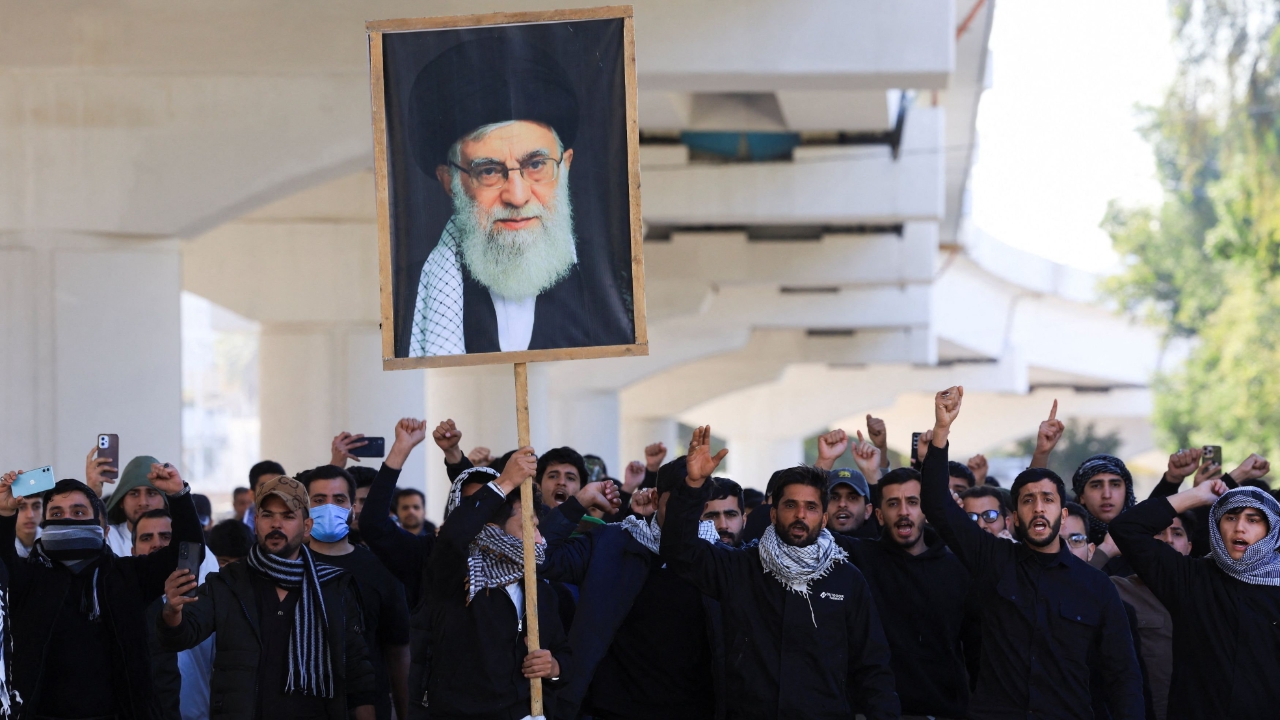
The international community is divided after the US and Israel bombed Iran, killing Supreme Leader Ayatollah Ali Khamenei. Meanwhile, the UN warned of risks of escalation across the region.
On 1 March 2026, foreign news agencies reported that the global community is closely monitoring the Middle East situation after the US and Israel launched attacks on multiple Iranian cities. President Donald Trump described it as a "major military operation" and later announced that Ayatollah Ali Khamenei, Iran's Supreme Leader, had died. Iranian state television confirmed this news, while Israel described the strikes as "pre-emptive defensive attacks."
Trump urged the Iranian people to rise up and overthrow their government and called on state forces to surrender. He later announced that Ayatollah Ali Khamenei, Iran's Supreme Leader, had died, a report confirmed by Iranian state television.
The Iranian Islamic Revolutionary Guard Corps declared it is retaliating by targeting US bases and assets across the Middle East under Operation “Truthful Promise 4,” amid weeks of rising tensions over Iran's nuclear program.
The UN warns of the risk of Middle East escalation.
UN Secretary-General António Guterres condemned the military escalation and warned that the use of force by the US and Israel, along with Iran's retaliation, undermines international peace and security. He called for an immediate halt to the fighting.
Meanwhile, UN High Commissioner for Human Rights Volker Türk urged all parties to exercise restraint and return to negotiations, warning that "in every war, civilians pay the highest price."
At an emergency UN Security Council meeting in New York, US Ambassador to the UN Mike Waltz stated the strikes targeted specific capabilities: destroying missile capacities, reducing naval potential, and disrupting proxy support networks to prevent Iran from threatening the world with nuclear weapons.
At the same time, Israeli Ambassador Danny Danon said the operation was to halt threats to Israel’s existence and global stability.
Russia, Oman, and Iran strongly condemn the attacks.
Russian UN Ambassador Vassily Nebenzia warned that this assault could escalate beyond regional borders and called for a reassessment of irresponsible actions that undermine peace.
Meanwhile, Oman's Foreign Minister Badr Al Busaidi, who is mediating US-Iran nuclear talks, expressed deep disappointment and warned the US against plunging deeper into war.
Iranian Foreign Minister Abbas Araghchi condemned the attacks as unprovoked, illegal, and illegitimate, accusing Trump of shifting policy from "America First" to "Israel First."
Europe calls for negotiations—UK deploys aircraft.
A joint statement from French President Emmanuel Macron, German Chancellor Friedrich Merz, and UK Prime Minister Sir Keir Starmer called on Iran to seek a negotiated solution and affirmed they were not involved in the attacks.
Starmer said British aircraft are operating in Middle Eastern airspace for coordinated defensive purposes, while Macron warned that this outbreak could have serious consequences for world peace.
At the same time, EU Chief Foreign Policy Officer Kaia Kallas said the situation has become extremely dangerous, emphasizing that civilian protection must be the top priority.
Saudi Arabia supports the Gulf nations; Australia backs the US.
Saudi Arabia condemned Iran’s retaliatory strikes targeting Bahrain, the UAE, Qatar, Jordan, and Kuwait, pledging full support for its brotherly nations. Meanwhile, Australian Prime Minister Anthony Albanese stated that Australia supports US actions to prevent Iran from acquiring nuclear weapons.
Source: RT, Aljazeera