

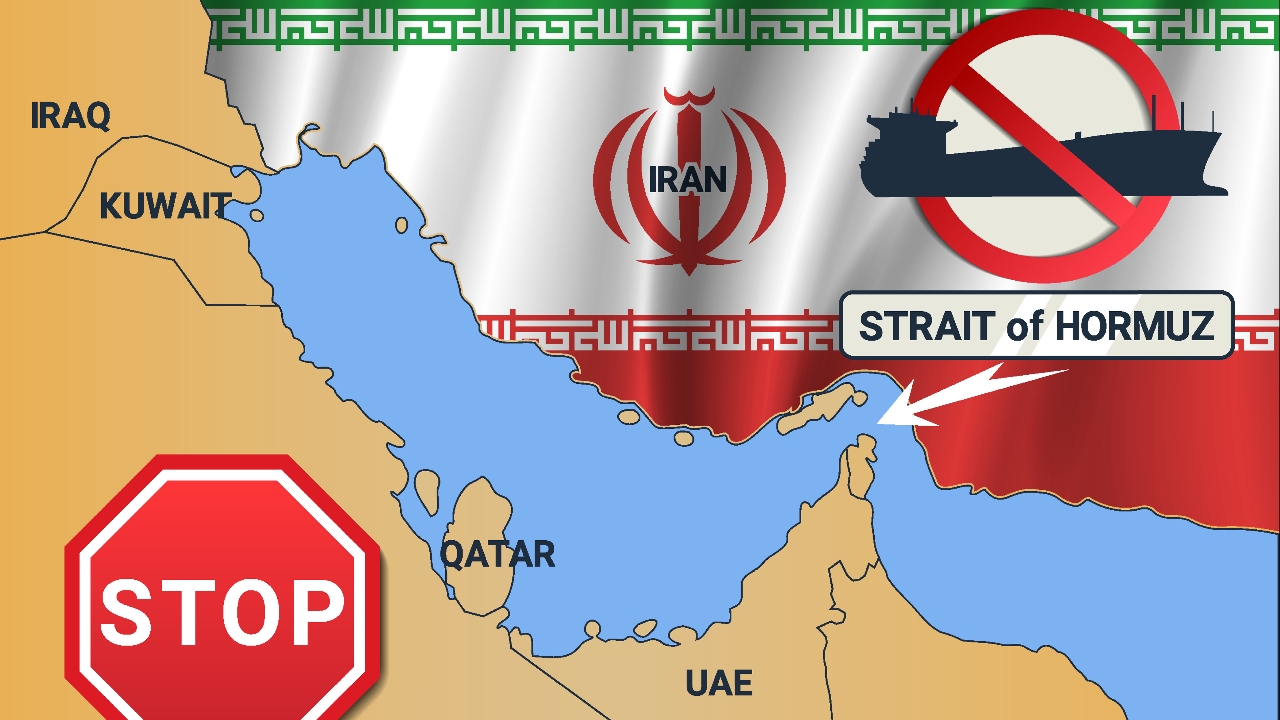
The world is closely watching the Strait of Hormuz, a crucial global energy strategic point, amid concerns that escalating tensions in the Middle East could lead to another closure of the strait, even though Iran has not officially declared it.
After the United States and Israel launched attacks on Iran on 28 February, Tehran announced via radio communications to ships in the area a ban on passing through the Strait of Hormuz. However, there has been no official declaration that the shipping route has been closed. Meanwhile, Iranian Foreign Minister Abbas Araghchi told Al Jazeera that his country currently has no intention to close the Strait of Hormuz and has no plans to undertake any actions that would obstruct navigation there at this time.
Nonetheless, although the Strait of Hormuz has not been fully closed, reports indicate that Iran's Islamic Revolutionary Guard Corps (IRGC) fired missiles at three oil tankers from the United States and the United Kingdom in the Persian Gulf and the Strait of Hormuz, causing fires on those vessels. This has led countries to avoid entering the strait or halt some shipping traffic, effectively creating a situation similar to a de facto closure.
Why is the Strait of Hormuz important to the world?
The Strait of Hormuz is a narrow outlet from the Persian Gulf to open seas. Although the shipping lane is only about 2 miles wide, it serves as a global energy bottleneck because vessels passing through transport approximately 20 million barrels of oil daily, about one-fifth of the world's oil supply.
In addition to oil, liquefied natural gas (LNG) and fertilizers—accounting for nearly one-third of global fertilizer trade—also transit this route. Therefore, any activity in the area immediately impacts global energy markets and supply chains.
Is it really closed or just a "de facto" closure?
Physical closure is difficult due to the heavy presence of US naval bases in the region. However, Iran could effectively block passage by laying naval mines along the shipping lanes, which would represent a significant escalation.
In practice, an official closure declaration may not be necessary. If the risk level increases, shipping companies might halt transit on their own. Currently, major shipping firms like Hapag-Lloyd and CMA CGM have suspended passage through the strait and instructed their vessels to seek safety.
Vessel tracking data shows reduced maritime traffic in the area, with many ships anchored or rerouting. Meanwhile, the UK Maritime Trade Operations center has warned of risks from miscalculations or misidentification.
Energy and global economic impacts
The main destinations for oil and gas from the Strait of Hormuz include China, India, Japan, and South Korea. India, which imports about half of its crude oil through this route, has already initiated emergency energy plans.
Although Saudi Arabia and the United Arab Emirates have pipelines that bypass the strait, their combined spare capacity is only about 2.6 million barrels per day, which is very limited compared to normal volumes.
Analysts expect oil prices could surge to $100 per barrel if tensions persist. OPEC has tried to slightly increase production to support the market, but options remain limited. The effects would directly impact consumers through higher fuel prices, electricity costs, transportation expenses, and broader product prices.
Risks of severe escalation
Experts warn that if an oil tanker were sunk, it would cause severe environmental damage and could disrupt shipping for an extended period.
Previously, closure of the Strait of Hormuz was considered unlikely because it would economically pressure Iran itself. However, with US and Israeli objectives perceived as regime change, Tehran's leaders might reassess economic costs.
Source:The Independent
Click to readInternational news