

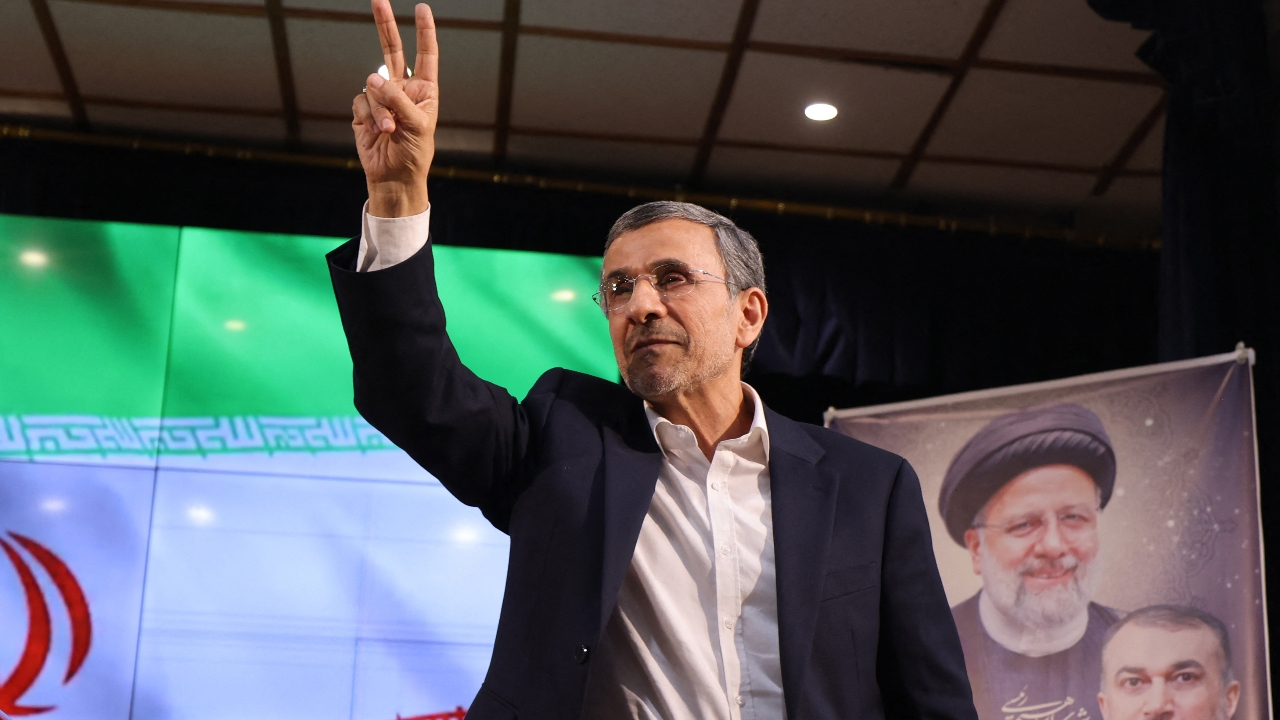
Mahmoud Ahmadinejad is a prominent figure in modern Iranian political history, recognized both as a populist politician who reached the working class and as a hardline leader who fiercely challenged Western powers. Recent reports in early March 2026 stated that he died alongside his bodyguards in an airstrike in Tehran amid the tense war situation between Iran, the United States, and Israel. However, no official confirmation has been made by Iranian authorities or reliable sources.
Personal Background and Education
Mahmoud Ahmadinejad was born on 28 October 1956 in the village of Aradan, Semnan Province. He was the son of a poor blacksmith. His family relocated to Tehran when he was young, and the hardships of his youth became a foundational influence on his later populist policies.
Regarding education, Ahmadinejad graduated in civil engineering from the Iran University of Science and Technology (IUST). He later earned a doctorate in traffic and transportation engineering and also served as a university lecturer there.
In his personal life, Ahmadinejad is married to Azam al-Sadat Farahi and has several children. He often projected a modest image, leading a simple life, and emphasized his stance as a representative of the lower classes. Despite heavy criticism domestically and internationally, he maintained a base of support among those who viewed him as a staunch defender of Iran’s sovereignty.
Early Political Career
He gained recognition following the 1979 Islamic Revolution, playing a role in Islamic student organizations and was seen as aligned with the Islamic revolutionary ideology emphasizing nationalism and opposition to Western influence. During the revolution, Ahmadinejad was among the student leaders supporting the overthrow of the Shah’s monarchy. Later, he joined the Islamic Revolutionary Guard Corps (IRGC), with reports indicating he undertook covert missions during the Iran-Iraq war.
His administrative political career became clearer when he was appointed governor of Ardabil Province in the 1990s. He rose to local prominence as Tehran’s mayor in 2003, gaining a reputation for policies aiding the poor, leading a modest lifestyle, opposing the elite, and focusing on social justice. This popularity among grassroots citizens paved his way to victory in the 2005 presidential election.
Presidency (2005–2013)
Ahmadinejad was elected as Iran’s 6th president in 2005, defeating moderate former president Akbar Hashemi Rafsanjani. He became a symbol of hardline conservatism. During his presidency, he implemented populist economic policies such as subsidizing energy and distributing cash to low-income households. He focused on redistributing oil revenues to the poor and relentlessly pursued Iran’s nuclear program. Simultaneously, he faced intense international pressure, especially over the nuclear issue, leading to multiple rounds of US and Western sanctions. His hardline stance against Israel and the United States escalated tensions in the Middle East.
However, the 2009 election, in which he won a second term, marked a turning point when opposition groups alleged electoral fraud, sparking the major "Green Movement" protests. The demonstrations were harshly suppressed, damaging Iran’s global image and causing political fractures within the country.
Political Role After Presidency
Toward the end of his term, Ahmadinejad clashed with religious elites and key power institutions, notably differing with Iran’s Supreme Leader on some issues. After leaving office in 2013, he remained politically active, shifting from a hardliner to an "independent populist" who frequently criticized government elites. He attempted multiple presidential bids, including in 2024, but was mostly disqualified by the Guardian Council. Despite restrictions, he remains a member of the Expediency Discernment Council and retains a loyal following among the rural poor.
Controversial Statements and Positions
Throughout his leadership, Ahmadinejad was known for aggressive rhetoric against Israel, once claiming Israel should be "wiped off the map" and questioning the Holocaust's authenticity. These statements made him a figure viewed by the West as an obstacle to peace, yet he gained popularity in countries opposing imperialism for his direct confrontation with the United States.
Final Years Amid 2026 Conflict
News reports from 1-2 March 2026 stated that Ahmadinejad died at age 69 during an attack on a residential area in the Narmak district east of Tehran, coinciding with attacks on other high-ranking Iranian leaders. Although reports suggested he was under house arrest or marginalized from main power circles at the time, his death represents a significant intellectual loss for Iran’s conservative and populist movements.