

Senior General Min Aung Hlaing, Myanmar's military leader, has ordered the release of over 7,000 prisoners convicted of supporting and sheltering "terrorist groups," a charge used against anti-government and pro-democracy groups. Analysts say this move aims to improve the military's image ahead of the transfer of power to a civilian government scheduled for April.
Myanmar's military government announced amnesty for 7,300 prisoners convicted under anti-terrorism laws for financing, harboring, or providing transportation to "terrorist groups," a term the military uses to describe pro-democracy political groups and armed forces opposing the 2021 coup.
Additionally, a separate statement said nearly 12,500 ongoing terrorism-related cases against civilians will be dismissed and prosecution halted, citing humanitarian reasons and public peace on the occasion of a public holiday.
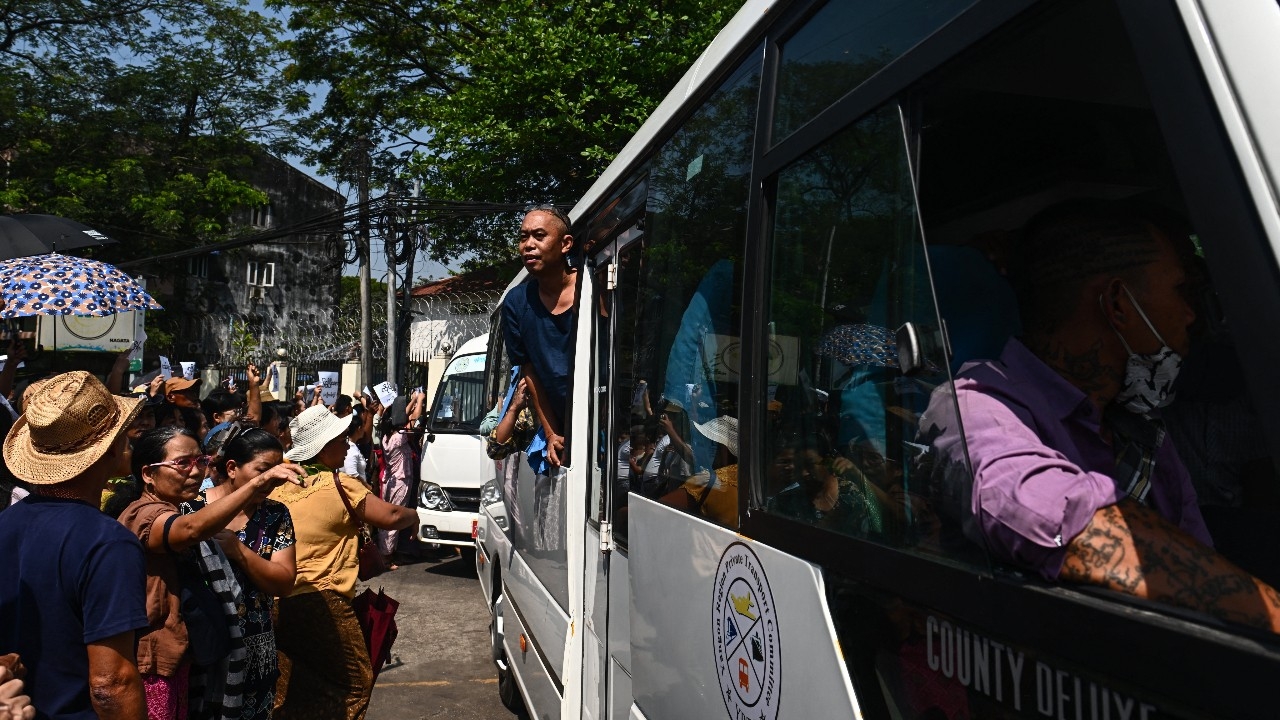
At the front of Insein Prison in Yangon, about 300 prisoners were released this morning (2 Mar) by bus amid an emotional atmosphere. Many relatives waited at the prison gates with flower bouquets and name signs for their loved ones.
Beyond terrorism cases, the military government also announced the release of over 2,800 prisoners charged with other offenses, including 10 foreign inmates, without specifying details of their crimes.
Analysts view this large-scale amnesty as Senior General Min Aung Hlaing's attempt to reduce criticism and legitimize the power transition following Myanmar's January elections, where the military-backed party won decisively after Aung San Suu Kyi's National League for Democracy party was dissolved and many members remain detained.
Although the military claims that the election and amnesty are steps toward democracy and ending the civil war, protesters and human rights groups continue to see these actions as "image-building," since Aung San Suu Kyi remains imprisoned and elections did not take place in many ethnic-controlled areas.
Myanmar's new parliament will convene in two weeks, with a presidential election scheduled for early April. Senior General Min Aung Hlaing is widely watched as a potential presidential candidate under the new regime.
/AFP