

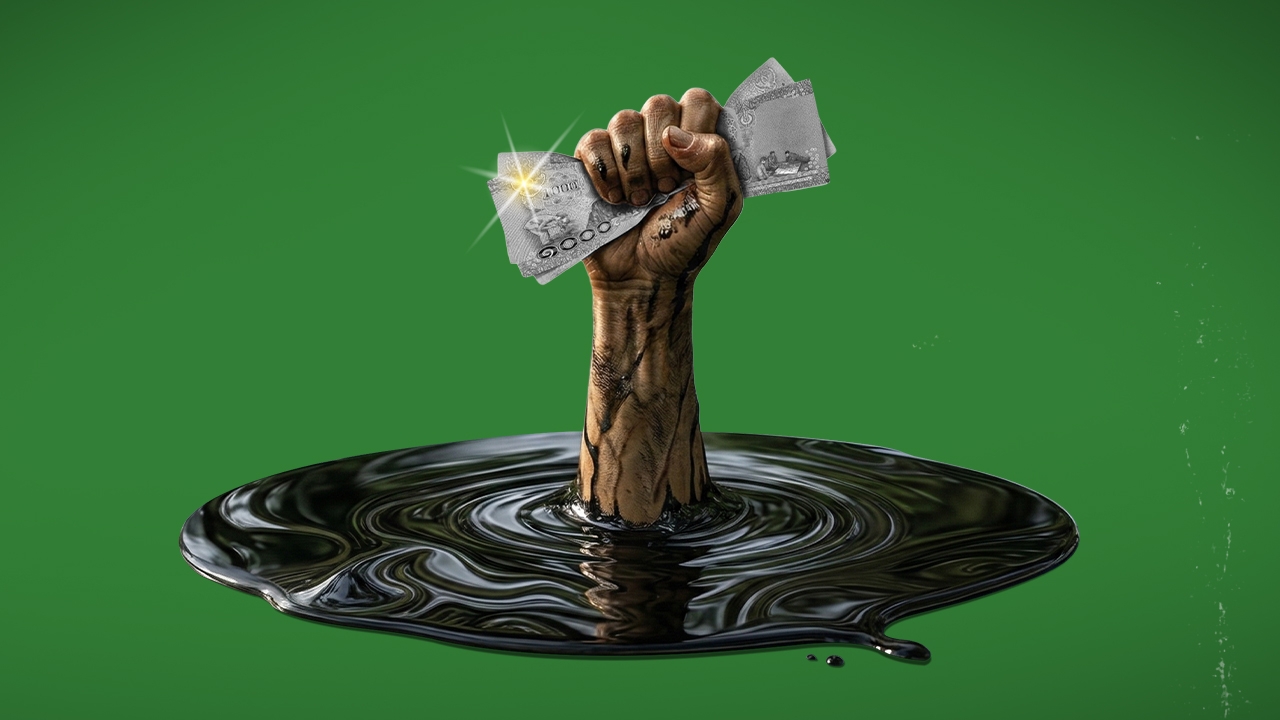
The war situation in the Middle East shows no sign of ending soon, even though President Donald Trump predicted it might end within four weeks. More importantly than global political games is how this war will affect our personal finances and how households should cope with it.
The first thing to understand is that the longer the war drags on, the more severe its impacts will become.
In the first month: we will start to notice rising prices but can still manage to get by.
From one to three months: spending pressures become clearer, forcing people to dip into their savings.
If it lasts beyond three months: this is the phase of "real pain" when spending habits must be adjusted.
Certainly, the first mechanism to affect us is fuel prices at the pump. If Brent crude oil prices stay above 100 US dollars for several weeks, diesel and gasoline prices will surge, immediately impacting travel costs and consumer goods prices.
Following that is the "electricity bill" because Thailand relies heavily on natural gas for electricity generation. If LNG prices from Qatar rise, the next FT adjustment will inevitably increase by 5-15 percent, triggering a domino effect leading to "inflation" that causes prices across the board to rise.
If the situation deteriorates to the point where the Strait of Hormuz is blocked, preventing oil tankers from passing, or oil prices spike to 120-150 US dollars per barrel, the consequences for Thailand could be more severe than expected.
Firstly, the economy could enter recession, with GDP shrinking by 1-1.5 percent, and tourism slowing down by 10-20 percent.
Financial volatility could cause the stock market to drop 15-25 percent due to capital outflows and rapid depreciation of the baht.
Next is the stagflation trap, the most frightening scenario, where high inflation coincides with economic slowdown, making it toughest for households in years.
However, this crisis may not be like the 1997 Asian Financial Crisis or the 2019 COVID-19 pandemic, but still requires calm management, such as maintaining cash reserves sufficient for 3-6 months to handle uncertainties.
Managing debt carefully is vital—especially high-interest debt—and avoiding new debt during this period.
Reducing energy expenses by adjusting electricity and fuel use to maximize efficiency is also important.
Finally, keep calm and avoid hastily selling assets out of panic from war news.
Surviving in this situation is not just about saving money, but conserving resources to ensure we have enough endurance to get through the crisis, as taught by “A Meng” from the Project to Halve Consumption, which vividly reminds us that
“Fish roe is rare, requiring hardship to go out to sea,
transported from distant lands, using ice and consuming fuel,
refrigeration wastes electricity, cooking uses gas,
energy will be depleted, oh descendants, remember this well. ”