

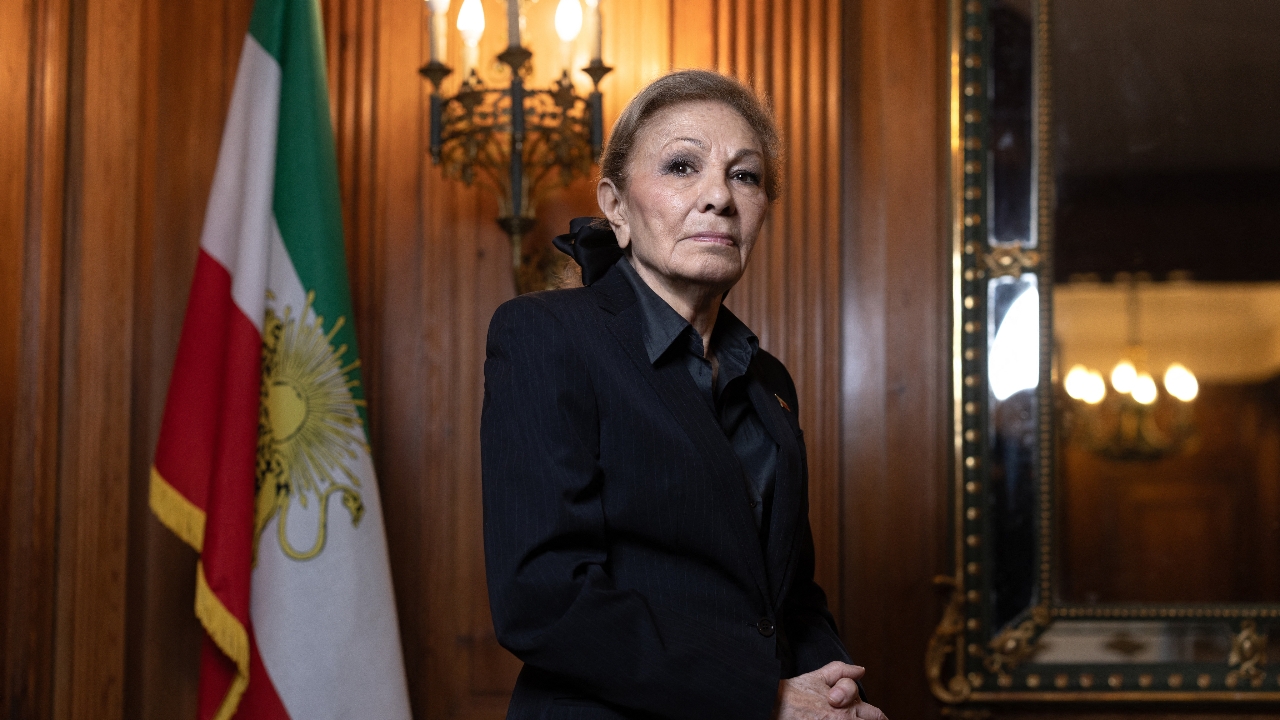
"Farah Pahlavi," wife of Mohammad Reza Pahlavi, the last Shah of Iran, told AFP news agency that the death of Ayatollah Ali Khamenei, Iran's Supreme Leader, is a historically important event but does not mean the Islamic Republic regime will automatically collapse.
This statement came after military strikes by the United States and Israel against Iran, which killed Khamenei and several senior officials, plunging the Middle East into turmoil and raising questions about Iran's political future.
The 87-year-old former empress said that the death of any individual, no matter how central to the power structure, does not immediately end the governing system. She called on the global community to respect Iran's sovereignty and support the Iranian people's right to determine their own future.
She said the key factor shaping the country's direction is the ability of the Iranian people to unite and peacefully transition to a rule-of-law state that is orderly and sovereign.
Farah Pahlavi also mentioned that her son, Reza Pahlavi, currently living in the United States and seen as a political alternative if the Islamic Republic collapses, is preparing plans for such a transition process.
Reza Pahlavi, 65, has gained increased global attention amid nationwide protests in Iran that intensified in January, during which some protesters chanted slogans supporting the former Shah's son.
Recently, he posted on the platform X, calling on ethnic minorities in Iran to cooperate in building national unity and signaling opposition to using current conflicts to push for territorial separatism.
Meanwhile, Farah Pahlavi, who has been exiled in Paris since the 1979 Iranian Revolution, also called on the international community to support the fundamental rights of Iranians, such as the right to choose their leaders, freedom of expression, and a life of dignity and prosperity.
She emphasized that support should focus on the people, not geopolitical interests, and urged Iranian authorities to exercise restraint and avoid bloodshed.
Earlier, protests in Tehran in January were violently suppressed, with the human rights activist news agency HRANA reporting more than 7,000 deaths, mostly protesters, with the actual number likely higher. Over 53,000 people have been arrested since January.
Farah Pahlavi previously said that the latest wave of protests in Iran "cannot be reversed," and that the Iranian people's victory will be not only a national triumph but also a victory for global peace, security, and stability.
Former Empress Farah Pahlavi and her husband Mohammad Reza Pahlavi were expelled from Iran in January 1979 after a popular revolution overthrew the monarchy, leading to the establishment of the Islamic Republic of Iran.
/sourceAFP