

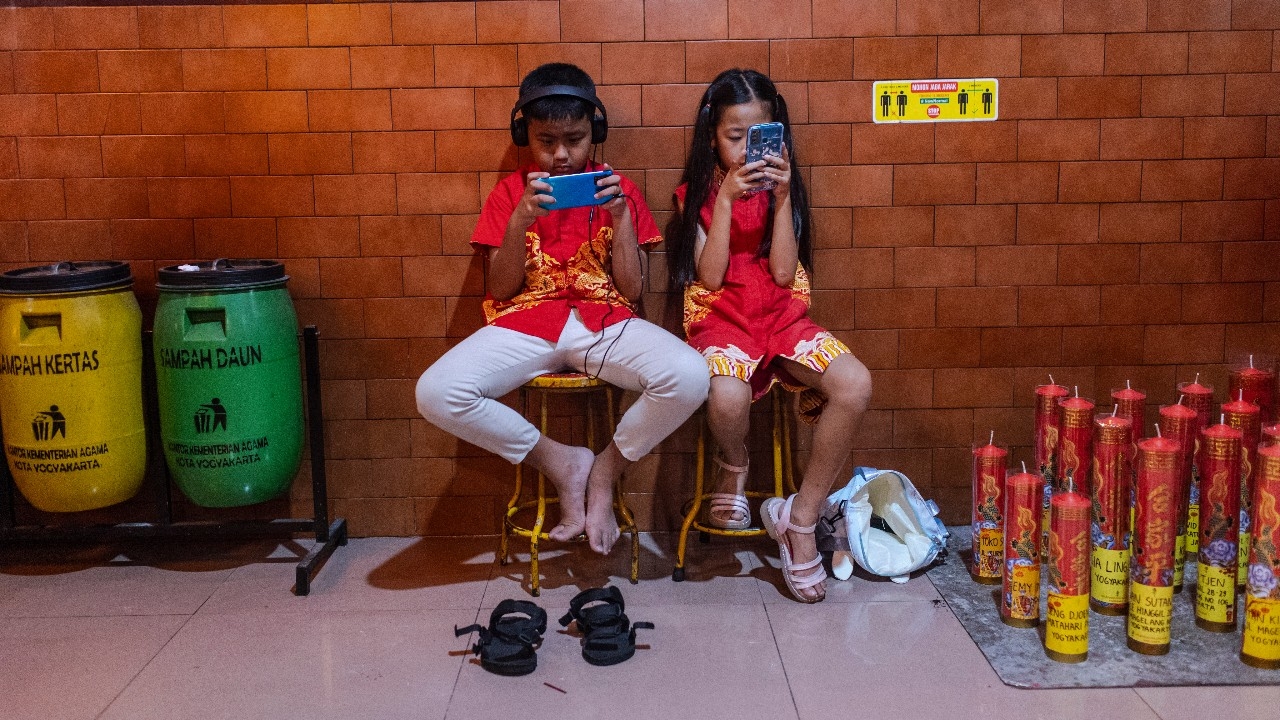
The Indonesian government, through the Ministry of Communication and Digital Affairs, has officially announced enforcement of a law controlling high-risk digital platforms, ordering the suspension of access for children under 16 years old. The nationwide closure of social media accounts will begin on 28 March, aiming to address online threats and digital addiction among children.
The Indonesian government, via the Ministry of Communication and Digital Affairs, has announced a strict measure to restrict access to high-risk digital platforms for children under 16. This move follows a subsidiary regulation stemming from secondary law No. 17 of 2025 concerning the management of electronic service providers to protect children, known as "PP Tunas."
Mutia Hafid, Minister of Communication and Digital Affairs, stated in a press release today (6 Mar) that the regulation has been enacted to enhance safety for youth in cyberspace, including various social networking services. This makes Indonesia one of the first non-Western countries to implement age-based digital platform access restrictions.
Mutia emphasized that this measure is necessary because children are vulnerable to internet dangers. "Our reason is clear: our children face escalating threats ranging from pornography, cyberbullying, online scams, and most importantly, digital addiction," she said.
The government will begin enforcing the law on 28 March 2026. Initially, user accounts under 16 years old on platforms deemed high-risk will be "gradually deactivated." Platforms covered by this policy include YouTube, TikTok, Facebook, Instagram, Threads, X (formerly Twitter), Bigo Live, and Roblox (a gaming platform).
The Ministry of Communication stated that the account closure process will continue until all platforms fully comply with the legal requirements.
However, Minister Mutia acknowledged that the initial phase may cause inconvenience for both children and parents. "We fully understand that enforcing this rule may lead to complaints from children or confusion among parents in handling their children's dissatisfaction. But in what we call a 'digital emergency,' this is a crucial strategy the government must undertake to protect the nation's future," she said.
She concluded, "We want technology to help develop humanity, not let childhood be sacrificed to technology." The government affirmed that this policy aims to ease the burden on parents in monitoring digital threats, so it is no longer solely the family's responsibility.