

The Middle East regional war enters its second week as Iran continuously launches missile and drone attacks on Saudi Arabia, Qatar, and Kuwait. Most recently, Kuwait International Airport was struck by drones, prompting a reduction in oil production for safety reasons. Meanwhile, the United Arab Emirates revealed it has been hit by more than 200 missiles since the conflict began.
Officials from the Gulf Arab states reported a new wave of attacks on Sunday (8 Mar), causing damage at several key sites. Kuwait's military stated that it deployed forces to counter an "enemy drone swarm" that violated its airspace, primarily targeting fuel storage tanks at Kuwait International Airport. This represented a direct attack on critical infrastructure. Explosions and debris from interception efforts damaged civilian facilities, leading the national oil company to consider reducing crude oil production as a precaution.
Additionally, a large fire broke out and spread across a high-rise building in Kuwait City early Sunday morning. The cause of the fire remains unclear but is believed to be the result of an Iranian drone attack. The explosions and flames severely damaged the building's structure, causing extensive harm.
In Saudi Arabia, the Ministry of Defense reported intercepting 15 drones, some of which targeted the embassy district in Riyadh. They also destroyed three missiles heading toward Prince Sultan Air Base, which hosts U.S. forces, and intercepted another 17 drones above the Shaybah oil field in the southeast.
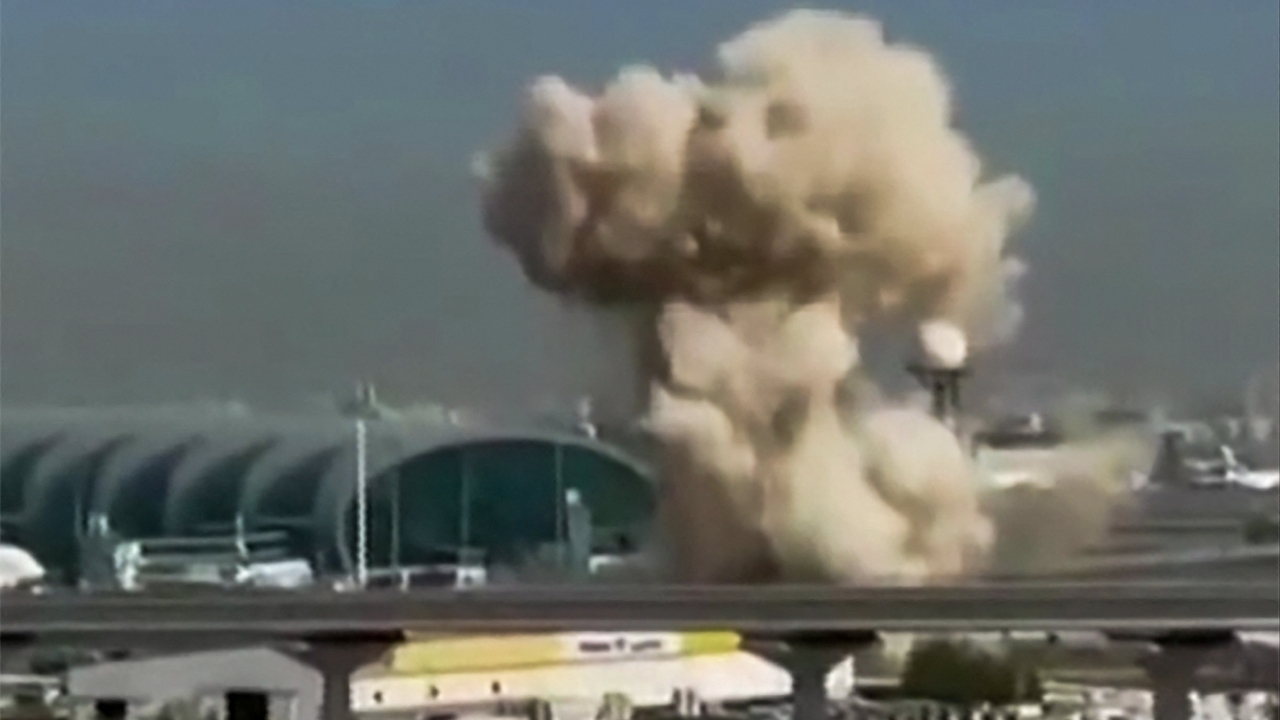
Meanwhile, Qatar's Ministry of Defense revealed that on Saturday (7 Mar), it was attacked with 10 guided missiles and 2 cruise missiles launched from Iran. Most were intercepted with no casualties reported. On the same day, Dubai International Airport, the world's busiest aviation hub, temporarily suspended operations after unidentified objects were intercepted near the airport. Explosions and thick smoke were reported near the passenger terminal. Dubai authorities confirmed one Pakistani national died from missile debris intercepted midair.
The United Arab Emirates (UAE), a close U.S. ally, has become the heaviest target. The Ministry of Defense disclosed alarming figures since the war started on 28 February: 221 guided missiles and over 1,300 attack drones. Targets already struck include Abu Dhabi Airport, the Palm Jumeirah project, the luxury Burj Al Arab hotel, and the U.S. consulate in Dubai.
Although Iran's president previously apologized to the Gulf Arab nations for earlier attacks, just hours later Iran's judiciary chief declared firmly that "the attacks will continue" in Gulf countries that allow "enemies"—a reference to the United States—to use their territory or facilities.
Meanwhile, UAE President Mohamed bin Zayed Al Nahyan stated in a special televised address that the country is currently in a "state of war," but expressed confidence that the Emirates will emerge from this crisis stronger. Bahrain reported that it has intercepted 92 missiles and 151 drones so far, describing the assaults as a "brutal aggression by Iran."
.sourceAFP