

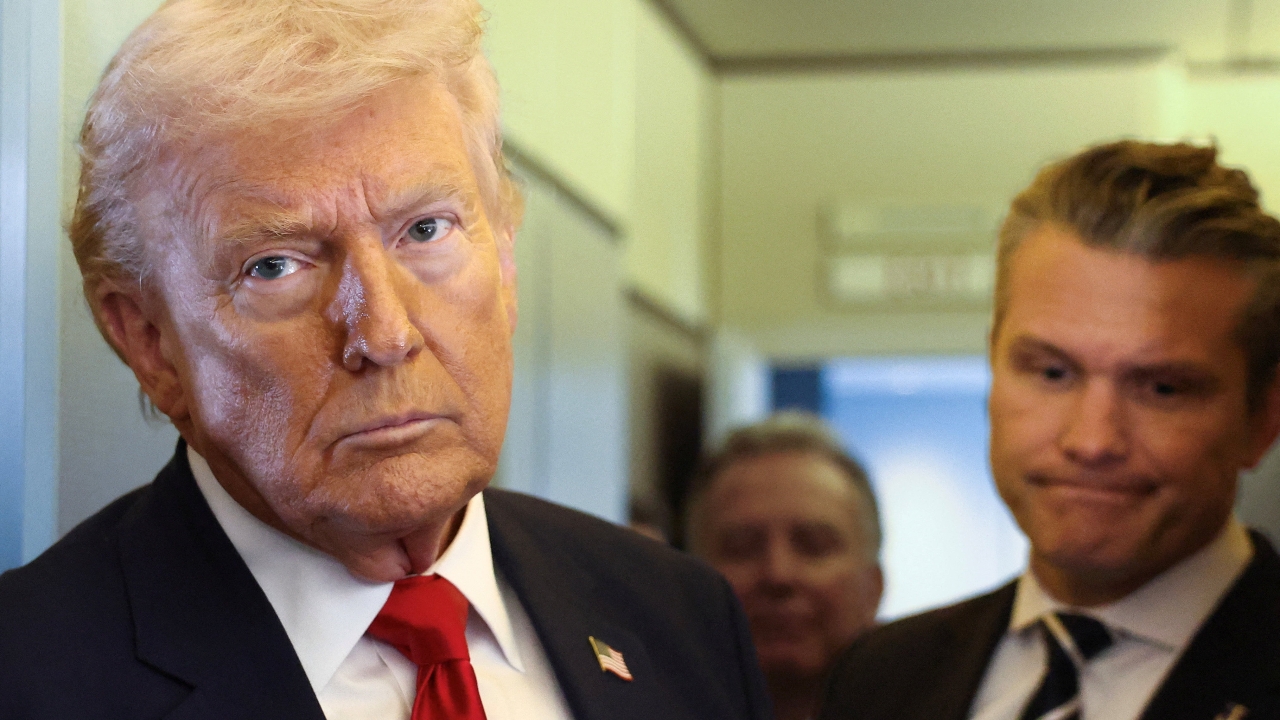
President Donald Trump declared firmly aboard Air Force One that he has no interest in negotiating with the Iranian government. He stated that the war will only end when Iran's military and leadership have been completely wiped out. Meanwhile, the situation in Lebanon is intensifying, and the fighting between the U.S.–Israel coalition and Iran has spread into its second week, beginning to impact the region and the global economy.
President Donald Trump told reporters that he currently has no desire to negotiate with Iran. He noted that the ongoing airstrikes might make negotiations unnecessary if all Iranian leaders are eliminated and the military is thoroughly destroyed. "At some point, I think there won’t be anyone left to even say 'we surrender,'" Trump said.
At the same time, Trump denied responsibility for the attack on a girls' school in Iran that killed hundreds of children, suggesting it was likely the work of Iran itself due to the imprecise weapons used. This was despite some U.S. officials indicating a high probability that U.S. forces were responsible.
Meanwhile, Iranian President Masoud Pashaei officially apologized to the neighboring Gulf countries affected by the U.S. military base attacks and appealed for those neighboring nations to remain neutral.
However, he rejected Trump’s demand for unconditional surrender, calling it "a mere fantasy." The temporary Iranian leadership council agreed to suspend attacks on neighboring countries temporarily, unless those countries' territories are used as bases for attacks against Iran first.
The regional situation has escalated continuously into the second week of the war. Israel has intensified attacks on Hezbollah, recently bombing residential buildings in downtown Beirut, causing the death toll in Lebanon to nearly reach 300 since last Monday.
In Iran, loud explosions were heard in Tehran, while Israel claimed to have destroyed multiple arsenals and command centers. Iran reported over 1,332 civilian deaths.
The widening war has severely disrupted global logistics and business, especially after the de facto closure of the shipping route through the Strait of Hormuz, causing global oil prices to surge to multi-year highs.
Recently, Kuwait, Iraq, and Qatar announced reductions in oil and natural gas production capacity, while Saudi Arabia warned Tehran that if attacks on the kingdom’s energy infrastructure do not cease, Riyadh may have to respond with measures of equal scale.
Regarding the latest casualties, at least 1,332 Iranian civilians have died and thousands injured. In Israel, 10 people have been killed by Iranian attacks, while at least six U.S. soldiers have died; the bodies arrived at a Delaware Air Force base last Saturday. In Lebanon, approximately 300 have died from Israeli attacks.
Currently, hardline clerics in Iran have called for a meeting to select a new "Supreme Leader" as soon as possible, with the gathering expected by Sunday amid a situation still lacking diplomatic resolution.