

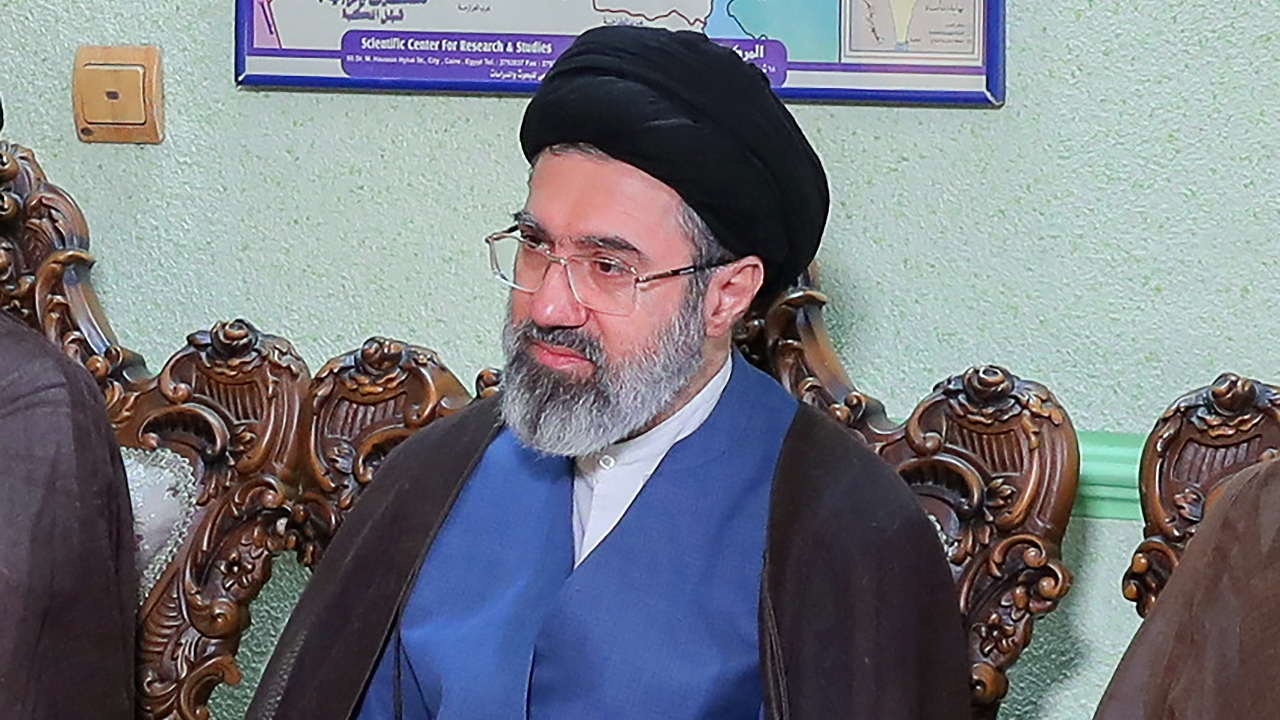
The appointment of Mojtaba Khamenei as Iran's new Supreme Leader has caused political reverberations both inside and outside the country. Many view it as a consolidation of hardline faction power, making chances for negotiations more difficult. Here is the background of Mojtaba Khamenei and what you should know about Iran's new leader.
1. Son of the previous Supreme Leader
Mojtaba Khamenei is the second son of Ali Khamenei, the former Supreme Leader of Iran who held the position for nearly 40 years before his death from a U.S. and Israeli airstrike.
His rise to power is seen as significant because after the 1979 Islamic Revolution, many Iranians believed the country would not return to a "father-to-son" succession system. However, this appointment has led many to see Iran's political system as increasingly resembling a monarchy.
2. Selected by the Assembly of Experts
The Supreme Leader of Iran is chosen by the Assembly of Experts, a council of 88 clerics responsible for selecting the country's Supreme Leader.
Mojtaba's selection occurred during a time when the country faces war and international pressure, with many experts viewing it as a signal that the regime wants continuity of existing policies.
3. A mysterious figure with high influence
Born in 1969, Mojtaba Khamenei received religious education like his siblings. Although he has never held significant political office, he has been a powerful figure behind the scenes for a long time.
He maintains close ties with the Islamic Revolutionary Guard Corps (IRGC), Iran's powerful military and economic institution.
Analysts believe that the IRGC network and hardline groups play a key role in supporting him.
4. Subject to U.S. sanctions
In 2019, Mojtaba was sanctioned by the U.S. Department of the Treasury for allegedly supporting his father's geopolitical policies and advancing internal political objectives.
Former U.S. President Donald Trump stated before the official announcement that Mojtaba's rise to Supreme Leader was unacceptable.
5. Seen as a backer of hardline politics
Many observers believe Mojtaba played a key role in helping Mahmoud Ahmadinejad win the 2005 presidential election by leveraging the IRGC's network to support the campaign.
During the major protests following the disputed 2009 election, he was also viewed as one of the main figures behind the crackdown on demonstrators.
6. Iran's future may become more hardline
Many experts believe Mojtaba's rise will strengthen hardline factions in Iran and confirm that the country will continue the policies of the previous leader.
The director of the Carnegie Middle East Center noted that his selection reflects Iran's intent to maintain regime stability and signals that military pressure from the U.S. and Israel will not cause Iran to change its stance.
Meanwhile, David Petraeus, former director of the U.S. Central Intelligence Agency, told CNN's Jessica Dean that Iran's new Supreme Leader is likely to continue the hardline political and religious approach of his father, maintaining a strict ideological stance as a senior cleric. This may mean Iran's policies will not change much, which is regrettable as many hoped for a more flexible leader to pave the way for compromise or negotiations.
Source:CNN
Click to read news aboutInternational News