

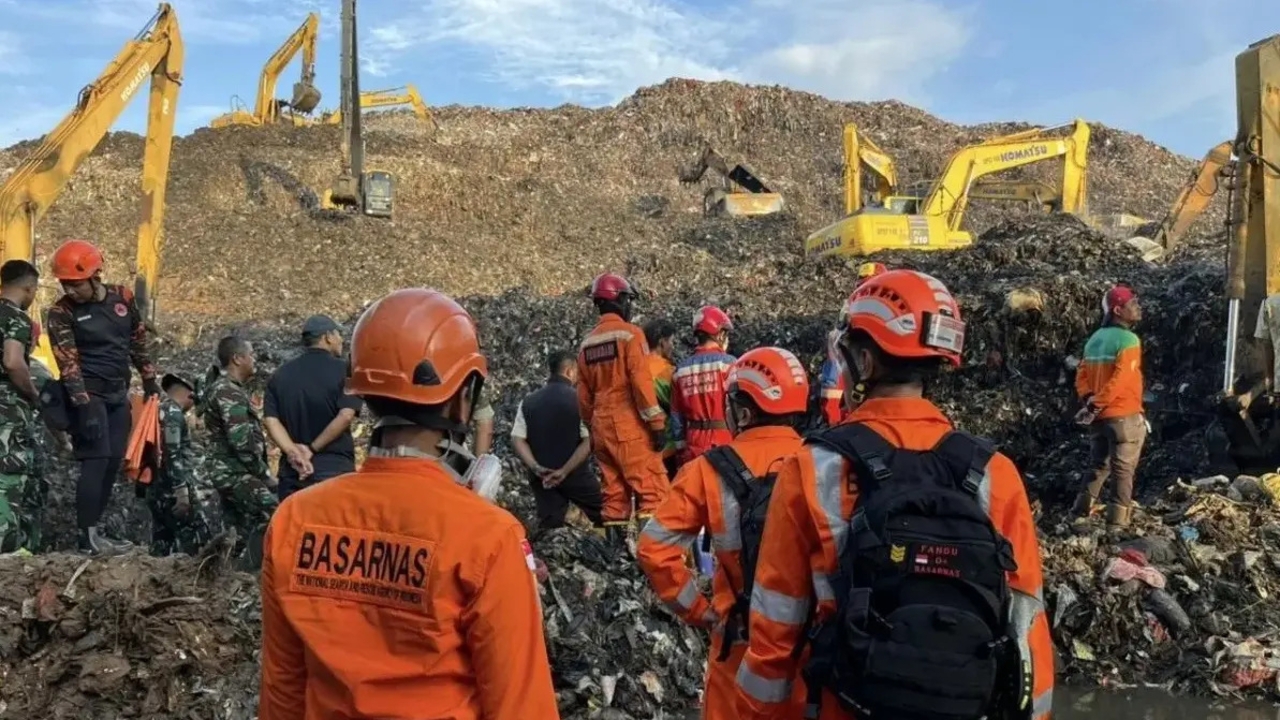
A massive trash pile collapsed onto a garbage truck and food stalls at the Bantargebang landfill center outside Jakarta, Indonesia, resulting in at least four confirmed deaths and five people missing. Heavy rain caused the unstable structure of the trash heap to give way. The Environment Minister blamed Jakarta authorities, calling it an expensive lesson in failed waste management.
Indonesia's National Rescue Agency reported progress on the large trash pile collapse at Bantargebang landfill, located just 25 kilometers from Jakarta, at around 14:30 local time on Sunday, 8 Mar. The debris crushed a garbage truck and nearby food stalls, causing multiple deaths and missing persons.
Rescue teams said they are urgently clearing access routes using heavy machinery, such as hydraulic excavators, alongside rescue dogs trained to sniff out possible trapped victims beneath the trash. However, operations must proceed cautiously as the trash pile remains unstable and vulnerable to further collapse after accumulated heavy rainfall.
Rescue official Kusumo stated, “We are closely assessing the situation on site. If weather and conditions allow, we will continue the search efforts with full force.”
The four confirmed fatalities include Dedi Sutrisno, a garbage truck driver, and two small food stall owners near the incident: 25-year-old Enda Widayanti and 60-year-old Sumine. The fourth deceased has not yet been identified in preliminary reports. Authorities are continuing to search for at least five missing persons.
Bantargebang landfill is one of the world's largest open dumps, covering about 687 rai (approximately 275 acres) and holding over 55 million tons of accumulated waste. The Jakarta metropolitan area, home to more than 42 million people, produces up to 14,000 tons of garbage daily.
Minister of Environment Hanif Faisal Nurofiq strongly criticized local authorities, stating the incident resulted from allowing excessive waste accumulation despite laws banning open dumps since 2008. “Bantargebang is under Jakarta’s management, so they must be held accountable,” Hanif said. He added, “This must be a bitter lesson to prompt Jakarta to urgently improve its waste management system.”
In 2005, Indonesia experienced a deadly trash pile collapse in West Java province that killed 143 people. The disaster was caused by methane gas explosions combined with heavy rain.
Last month, President Prabowo Subianto stated that most landfills in the country will exceed capacity by 2028. The government plans to invest over 3.5 billion US dollars to build 34 waste-to-energy power plants within two years, aiming to convert trash into electricity and reduce reliance on traditional landfills.
. . .JAKARTA GLOBE