

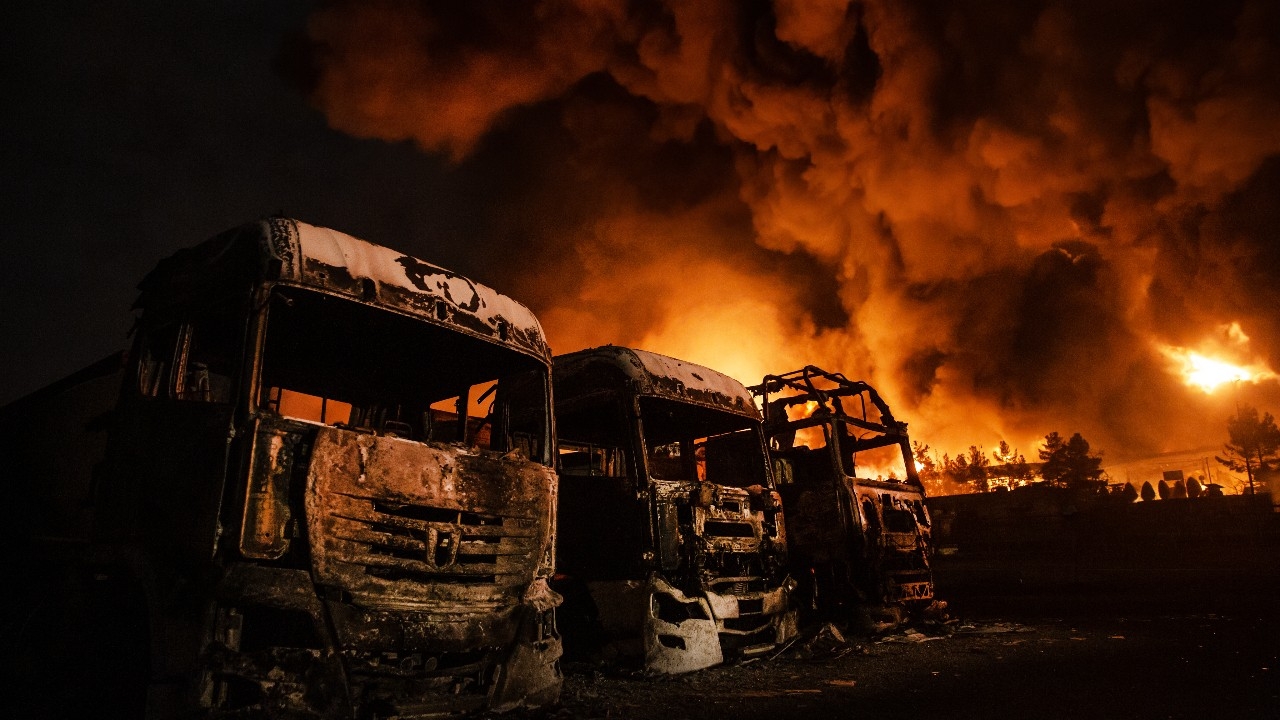
The Group of Seven (G7) leading industrial nations is set to hold an urgent meeting today to address Brent crude oil prices soaring past $100 per barrel, following intensified conflict between the U.S., Israel, and Iran that has led to the closure of the Strait of Hormuz. Meanwhile, global stock markets have experienced heavy sell-offs.
Finance ministers from the seven leading industrial nations, known as the G7, will convene an emergency meeting today (9 Mar) to discuss the economic impact and measures to address rapidly rising energy prices after global crude oil prices surged beyond $100 per barrel amid escalating Middle East conflict.
On Monday morning in the Asian market, Brent crude oil prices surged over 25% to reach $119.50 per barrel before settling around $109, while U.S. WTI crude traded near $104. The main cause is concern that the key oil shipping route, the "Strait of Hormuz," which handles about one-fifth of global oil exports, has been nearly completely blocked since the conflict began last week.
Reports indicate the G7 meeting will discuss jointly releasing strategic oil reserves coordinated by the International Energy Agency (IEA) to stabilize prices and protect global businesses and consumers.
Panic has spread to global financial markets, with the UK's FTSE 100 opening down 1.5%. In Asia, heavy sell-offs hit markets sharply: Japan's Nikkei 225 closed down 5.2%, and South Korea's Kospi plunged more than 8%, triggering a 20-minute "circuit breaker" trading halt before closing 6% lower.
Tensions in Iran have escalated following the appointment of Mojtaba Khamenei as the new supreme leader succeeding his father, signaling that hardline conservatives maintain firm control during the conflict. Meanwhile, U.S. and Israeli forces continued weekend airstrikes on multiple Iranian oil depots.
President Donald Trump posted on Truth Social that the short-term rise in oil prices is a "very small price" compared to the global safety and peace that will result once Iran's nuclear threat is eliminated, adding, "Only fools think otherwise."
However, the U.S. Energy Secretary clarified that Israel independently decided to strike Iran's energy infrastructure, not the U.S., amid American concerns over rising gasoline prices driven by the conflict.
/sourceBBC