

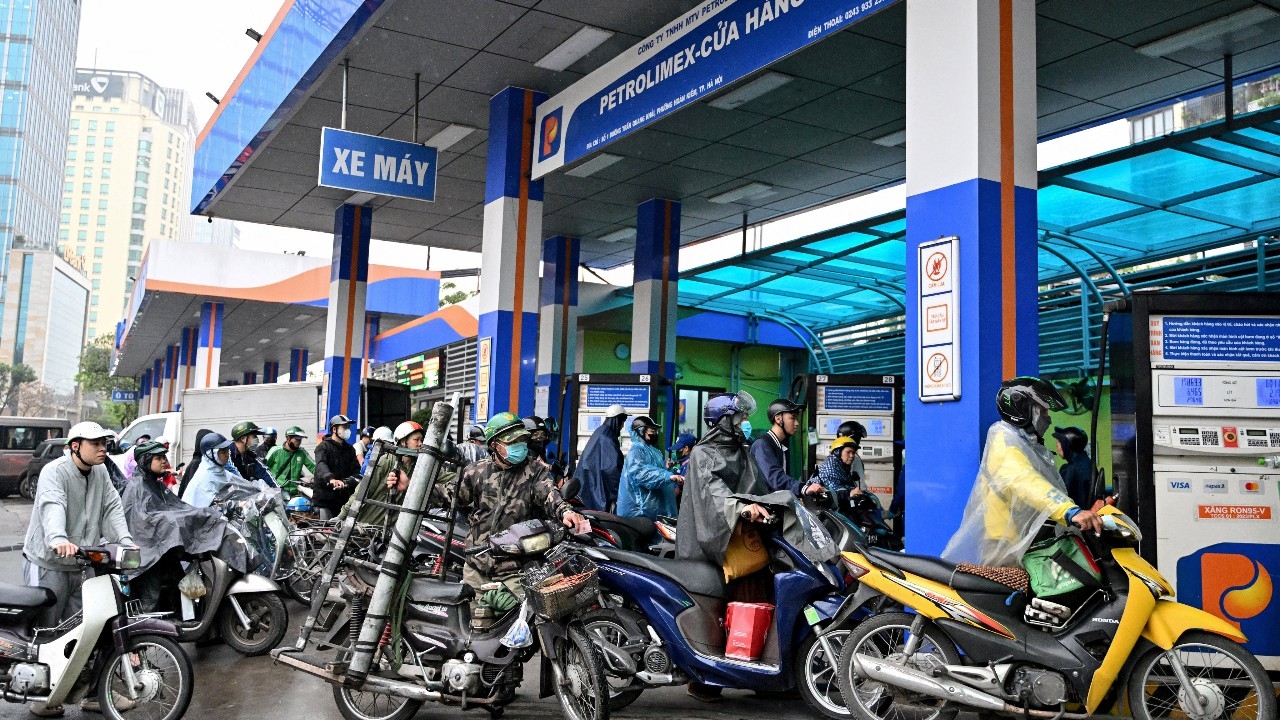
The Vietnamese government is preparing to implement emergency measures exempting all types of fuel import taxes after the war between the US-Israel and Iran severely disrupted the global energy supply chain, driving domestic oil prices up by more than 20%. Meanwhile, some gas stations have begun closing due to fuel shortages.
Vietnam's Ministry of Finance revealed that it is considering a draft decree to reduce import tax rates on certain fuels to 0% temporarily, aiming to stabilize the domestic market and ensure energy security after global energy prices hit their highest level since 2022 due to the Middle East conflict.
The Ministry of Finance stated that if the conflict drags on and the blockade of the Strait of Hormuz—which handles about one-fifth of the world's oil shipments—continues, global oil supply shortages will worsen and prices will rise further. Since the war began over a week ago, oil prices in Vietnam have surged sharply, prompting the government to declare an emergency pricing regulation.
Vietnamese government media reported that the price of the most commonly used gasoline grade in the country has jumped 21% to 27,040 dong (approximately 33.03 baht) per liter, marking the highest level since July 2022, while diesel prices have soared more than 50%.
Currently, Vietnam imposes a 10% import tax on unleaded gasoline and a 7% tax on diesel, aviation fuel, and kerosene. Under the new draft law, all these taxes would be temporarily suspended until the end of April, subject to government approval.
Although Vietnam has not yet experienced widespread fuel shortages, reports indicate that dozens of small gas stations have begun temporarily closing or reducing operating hours due to declining fuel stocks. The public is starting to feel the impact of rising living costs severely. A resident of Ho Chi Minh City said in an interview, “Fuel prices are sky-high while salaries remain the same. I will probably have to start walking to work.”
The Middle East war crisis has pushed global crude oil prices to nearly 120 US dollars per barrel, the highest level since Russia's invasion of Ukraine in early 2022. This has led finance ministers from the Group of Seven (G7) leading industrial nations to hold an emergency meeting today to discuss coordinated release of oil reserves to address soaring oil prices.
/sourceAFP