

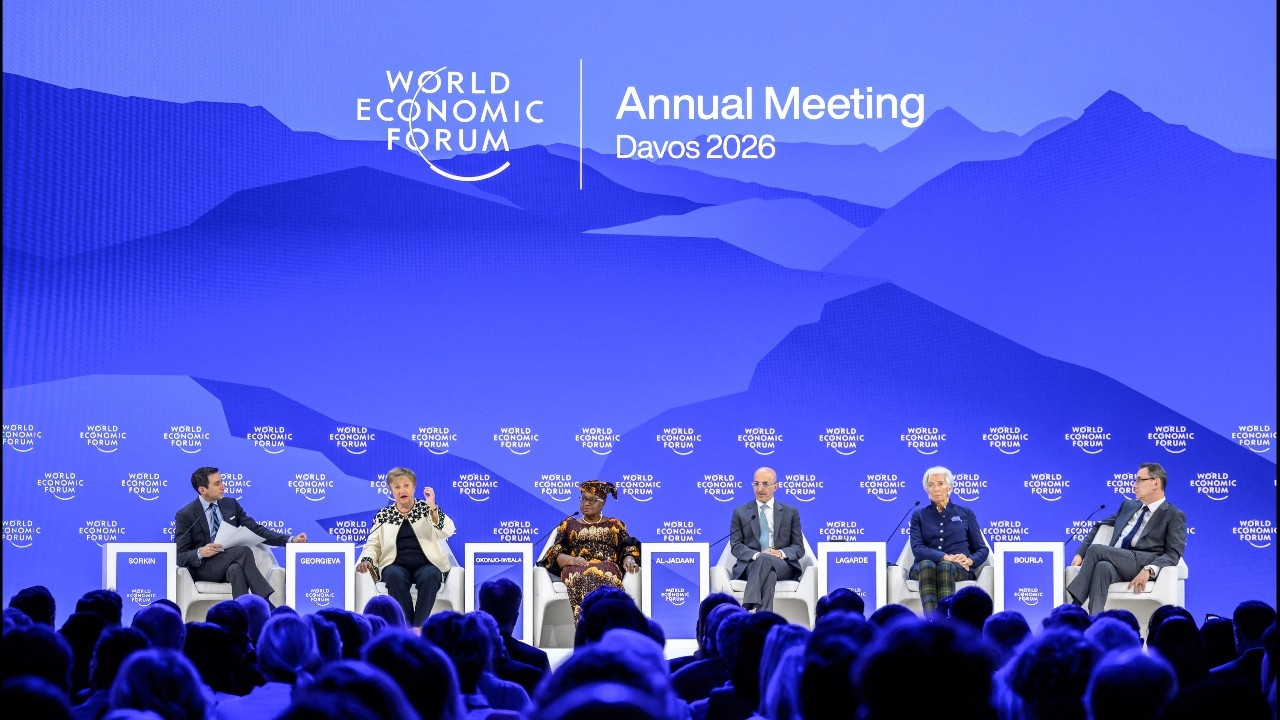
The International Monetary Fund (IMF) held a seminar inviting participants worldwide to plan responses to unforeseen problems that may arise amid the Middle East conflict.
On 9 March 2026, the International Monetary Fund (IMF) held a conference in Tokyo, Japan, focusing on financial and economic risks stemming from the Middle East conflict and highlighted unexpected challenges requiring new approaches, or a “New normal.”
Kristalina Georgieva, IMF Managing Director, pointed out that if the ongoing conflict persists for a long time, it could lead to market instability, inflation, and slower economic growth. She emphasized that today’s policymakers must consider the 'Unthinkable.' These issues have prompted the IMF to reorganize its internal policy priorities to address emerging problems.
The Middle East conflict has caused global oil prices to rise sharply due to the closure of the Strait of Hormuz, reducing oil and goods transport through this route by over 90%. The Strait of Hormuz handles about one-fifth of the world’s oil shipments, which explains the recent sharp price increases.
In Asia, where over 60% of oil imports come from the Middle East, the closure of the Strait of Hormuz has created major problems. In Japan, which imports up to 90% of its oil from the Middle East, rapidly rising oil prices and a weakening yen have raised risks of high inflation and economic stagnation. This presents a significant challenge for the Japanese government to address.
In the United States, President Donald Trump posted on social media that the rising oil prices are only a short-term adjustment and a fair price to pay. He stated that once the U.S. successfully handles Iran’s nuclear weapons issue, prices will drop immediately.
Additionally, the World Economic Outlook reports that a 10% increase in oil prices would raise global inflation by 40% and slow worldwide economic growth.
This highlights the critical need for policymakers to focus on crafting policies that build a foundation capable of withstanding future economic volatility.
. Source:Straits Times
Read moreInternational News