

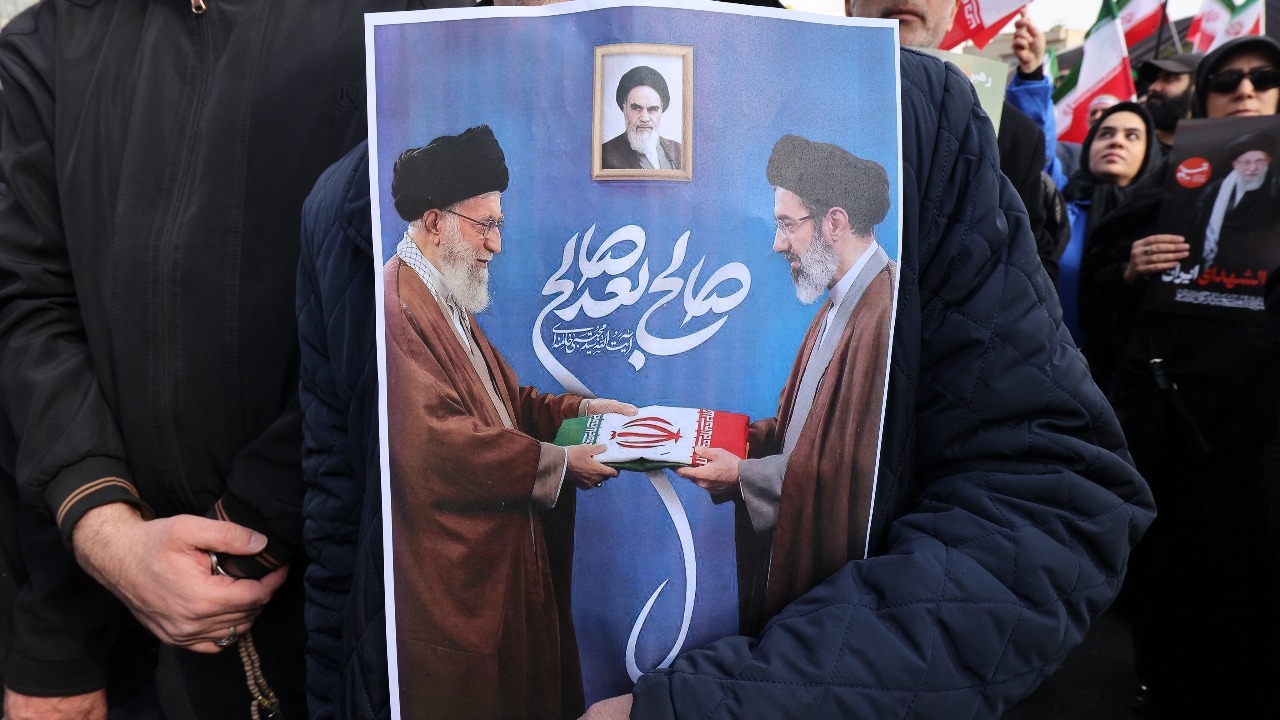
The Islamic Revolutionary Guard Corps (IRGC) of Iran has asserted it will decide the war's end on its own terms, firmly declaring that it will not allow even a single liter of oil to be exported. This defies threats from Donald Trump, who vowed to retaliate 20-fold if the Strait of Hormuz is closed. Meanwhile, Iran's Foreign Minister has severed ties, rejecting negotiations with the U.S. after the attacks began despite prior progress in talks.
The Islamic Revolutionary Guard Corps (IRGC) has issued a firm statement reaffirming its stance to halt oil exports from the Middle East to U.S. and Israeli allied countries, as long as military operations against Iran continue.
Ali Mohammad Naeini, IRGC spokesperson, told Tasnim News Agency, "Iran’s military will not permit even a single liter of oil to be exported from this region to enemy and allied parties until an official change is declared." He emphasized that U.S. efforts to control oil prices are futile because under wartime conditions, "trade must depend on security."
Additionally, the IRGC proposed to Arab and European nations that if any country expels U.S. and Israeli ambassadors from its territory, it will be granted "full freedom and authority" to navigate the Strait of Hormuz starting tomorrow.
The conflict began on 28 February, when the U.S. and Israel launched attacks on Iran, resulting in the death of Supreme Leader Ayatollah Ali Khamenei (note: this is ambiguous and likely incorrect in the source—possibly a fictional or mistaken reference). The conflict has since expanded throughout the Middle East, severely disrupting shipping through the Strait of Hormuz, a key route transporting over 20% of the world’s crude oil, due to repeated attacks on oil tankers.
U.S. President Donald Trump responded by threatening to retaliate "20 times more severely" if Iran obstructs oil flow. He also predicted the war would end sooner than the four weeks he initially set, although he did not clearly define what constitutes "victory." Meanwhile, Israel has explicitly stated its goal to overthrow Iran’s clerical regime.
Iranian Foreign Minister Abbas Araghchi told U.S. PBS television that Iran has no plans to resume talks with the U.S., citing "bitter experiences" from the past. He noted that although the previous three rounds of negotiations showed significant progress, the U.S. ultimately chose to attack Iran.
In the energy market, Brent crude oil prices have been highly volatile, surging above $100 per barrel—the highest level since Russia invaded Ukraine in 2022—before falling over 10% today (10 March) after Trump indicated possible exemptions from oil sanctions for "certain countries," which sources suggest could mean easing restrictions on Russian oil to alleviate global energy shortages.
Iran’s ambassador to the United Nations revealed that since the U.S. and Israeli air strikes began in late February, at least 1,332 Iranian civilians have been killed and many more injured.