

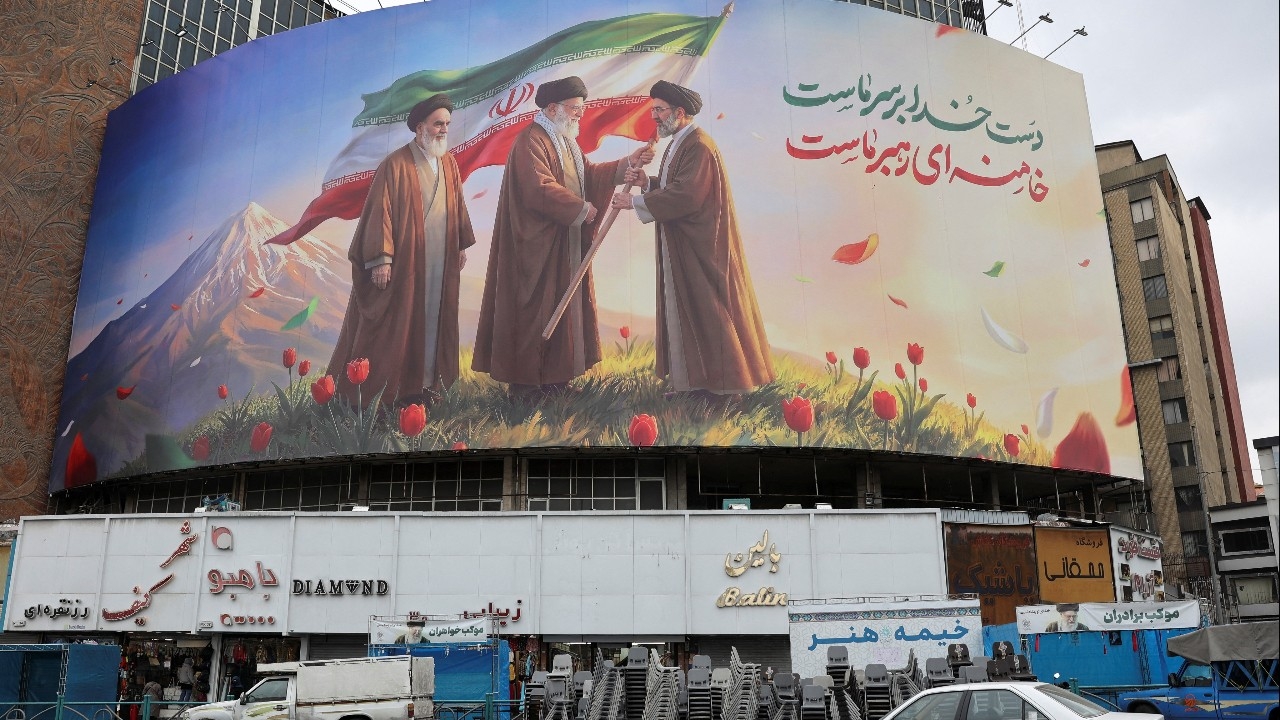
A government advisor and the son of Iran's president has stepped forward to quash rumors that Mojtaba Khamenei, the new Supreme Leader, was injured in attacks by the U.S. and Israel. He confirmed that Khamenei remains safe, despite state media referring to him as a "wounded warrior" who is currently staying in a secure location.
Yousef Pashaei, son of the Iranian president and government advisor, posted on his personal Telegram channel denying rumors about Mojtaba Khamenei's injury. He stated, "I heard reports that Mojtaba was injured, so I inquired with close contacts and was told, thank God, he is still safe."
Confusion about the new leader’s condition arose after Iranian state television called Mojtaba "janbaz," meaning "wounded warrior," in reference to the Ramadan war—a term Iran uses for the current conflict. However, no specific details of his injuries were given. Meanwhile, The New York Times cited three Iranian officials reporting that the 56-year-old leader suffered a leg injury and is recovering in a highly secure location with limited communication.
Mojtaba Khamenei is the son and direct successor of Ayatollah Ali Khamenei, the former Supreme Leader who was killed in a U.S. and Israeli airstrike on 28 February. That event sparked widespread conflict across the Middle East. Although Mojtaba was officially appointed Supreme Leader by the Assembly of Experts on Sunday, 8 Mar 2024 GMT+7, he has yet to appear publicly or issue any statements to the Iranian people.
Analysts suggest the new leader’s silence and his rise to power amid wartime may indicate a shift in Iran’s internal power balance, particularly highlighting the growing influence of the Islamic Revolutionary Guard Corps (IRGC) over political affairs. This is evident from the intense pressure faced by President Masoud Pashaei after he apologized to Gulf countries over recent attacks.
Alex Vatanka, a Middle East expert in Washington, D.C., commented, "Mojtaba owes his rise to the Revolutionary Guards, so his absolute power may not match that of his father." This implies that future major strategic decisions in Iran could be increasingly guided by military leadership rather than civilian political authorities.