

Global oil prices have surged past $100 per barrel, despite multiple major powers announcing an emergency release of 400 million barrels of oil reserves to address the war crisis, while Iran threatens prices could reach $200.
Foreign news agencies report that global crude oil prices continued to rise today (12 Mar), despite an agreement among major powers for the largest emergency crude oil release in history to try to mitigate the escalating Iran war crisis.
In Asian trading markets, Brent crude oil prices surged nearly 9% to surpass $100 per barrel, roughly 3,200 baht, even though 32 member countries of the International Energy Agency (IEA) confirmed their readiness to release a total of 400 million barrels of oil reserves to ease concerns about shortages. This emergency release figure is more than double the 182 million barrels released during Russia's invasion of Ukraine in 2022.
Tensions escalated further when a spokesperson for Iran's Islamic Revolutionary Guard Corps (IRGC) stated that oil prices could reach $200 per barrel (about 6,400 baht) as Iran prepares to intensify attacks on oil tankers passing through the Strait of Hormuz, a crucial shipping route that accounts for about one-fifth of the world's energy exports. The spokesperson warned that no country could intervene to lower oil prices and emphasized that any vessels linked to the United States, Israel, or their allies would become immediate targets when passing through this strait.
Market volatility has increased since the United States and Israel launched attacks on Iran on 28 February, directly impacting global retail fuel prices. In the US, the average gasoline price rose above $3.50 (approximately 112 baht) per gallon as of Tuesday (10 Mar).
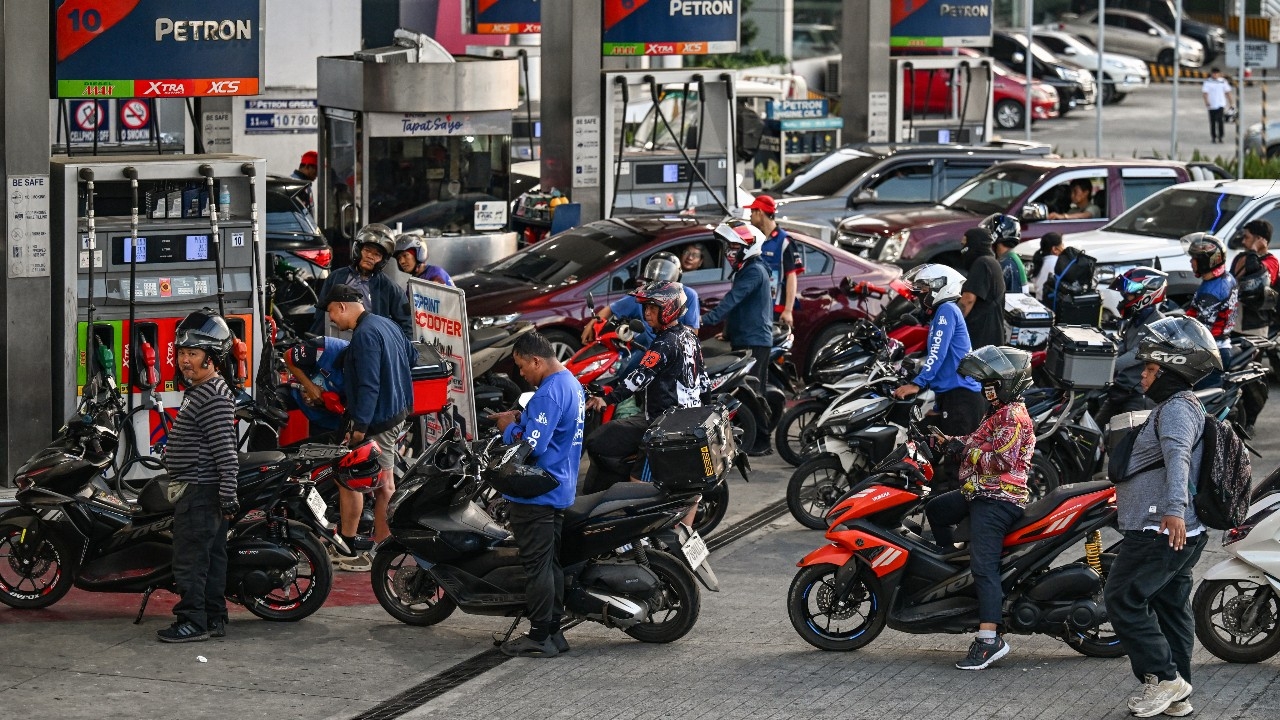
Meanwhile, Asian countries heavily reliant on Middle Eastern energy supplies have been severely affected. Citizens in the Philippines, Vietnam, and Thailand have been queuing densely at gas stations throughout the week to refuel.
In Thailand, the government has urged most state agencies to adopt work-from-home policies to conserve energy and has suspended non-essential overseas travel for officials. Meanwhile, the Philippines has introduced a four-day workweek for civil servants to reduce national energy consumption.
,BBC
Read moreMiddle East War