

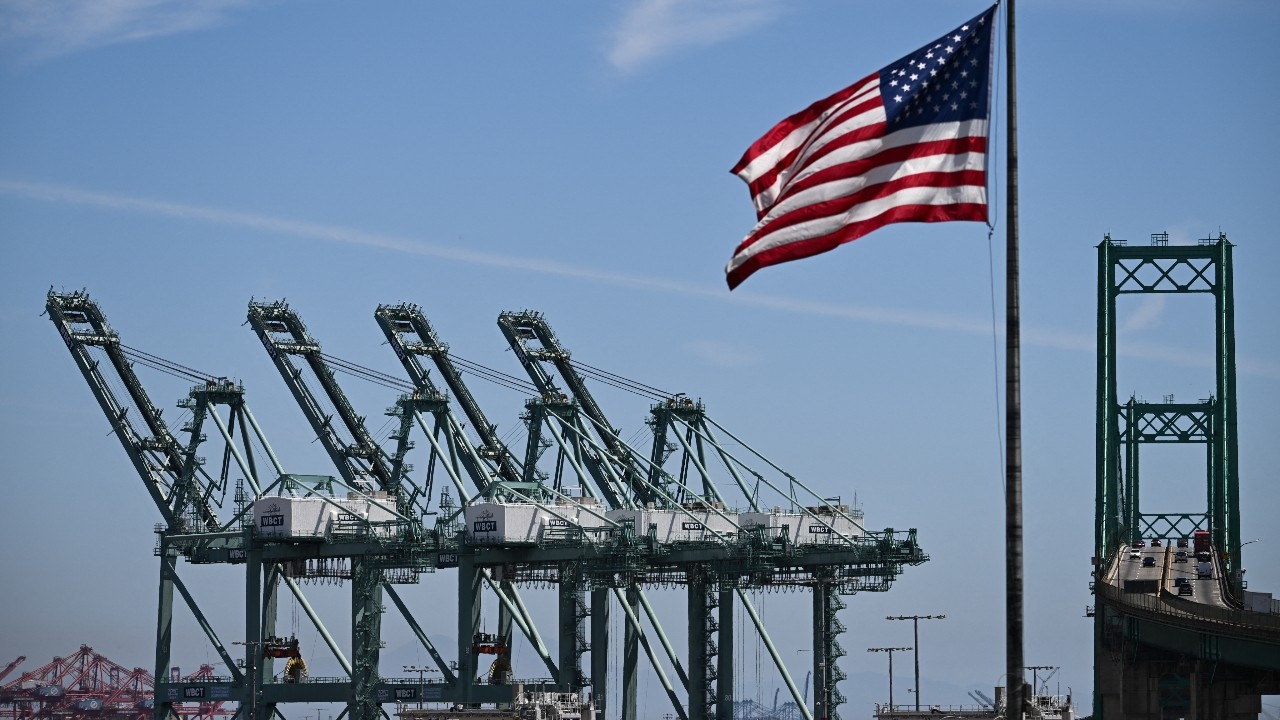
The US government under President Donald Trump has started a trade investigation under Section 301 targeting "excess production capacity" in 16 major trading partners with huge trade surpluses with the US, including "Thailand." The probe focuses on issues of overcapacity and plans to ban products from over 60 countries linked to forced labor, aiming to leverage these actions to negotiate new import tariffs after the US Supreme Court struck down previous tariff measures last month.
The US government announced a new strategy to protect its domestic manufacturing base. US Trade Representative (USTR) Jaymeison Greer stated that an investigation under Section 301 of the 1974 Trade Act is being launched to target countries with "structural excess production capacity" that negatively impacts US industries.
The US Trade Representative said the unfair trade investigation under "Section 301" could lead to new tariffs on China, the European Union, India, Japan, South Korea, and Mexico by this summer.
Other trading partners under investigation for overcapacity include Taiwan, Vietnam, Thailand, Malaysia, Cambodia, Singapore, Indonesia, Bangladesh, Switzerland, and Norway. Canada, the US's second largest trading partner, was not mentioned as a target of this investigation.
The USTR noted that in the case of Thailand and its ASEAN neighbors, attention is on the automotive and machinery industries—especially the market expansion of Chinese electric vehicle maker BYD, which is expanding production bases in Thailand and other countries. The US views this as dumping excess capacity that disrupts global market mechanisms.
In addition to overcapacity issues, Greer is preparing to announce another Section 301 investigation this Thursday to ban imports made with forced labor. This review will cover over 60 countries worldwide, broadening the scope from the previous focus on China's Xinjiang region to a more globally enforced measure.
This move is a response following the US Supreme Court ruling on 20 February that the Trump administration's broad tariff measures were "illegal," forcing Trump to use Section 122 to impose a temporary 10% tariff for 150 days, expiring in July. Therefore, the USTR is expediting the Section 301 investigation results before the temporary tariffs expire.
This action comes just weeks after the Supreme Court ruled that tariffs imposed by Trump on many countries worldwide last April were unlawful.
This investigation gives the Trump administration a credible pretext to threaten tariffs on trading partners. It also occurs as senior US officials are scheduled to meet Chinese negotiators in Paris this weekend, with talks expected to lay the groundwork for Trump's meeting with Chinese President Xi Jinping in Beijing later in March.