

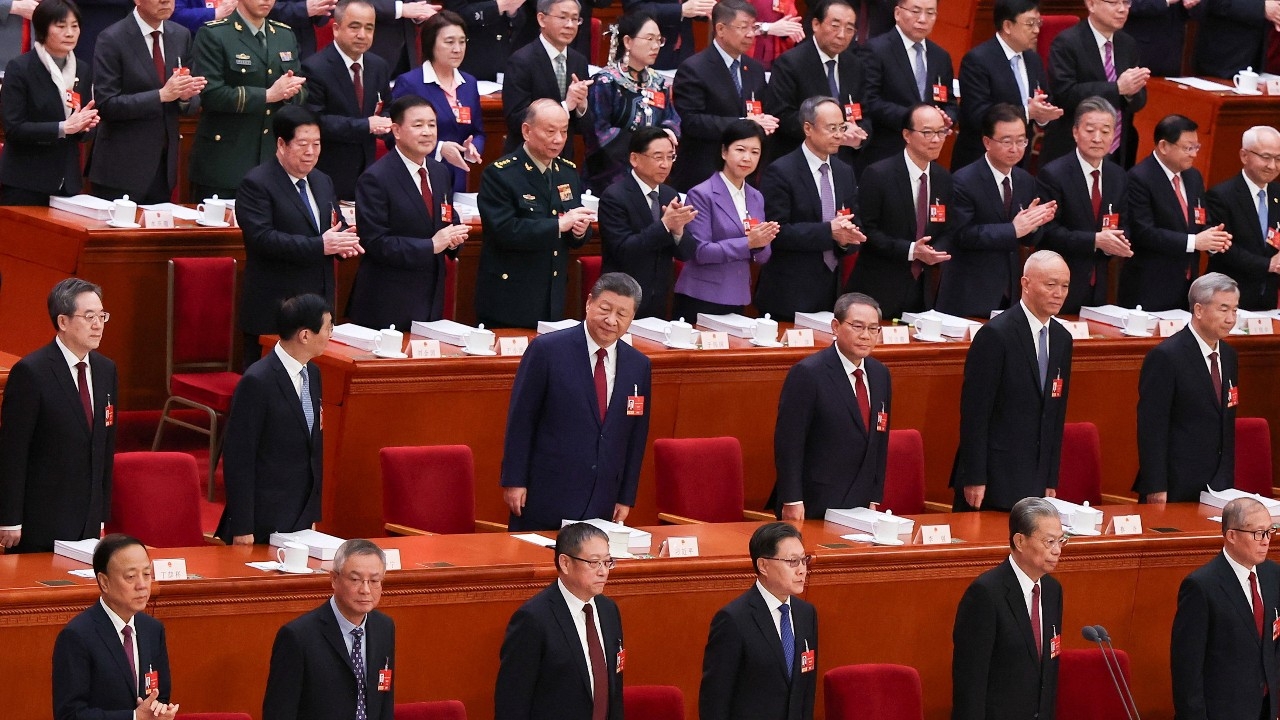
China passed a new "Ethnic Unity" law during the annual session of the National People's Congress (NPC), aiming to create a shared identity among its 56 ethnic groups. The law establishes Mandarin Chinese as the main language for education and government work, requiring all children to learn Mandarin from before kindergarten until the end of high school. However, critics express concern that the law may accelerate the assimilation of minority groups and limit their ethnic cultural expression.
China has passed a new law concerning ethnic minorities to promote the concept of a "shared national identity" among the country's various ethnic groups. This law was approved during the closed session of the NPC, China's highest legislative body.
The draft law, titled "Promotion of Ethnic Unity and Progress," aims to foster national unity and support the rejuvenation of China under the leadership of the Chinese Communist Party.
Currently, China officially recognizes 56 ethnic groups, with the Han Chinese being the largest, accounting for more than 91 percent of the country's 1.4 billion population. Other ethnic groups such as Tibetans, Mongols, Hui, Manchu, and Uyghurs often reside in regions covering nearly half the country, rich in natural resources.
The draft law explicitly promotes integration through policies on education, housing, migration, and culture. A key point is mandating Mandarin as the basic language of instruction in schools, requiring all children to learn Mandarin from before kindergarten through high school. Previously, students could study most subjects in their native languages like Tibetan, Uyghur, or Mongolian.
The law also requires the use of Mandarin in government agencies and formal businesses. In public areas where local languages are used alongside Mandarin, the law stipulates that Mandarin must be "prominently featured" in terms of placement, order, and presentation.
Additionally, religious groups, educational institutions, and ritual sites must adhere to the policy of "Sinicization of religion," whereby religious activities are aligned with Chinese culture and political systems, as mandated by the Chinese government.
The law also provides a legal basis to prosecute parents or guardians who instill attitudes deemed "harmful" to children, affecting ethnic harmony. It calls for a "closely connected community environment," which some analysts believe could lead to segregation in neighborhoods predominantly inhabited by minority populations.
Allen Carlson, an associate professor at Cornell University specializing in China's foreign policy, views this law as the clearest expression of ethnic assimilation policies under President Xi Jinping, pressuring non-Han groups to conform to the majority and pledge loyalty to the Chinese government above all else.
Furthermore, the law applies to individuals or organizations outside China, stating that any acts undermining unity or inciting separatism will be prosecuted. Critics worry this provision could be used against activists advocating for cultural rights.
The editorial board of the Chinese government-run China Daily newspaper stated that the law underwent rigorous review and thorough consultation with minority representatives. It affirmed that the law continues to protect minority traditions and lifestyles, and dismissed claims that minorities must choose between economic development and cultural preservation as "distorted reality."
.sourceReuters