

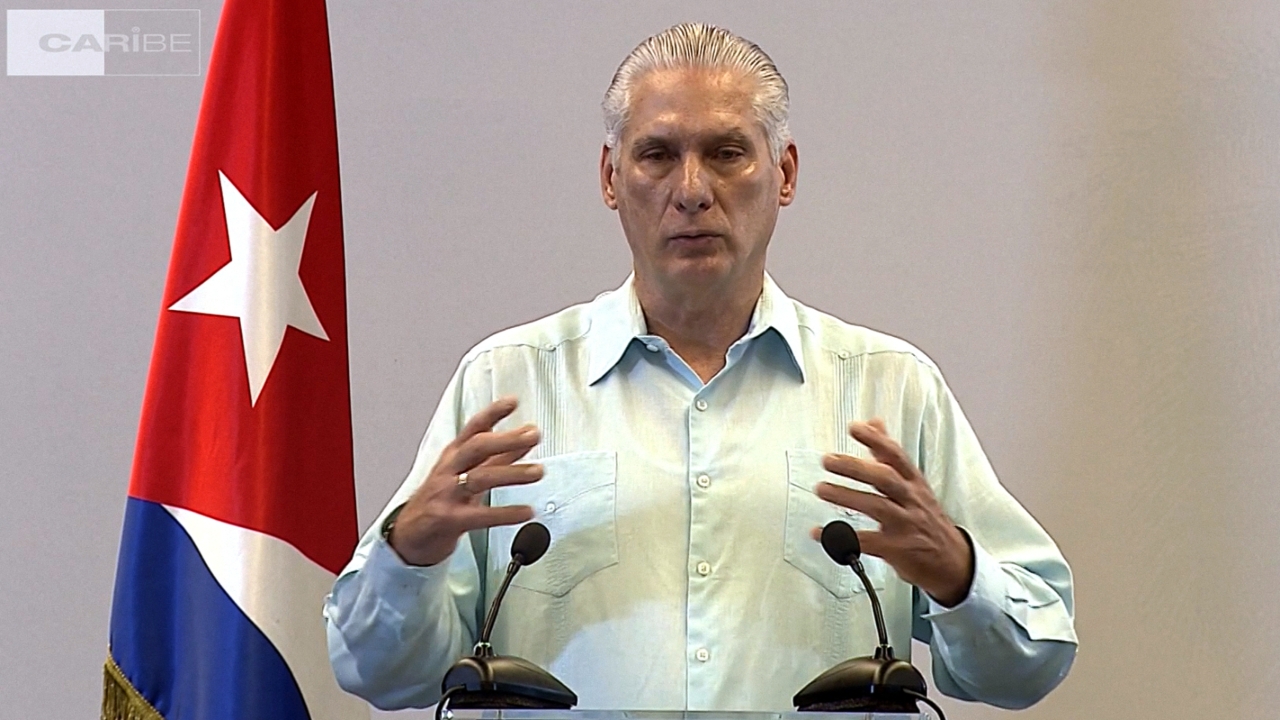
The Cuban president stated that the government has held talks with the U.S. to find solutions to bilateral conflicts and the energy crisis caused by U.S. oil embargo measures, while the country faces power outages and severe fuel shortages.
On 13 March 2026 GMT+7, Miguel Díaz-Canel, the president of Cuba, revealed that Cuban government officials have conducted negotiations with the U.S. to resolve bilateral conflicts and the energy crisis severely impacting the country's economy. The discussions aim to find solutions through dialogue regarding differences between the two nations, noting that certain international factors have facilitated these talks.
The Cuban leader also revealed that no oil imports have entered the country for three months, blaming the U.S. energy embargo as the primary cause of the fuel crisis. The situation worsened after the U.S. attacked and detained Nicolás Maduro, the Venezuelan leader and a key ally and major oil supplier to Cuba. This resulted in the suspension of oil shipments to Cuba. The fuel shortage has caused widespread power outages, including a major blackout last week in western Cuba, leaving millions without electricity.
The Cuban leader stated that although Cuba produces about 40% of its own oil and strives to generate electricity domestically, it is still insufficient to meet national energy needs. The power shortages have affected various public utilities, including communications, education, transportation, and healthcare. Tens of thousands of patients are awaiting surgery because hospitals lack electricity.
This revelation of negotiations comes just days after U.S. President Donald Trump mentioned the possibility of the U.S. amicably taking control of Cuba, which has further increased political pressure on the Cuban government.
Source: Aljazeera