

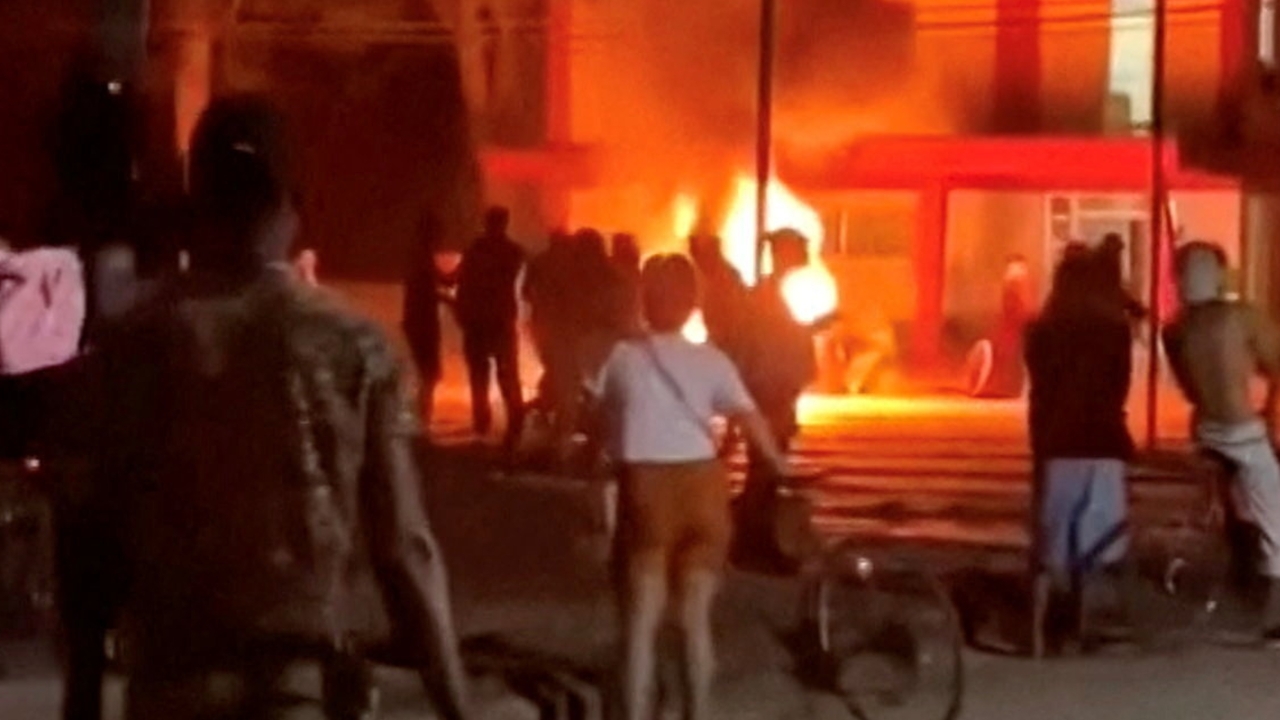
Cuban citizens have held intense protests against the government, including breaking in and destroying property at the Communist Party office, amid a nationwide energy crisis affecting all sectors.
Foreign news agencies report that protesters in Cuba ransacked the Communist Party branch office in Moron, a city in the country's center, following demonstrations over soaring food prices and persistent power outages from Friday night through Saturday (14 Mar).
Cuba’s Interior Ministry stated that five individuals were arrested after groups of people damaged property inside the Communist Party branch office.
Public dissatisfaction in Cuba is rising due to rotating power outages across regions and shortages of food, fuel, and medicine, worsened by the prolonged U.S. blockade on oil shipments.
The state-run newspaper Invasor reported that Friday’s protest “began peacefully” but escalated into “acts of vandalism,” with some individuals throwing stones at the building entrance and dragging furniture from the lobby onto the street to set on fire.
Additional reports indicate that other state locations, including government-run pharmacies and markets, were also targeted.
The protests erupted just hours after the Cuban government confirmed ongoing talks with the U.S. to seek “a resolution through dialogue” regarding their bilateral conflict.
Cuba’s President Miguel Díaz-Canel said in a nationwide live broadcast on Friday that no fuel shipments had arrived in the country for the past three months due to the U.S. oil blockade.
U.S. President Donald Trump has consistently expressed his desire to see a leadership change in Cuba. On Monday, he stated that Cuba was in “deep trouble” and threatened a “friendly takeover.”
Earlier, Trump had said that this single-party state would be the “next” to face U.S. intervention, following the arrest of Venezuela’s President Nicolás Maduro—an ally of Cuba—in Caracas by U.S. forces in January.
Since then, the U.S. has halted oil shipments from Venezuela to Cuba, which previously supplied nearly half of Cuba’s energy needs, and threatened tariffs on any country selling oil to the island, intensifying sanctions that have been in place for over six decades.
Cuba has long depended heavily on imported fuel for electricity generation, and this oil blockade has pushed its already struggling economy to the brink of collapse.
The crisis not only affects food prices and electricity production but also impacts waste collection, hospital emergency departments, public transportation, and education.
Follow international news:https://www.thairath.co.th/news/foreign
Source:bbc