

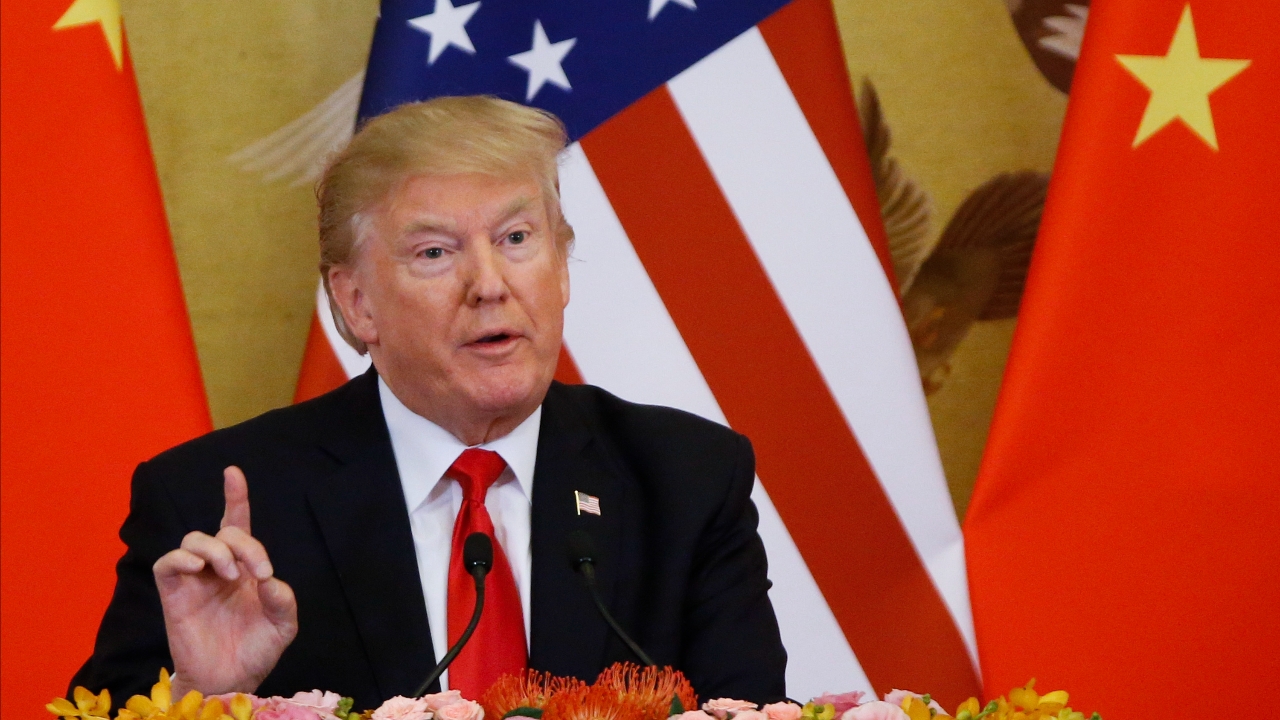
US President Donald Trump has requested to postpone his trip to China for a summit meeting with President Xi Jinping, citing obligations to oversee the war with Iran. He affirmed the delay is not related to pressure on China to assist in reopening the Strait of Hormuz.
Foreign media reported that yesterday (16 Mar), US President Donald Trump announced plans to delay his visit to China for a summit with Chinese President Xi Jinping by about one month from the original late March schedule. He explained that he needs to closely command the war situation with Iran and stressed that amid escalating conflict, he must personally oversee and make critical decisions.
The original schedule had the meeting between US President Donald Trump and Chinese President Xi Jinping set for 31 March to 2 April, marking their first meeting since their last discussion in October of the previous year.
President Trump confirmed that the postponement carries no hidden political meaning and is not connected to any pressure on China to help reopen the maritime route through the Strait of Hormuz. He added that he looks forward to meeting Xi Jinping and emphasized that the relationship between the two leaders remains positive.
This aligns with a statement by US Treasury Secretary Scott Bessent, who said the summit postponement was not due to US attempts to pressure China to assist in reopening the Strait of Hormuz or related trade disputes, but because President Trump wishes to personally coordinate the Iran war situation from Washington. He noted that international travel at this time might not be appropriate.
However, this development came just a day after Trump told Financial Times that he might postpone the summit if China does not step in to help resolve the blockade of the Strait of Hormuz, a critical global energy shipping route currently blocked by Iran, causing oil prices in the US and worldwide to surge sharply.
Meanwhile, trade tensions between the two nations remain high. Following the US Supreme Court's February decision to overturn Trump's tariff wall policy, the Trump administration announced renewed investigations into China's and several other countries' trade practices. Recently, representatives from both sides concluded talks in Paris, France, two days ago to seek solutions on tariffs and economic sanctions.
Li Chenggang, China's chief trade negotiator, told Xinhua News Agency that while some consensus was reached, the US's plan to investigate China's trade practices remains a significant concern. He urged the US to prioritize maintaining economic stability, especially as the world faces crises stemming from war.
/BBC
Read more news aboutMiddle East War