

The Philippine government has swiftly introduced short-term measures, including distributing cash aid to tricycle drivers and raising public transport fares, following a sharp rise in oil prices driven by the war situation in the Middle East, which is affecting living costs and incomes nationwide. Meanwhile, major companies are negotiating to import oil from Russia in hopes of easing the burden on the public.
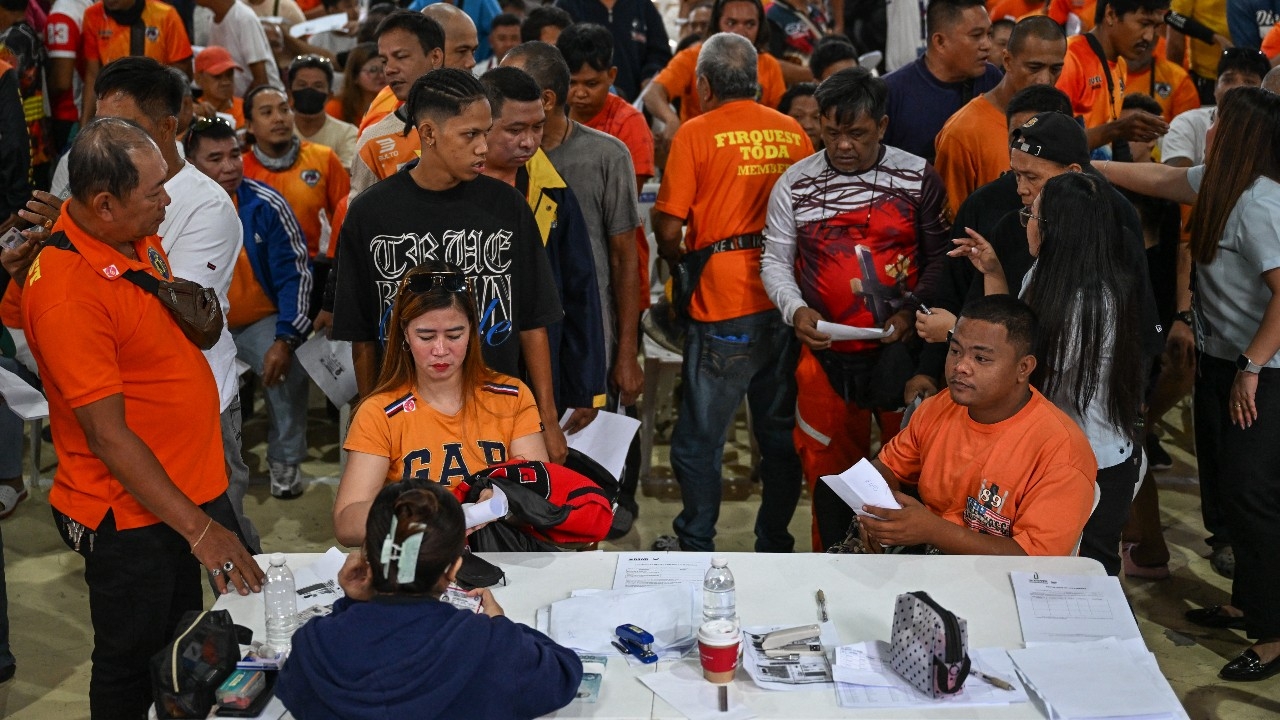
Hundreds of motorized tricycle drivers in Manila lined up to receive government aid to alleviate the impact of rapidly rising oil prices, a consequence of the Middle East war that erupted last month following attacks between the U.S., Israel, and Iran.
The nationwide belt-tightening measures have led the Philippines to implement multiple emergency actions, including reducing government officials' workweek to four days, cutting ferry schedules in certain areas, and seeking new energy sources to ensure the nation’s survival.
On the same day, Philippine authorities announced fare increases for several types of public transport, including the "jeepney," a key mode of transport in the country. Vigor Mendoza, head of the transport regulatory agency, revealed that jeepney fares would rise by about 8% on average to reflect "genuine concern" for both passengers and operators facing hardship.
However, the fare increase does not yet include motorized tricycles, which number in the hundreds of thousands nationwide and mainly serve passengers in narrow alleys. Romeo Cipriano, 60, a tricycle driver for over 40 years, said this was the most expensive oil he had ever experienced and that the 5,000-peso (about 2,710 baht) aid he received "is better than nothing."
Another driver, Al De Ocampo, said his daily income had halved from 1,000 pesos to just 500 pesos. He called on the government to exempt or reduce oil excise taxes by 50% until the war ends.

The Senate is expected soon to vote on granting President Ferdinand Marcos Jr. the authority to temporarily suspend or reduce oil excise taxes.
Since the Philippines relies almost entirely on crude oil from the Middle East, the closure of the Strait of Hormuz has had a severe impact. Recently, Ramon Ang, CEO of Petron—the country's sole oil refinery—confirmed the company is "in talks" to explore the possibility of purchasing oil from Russia after the U.S. began easing certain restrictions on oil business.
. AFP