

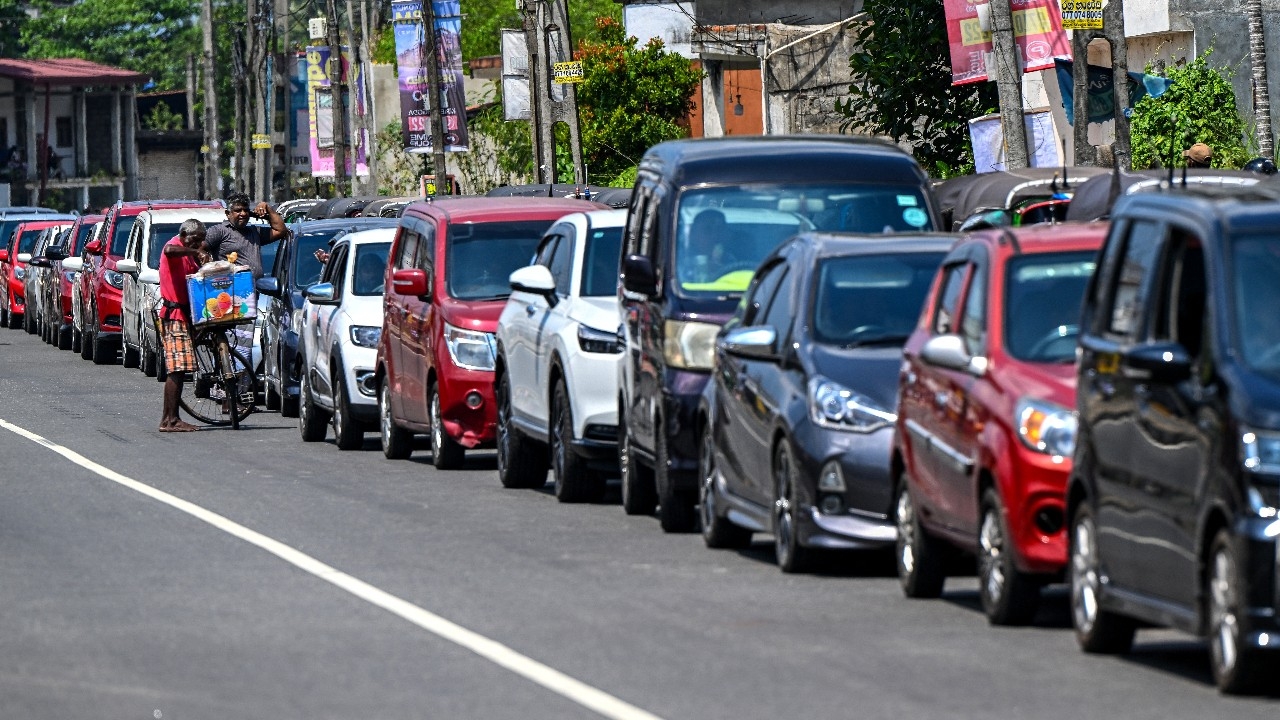
Several Asian countries are hastening to implement energy-saving measures, ranging from declaring holidays and reducing workdays to restricting oil use, after the Middle East conflict severely affected the global energy market, risking shortages.
The escalating tensions in the Middle East, particularly the conflict involving the U.S., Israel, and Iran, are shaking the global energy market. This has forced many Asian countries, heavily reliant on oil imports, to urgently adopt energy control measures to cope with potential fuel shortages.
Data shows that nearly 90% of the oil and gas transported through the Strait of Hormuz is destined for Asia, making the region directly vulnerable to supply uncertainties.
Overview of Strict Measures Across Asia
Several Asian countries have started implementing stricter measures to alleviate the immediate energy shortage situation as follows.
Sri Lanka has declared every Wednesday a public holiday to reduce fuel consumption and introduced the "National Fuel Pass" system to limit citizens' fuel purchases.
Myanmar restricts private car use by allowing vehicles to operate on alternate days based on license plate numbers.
Bangladesh has postponed Ramadan university holidays and implemented periodic power outages to reduce energy consumption and traffic, which leads to oil waste.
The Philippines requires some government agencies to work from home at least one day per week, cutting energy use by 10–20%, and has canceled offline meetings that can be held online.
Vietnam's Ministry of Industry and Trade advises businesses to adopt work-from-home arrangements and campaigns to reduce private car use by promoting public transport and carpooling amid soaring fuel prices and long queues at gas stations, some of which have temporarily closed.
Thailand has ordered government agencies and state enterprises to work from home, halt international travel, and implement energy-saving measures such as setting air conditioners at 26 degrees Celsius, using stairs instead of elevators, and is considering turning off billboard lights after 10 p.m. as well as possibly limiting gas station operating hours.
Pakistan has enacted major austerity measures, closing schools for two weeks, implementing a four-day workweek, and requiring half of civil servants to work from home.
Malaysia is preparing to discuss measures to reduce energy costs, including encouraging work-from-home arrangements in both public and private sectors.
Click to read related news aboutInternational News