

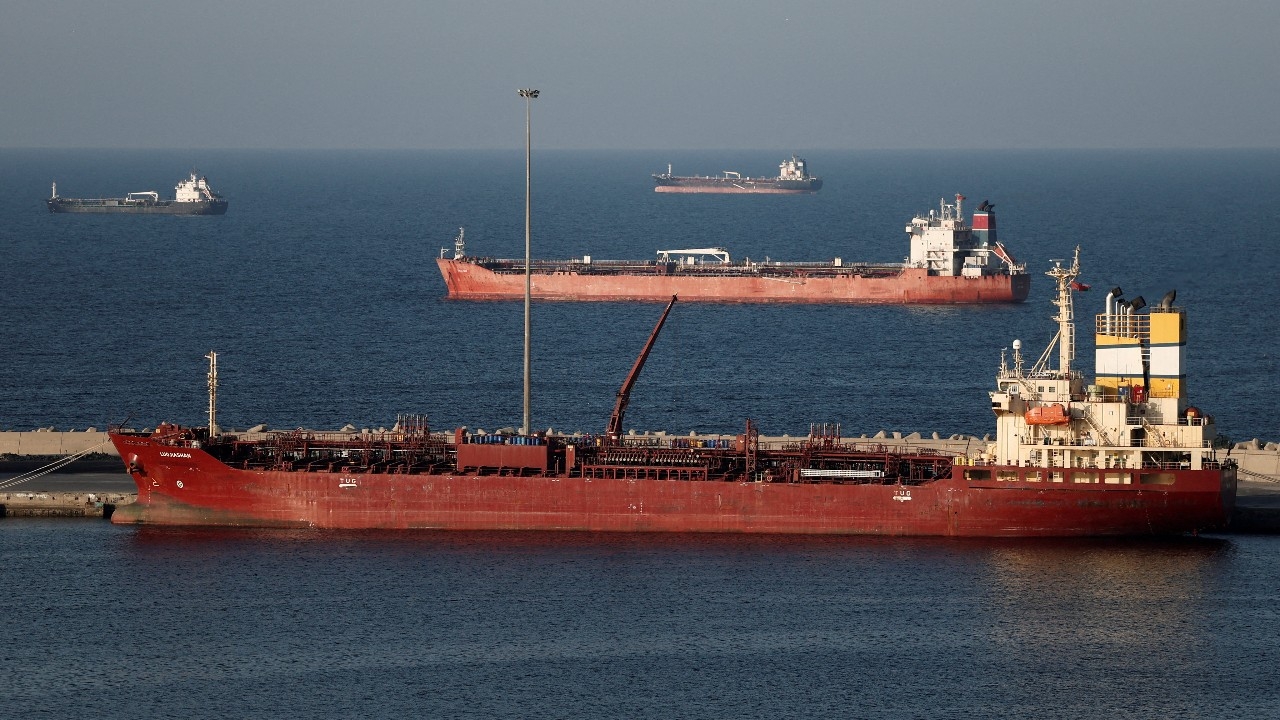
Iraq's Oil Minister revealed that the country is closely coordinating with Iranian authorities to request permission for some oil tankers to transit the Strait of Hormuz following a sharp decline in exports due to conflict. Iraq is also accelerating restoration of a historic oil pipeline linking to Turkey to provide an alternative route amid the crisis.
Hayan Abdel-Ghani, Iraq's Minister of Oil, told the local television station Al-Sharqiya that Iraq is in contact with relevant Iranian agencies seeking approval for certain oil tankers to pass through the Strait of Hormuz, a strategic global energy transit point.
The Oil Minister stated, "We must identify these vessels—their names, affiliations, and owners—to Iran so we can resume oil exports again."
Currently, Iran has closed the strait, affecting ships from nearly every country. Under normal circumstances, this strait handles about one-fifth of the world's crude oil transport.
As a founding member of OPEC, Iraq depends on crude oil sales for 90% of its national budget. Before the war erupted on 28 February, Iraq exported around 3.5 million barrels per day, mostly from the Basra oil fields in the south through the Strait of Hormuz.
However, since the conflict began, Iraq's oil production has rapidly fallen from 4.4 million barrels per day to about 1.2 million barrels per day, due to full storage tanks and inability to export.
Besides negotiations with Iran, Iraq is fast-tracking a backup plan by rehabilitating a long-unused oil pipeline to directly export oil to Turkey's Ceyhan port without passing through the Kurdistan region.
The Oil Minister said Iraq will inspect the first 100 kilometers of the pipeline within one week to prepare for direct exports from the Kirkuk oil fields. If reactivated, this pipeline will be a crucial alternative amid severe restrictions on transport through the Strait of Hormuz.
The Kirkuk-Ceyhan pipeline, approximately 960 kilometers long, once handled exports accounting for about 0.5% of global supply but has been shut since 2014 after repeated attacks by the Islamic State. Iraq's Ministry of Oil estimates initial exports could reach 250,000 barrels per day, potentially increasing to 450,000 barrels per day if including oil from the Kurdistan region.
Reactivating this pipeline is a critical turning point that would provide Iraq with alternative export routes to global markets while the main route through the Strait of Hormuz remains severely disrupted by Middle East conflict.
. Reuters