

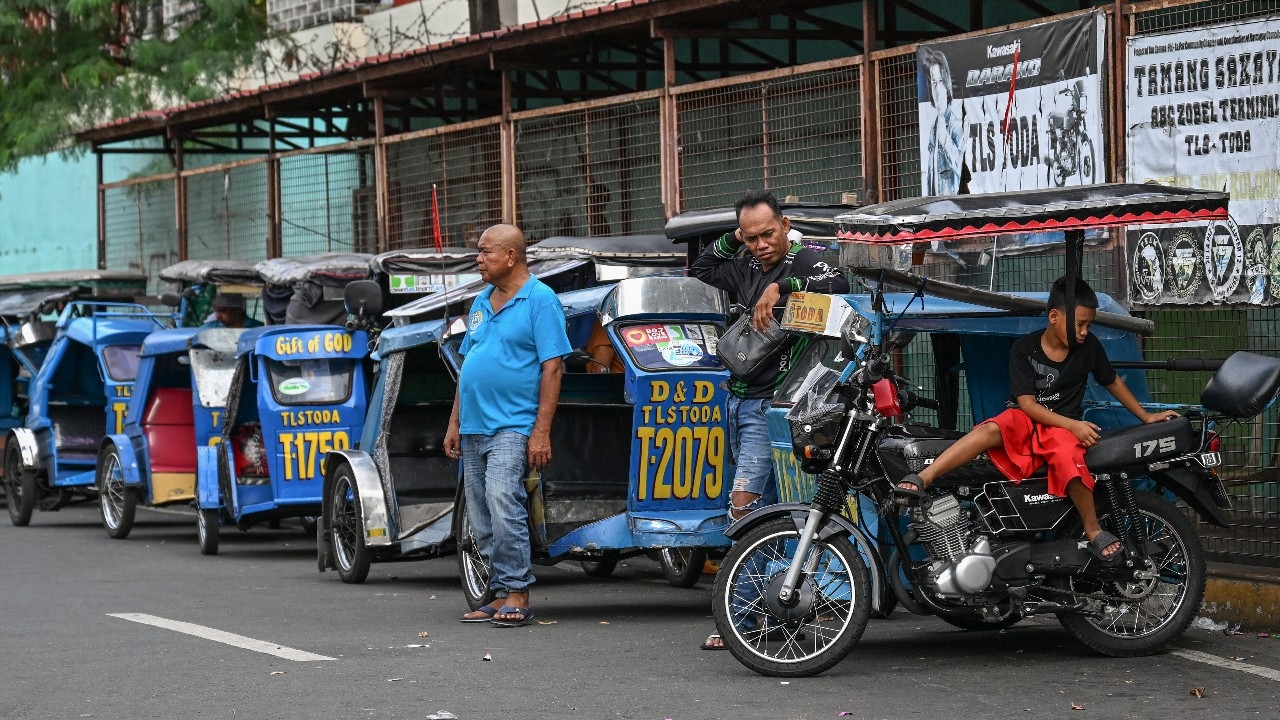
Tricycle drivers in Manila, Philippines, have each received 5,000 pesos from a government subsidy program to ease the impact of soaring fuel prices.
President Ferdinand Marcos Jr., who handed out the initial aid, said that as oil prices rise, everything is affected. The government is thus accelerating assistance starting with Manila’s tricycle drivers, providing 5,000 pesos each—about 2,700 baht—to help relieve immediate hardships.
Additionally, the government plans to expand aid measures nationwide to include public transport drivers with fuel subsidies, as well as assist over 50,000 poor farmers and fishermen, and provide free "Love Bus" services for students and workers.
The government is also pushing legislation to reduce fuel taxes and lower bioenergy prices, along with adjusting government agency work weeks to four days to reduce energy consumption.
This energy crisis originates from escalating conflicts among the U.S., Israel, and Iran, which are pressuring the global economy and forcing many countries to choose between reducing energy use or bearing higher costs.
Asia is among the hardest hit regions due to heavy reliance on oil imports, especially through the Strait of Hormuz, a route handling about one-fifth of the world’s oil and natural gas shipments, which is currently under tension.
Expert James Bowen noted that energy volatility driven by geopolitical factors is a normal feature of the global energy system still dependent on fossil fuels.
Putra Athiguna from an Indonesian energy institute warned that if many countries fail to manage the oil price crisis, it could lead to widespread economic slowdowns.
Meanwhile, several Southeast Asian nations are accelerating responses by stockpiling oil, conserving energy, and competing for resources, though this carries the risk of slowing economic activity.
. Inquirer
Click to read news related toInternational News