

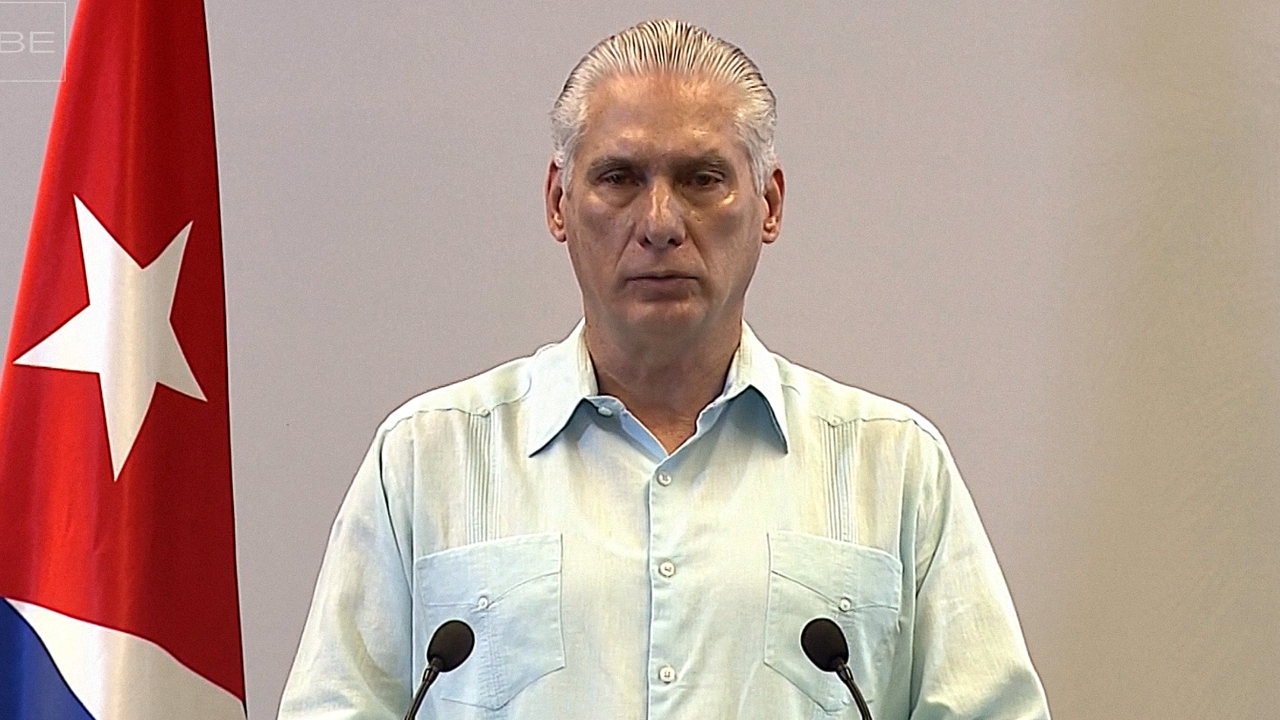
Miguel Díaz-Canel, President of Cuba, issued a strong declaration warning that the U.S. would face fierce resistance if it invades and seizes Cuba, following Donald Trump's signals of readiness to act while Cuba is severely weakened by an energy crisis.
Miguel Díaz-Canel, President of Cuba, responded firmly to Donald Trump, affirming that the U.S. government would encounter "fierce resistance" if it attempts to violate Cuba's sovereignty or try to occupy the country.
This conflict erupted after U.S. President Donald Trump told reporters at the White House on Monday (16 Mar) that he was prepared to "deal with" Cuba soon, stating that throughout his life he had heard about disputes between the U.S. and Cuba, and now he believes it is time for the U.S. to take action. He added that he would be honored to be the one to "take over" Cuba, whether as a liberator or occupier, because in his view, Cuba is currently a very weak country.
Meanwhile, U.S. Secretary of State Marco Rubio, a Cuban-American and long-time critic of the Cuban government, added that the measures Cuba announced earlier this week allowing Cuban exiles to invest and own businesses in the country are "not good enough" and do not constitute the free market reforms the Trump administration demands. Rubio emphasized that Cuba needs to make bigger decisions if it wants to overcome its crisis.
However, Cuban President Díaz-Canel remains resolute in opposing the U.S., posting on the platform X that no matter how severe the situation becomes, Cuba can guarantee one thing: any invader will face the strongest possible resistance.
At the same time, Tanieris Dieguez, Cuba's Deputy Ambassador to Washington, told foreign media that although Cuba is open to negotiations and willing to accept increased investment, issues regarding the country's governance and sovereignty "are not negotiable." She urged the U.S. to respect Cuba's sovereignty and its right to determine its own destiny.
Currently, Cuba is entering a crisis phase. On Monday (16 Mar), a nationwide power outage occurred, underscoring the collapsing economy after Cuba lost Venezuela—a key oil supplier and ally—in January due to U.S. military operations that toppled Venezuelan leader Nicolás Maduro. As a result, Cuba's maritime routes have been blockaded, preventing any oil imports since 9 January.
Although by yesterday morning (17 Mar), officials had restored electricity to about two-thirds of the country, including 45 percent of Havana, citizens continue to live in uncertainty. Olga Suarez, 64, told reporters that her greatest worry is prolonged blackouts spoiling the limited food in her refrigerator, as prices are extremely high. She also admitted that Cubans have become accustomed to waking up and going to sleep without electricity due to the aging power infrastructure and severe fuel shortages.
In addition to political and energy crises, Cuba is also facing natural challenges following a 5.8 magnitude earthquake off its coast on the morning of 17 March. While there have been no reports of casualties or severe damage, the quake has alarmed island residents already under intense pressure from the U.S.
Source: AFP
Read news aboutUnited States of America