

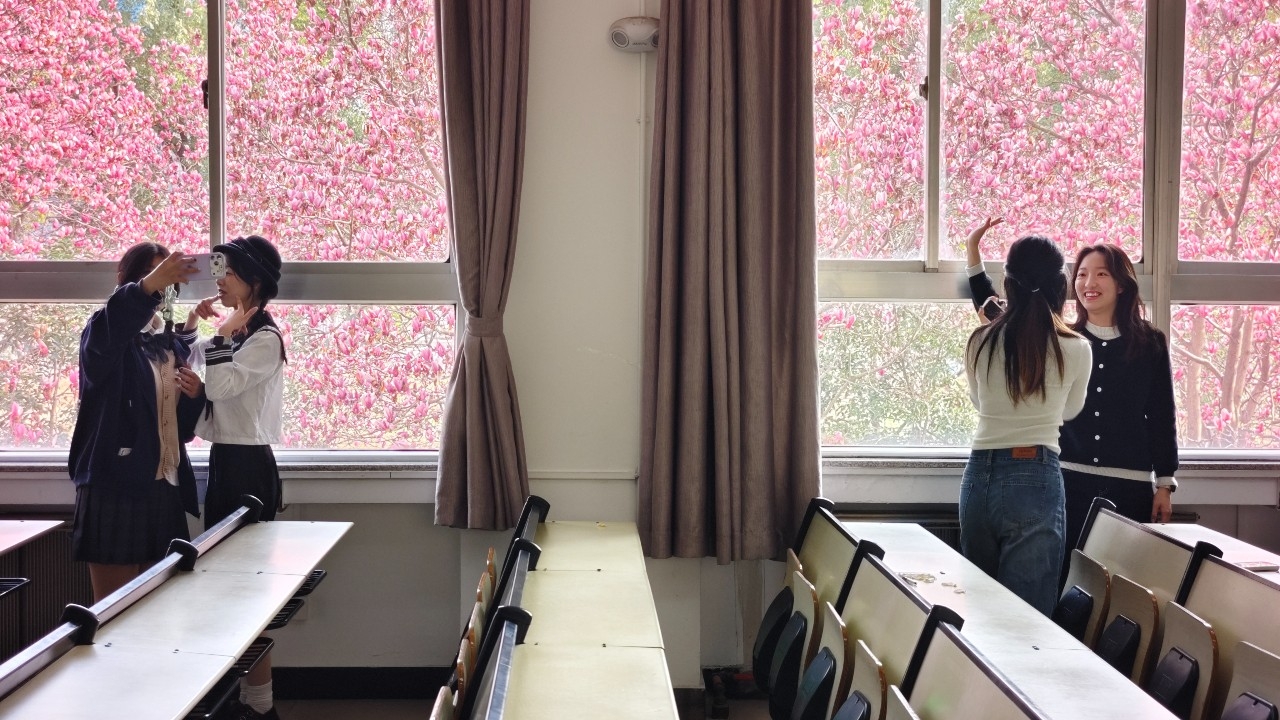
An aviation college in Sichuan province issued a statement urging students and staff to "put down their books and go find love" amid blooming flowers during the long spring holiday in April. This comes as the Chinese government accelerates policies to increase holidays, aiming to stimulate domestic consumption and address the crisis of historically low birth rates.
Against the backdrop of a culture that emphasizes intense study for academic excellence in Chinese society, the Southwest Civil Aviation Vocational College in Sichuan recently caused a stir by announcing the theme for its spring break from 1 to 6 April: "Go admire the flowers and immerse yourself in love."
The announcement was published via the college's official WeChat account, urging both faculty and students to spend this time connecting with nature and fostering romantic relationships. This move aligns with China's new government policy promoting additional "spring and autumn holidays" beyond the regular school breaks, intended to give people more time for rest and recreational activities.
Currently, several provinces in China, including Sichuan and Jiangsu, as well as major cities like Suzhou and Nanjing, have begun piloting spring holiday plans from April to early May. The two main objectives are to stimulate domestic consumption by encouraging China's 1.4 billion population to travel and spend during off-peak tourism seasons.
Authorities also hope that the increased leisure time will create opportunities for young people to meet, socialize, and ultimately lead to marriage and childbirth. This is in response to the population decline continuing into its fourth consecutive year in 2025, with birth rates falling to historic lows.
On Tuesday (17 March), China's National Development and Reform Commission issued guidelines to promote "child-friendly cities," focusing on improving public services ranging from education and healthcare to sports and recreational facilities.
James Liang, co-founder of major travel company Trip.com and a demographic expert, stated that society needs both sufficient "time" and "money" to raise children. He suggested that the government allocate more resources and increase financial support, while also urgently fostering in the younger generation an appreciation for the benefits of larger families to prevent further social crises.
. Reuters