

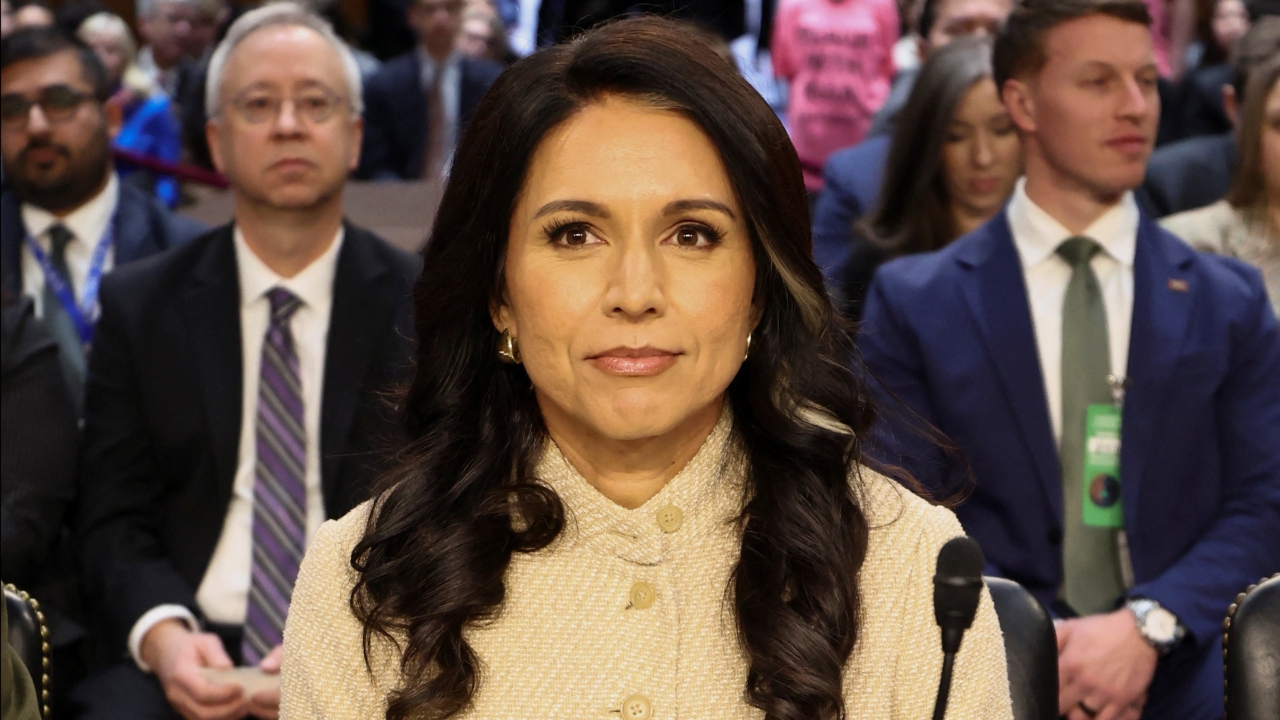
The Director of the US National Intelligence Agency refused to answer the Senate committee's question about how imminent a threat Iran poses, saying it is not her responsibility to make that judgment.
On 18 Mar 2026 GMT+7, Talssi Gabbard, Director of the National Intelligence Agency (DNI), testified before the Senate Democratic committee, refusing to confirm Donald Trump's claim that Iran was once an imminent threat to the US.
Gabbard's testimony before the Senate Intelligence Committee highlighted the difficult position of senior officials in the Trump administration as the war with Iran entered its third week, with rising signs of opposition within Trump's own Republican Party.
In her prepared statement, Gabbard reiterated Trump's frequent claim that Iran's nuclear program was "completely wiped out" by US strikes last June, adding, "Since then, Iran has made no attempts to restore or enhance its nuclear capabilities."
Later, Gabbard repeatedly refused to say whether she believed Iran was an "imminent threat" to the US before Trump launched the war last month, a key reason Trump cited for attacking Iran.
"It is not the responsibility of the intelligence community (IC) to decide what constitutes an imminent threat. That is up to the President," Gabbard said.
Her remarks prompted Democratic Senator Jon Ossoff to retort, "You are avoiding the question because answering directly to the committee would conflict with the White House statement."
This tense exchange revealed Gabbard's dilemma on the Iran issue, as she had been a vocal opponent of US military intervention in Iran during Trump's first term.
Gabbard also refused to say whether she was asked to brief President Trump about the possibility of Iran closing the Strait of Hormuz before the US launched military operations against Iran.
"I will not comment on whether the President asked me about any specific topic," Gabbard replied to Senator Mark Kelly of Arizona.
Asked the same question, CIA Director John Ratcliffe said such briefings do not typically occur at the White House's request, but intelligence agencies proactively provide critical information when issues arise.
"There has been ongoing intelligence analysis regarding the Strait of Hormuz and it continues," Ratcliffe confirmed.
.foreign news updates:https://www.thairath.co.th/news/foreign