

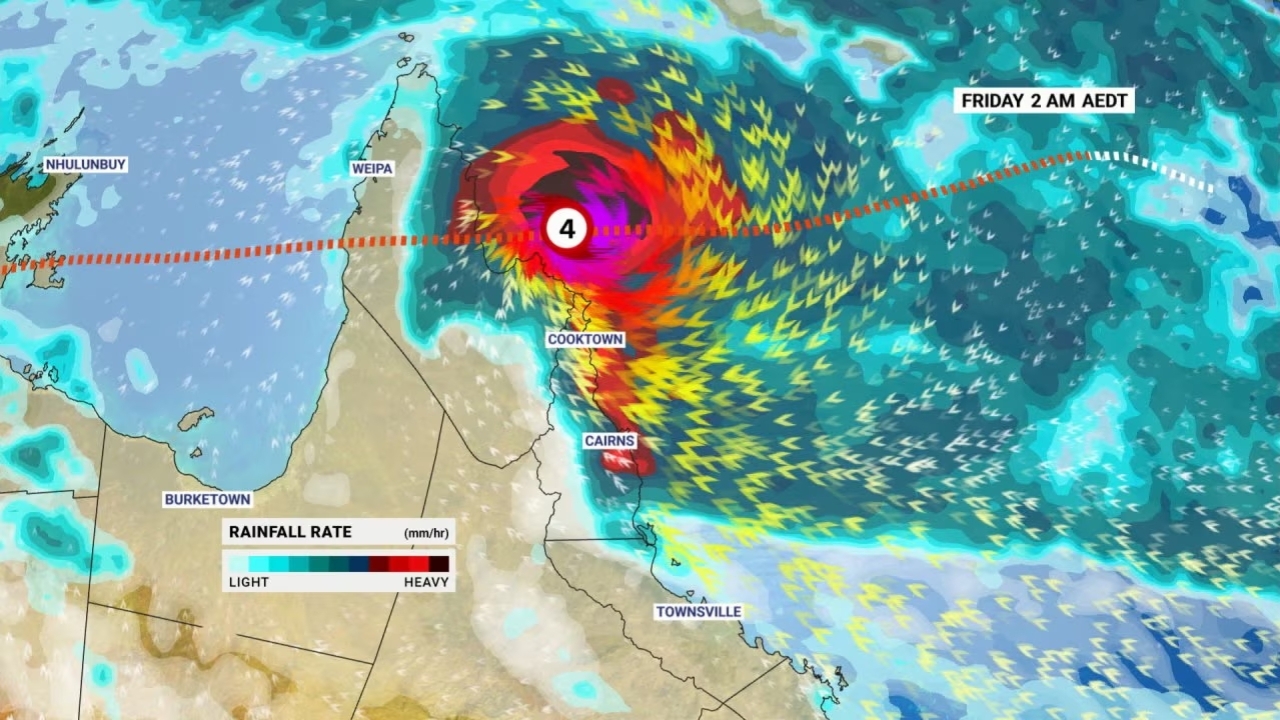
Australia has declared a state of emergency to address Cyclone "Narelle" striking northern Queensland with winds of 220 km/h, causing roofs to be blown off and widespread power outages. The state premier warned it could be the most powerful storm on record, while northern areas ordered evacuations to avoid flash flooding.
The latest update on Cyclone "Narelle" reports it made landfall on the eastern coast of Cape York, the northernmost point of Queensland, Australia, early today (20 Mar), bringing gusts up to 220 kilometers per hour before weakening from category 4 to category 3.
Local residents reported fierce winds tearing roofs off many homes and toppling numerous trees. Ergon, the electricity provider, reported over 3,500 homes without power. Heavy rainfall accumulating up to 500 millimeters is expected, heightening the risk of flash floods as soil saturation is already high. Queensland authorities have deployed police helicopters, medical teams, ambulances, and water rescue personnel to prepare for immediate assistance.
Queensland Premier David Crisafulli warned this could be the most severe storm remembered by locals and urged residents not to underestimate the danger even during the "eye" passage, as it can be life-threatening. He emphasized that despite the sparse population, authorities will provide full support.
Cyclone Narelle is moving past Cape York toward the Gulf of Carpentaria, where experts predict the warm currents may cause the storm to intensify again before advancing to the Northern Territory region.
Authorities have ordered the evacuation of several hundred people from remote communities in Numbulwar to Darwin for safety. Meanwhile, popular tourist destinations such as Port Douglas and Cairns, though hundreds of kilometers from the landfall site, are also experiencing strong winds causing severe beach erosion.
,BBC