

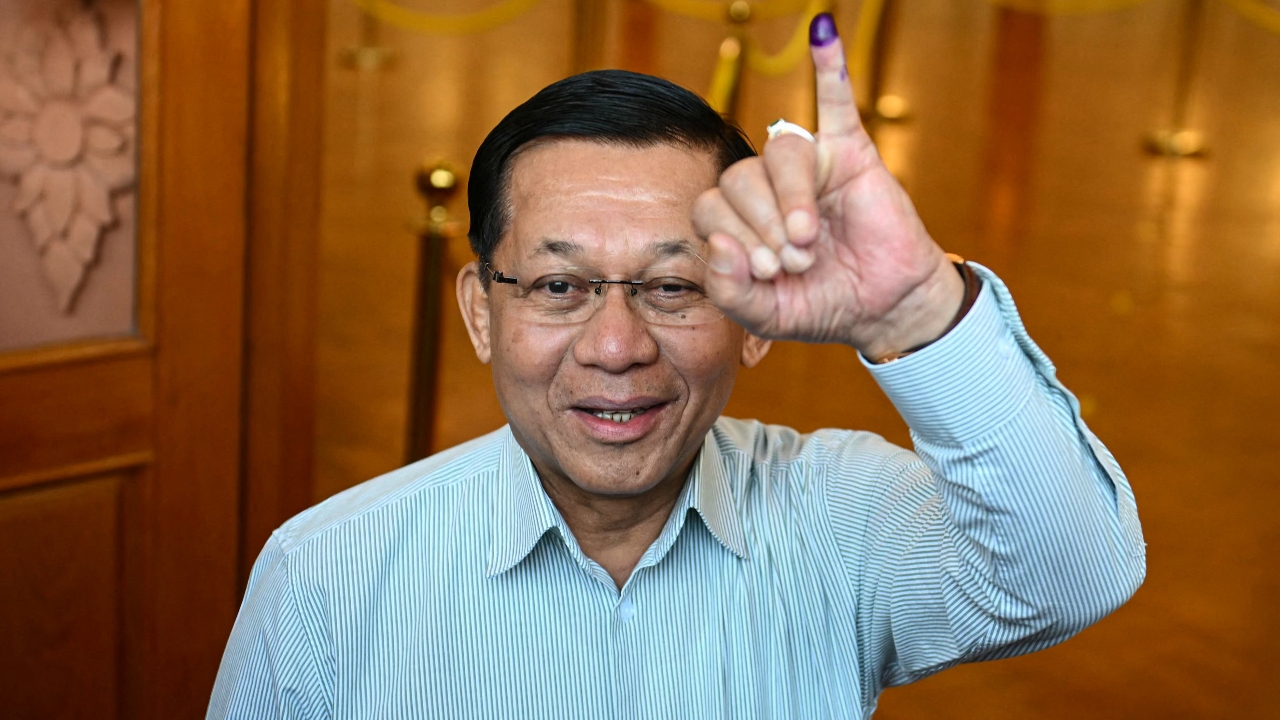
Myanmar's parliament is set to begin the process of selecting a new president on 30 March following an election fraught with doubts. Analysts clearly indicate that Senior General Min Aung Hlaing is preparing to officially assume the country's leadership but may have to resign as commander-in-chief to comply with constitutional law.
A Myanmar parliamentary official announced via state media on Friday that the country's presidential selection process will commence on 30 March. This is a crucial step following a heavily criticized general election, in which the military-backed party secured victory.
Under the established system, the parliament's Senate, House of Representatives, and military-appointed representatives each nominate one presidential candidate, totaling three nominees. After vetting their qualifications, parliament votes to select one as president, while the other two become vice presidents.
Analysts widely predict that Senior General Min Aung Hlaing, the leader of the 2021 coup, will win this vote and become Myanmar's next president.
Independent analyst Thin Zaw A from Thailand commented that Senior General Min Aung Hlaing will likely resign as commander-in-chief before 30 March because the 2008 constitution stipulates that active government officials cannot serve as president. Thus, he must change his status to civilian to qualify.
However, Thin Zaw A views this change not as a genuine transition to democracy but merely "a change in appearance from a military uniform dictatorship to a civilian uniform dictatorship," with the military and the Union Solidarity and Development Party (USDP) continuing to monopolize political power completely.
Myanmar has been mired in crisis and turmoil since the military coup in early 2021, which ousted the civilian government led by Nobel Peace Prize laureate Aung San Suu Kyi. The event triggered nationwide protests that escalated into armed conflict between the military and opposition groups, a struggle that persists today.