

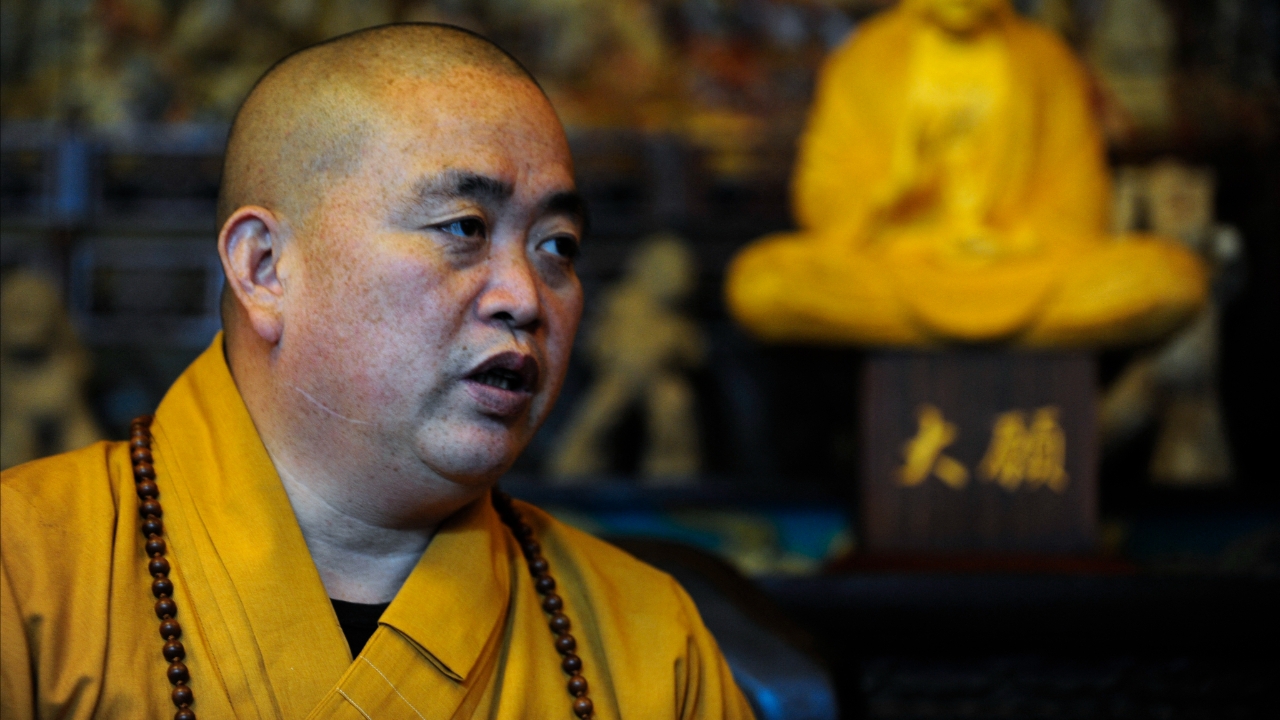
Chinese prosecutors have officially charged Shi Yongxin, the former abbot of the Shaolin Temple, with bribery, embezzlement, and several other offenses.
China's state-run Xinhua News Agency reported on 20 Mar 2026 that prosecutors have formally charged Shi Yongxin, the former abbot of the famous Shaolin Temple, after his arrest four months prior amid ongoing scandals involving financial and sexual misconduct.
Prosecutors in Xinxiang city, Henan province, have charged Shi Yongxin with embezzlement, misappropriating central funds for personal use, accepting bribes as a non-government official, and bribery.
The 60-year-old former abbot led the Shaolin Temple for over 25 years before being removed from his position in July last year.
That same month, the Buddhist Association of China revoked his monk status, accusing him of "severely damaging the reputation of the monastic community and the image of Buddhist monks." Additionally, companies linked to him had their business registrations revoked.
Following investigations, local authorities approved Shi Yongxin's arrest on multiple criminal charges in November. However, the exact amounts involved in the allegations have not been disclosed.
Besides charges of embezzlement and bribery, Shi is also accused of violating Buddhist principles by having "inappropriate relationships" with several women and fathering at least one child.
Shi, who holds a degree in business administration, transformed the Shaolin Temple into a global brand valued in the billions, with business interests spanning real estate and entertainment industries, earning him the nickname "CEO Monk."
Shi entered the Shaolin Temple in 1981 and became abbot in 1999 at just 34 years old. Despite criticism over commercializing the temple, he defended his approach as necessary to protect the institution, which has existed for over 1,500 years.
The Shaolin Temple itself is a UNESCO World Heritage site, renowned as the birthplace of Shaolin Kung Fu.
Shi's case has severely damaged the monastic community's reputation in China and triggered reforms. In December, the official Buddhist Association announced the establishment of a "regulatory body" for the first time to enhance oversight of monastic conduct.
In December 2025, Wang Huning, China's fourth-ranking official and chairman of the top political advisory body, urged the association to "govern religion comprehensively and strictly," while "raising legal awareness and guiding religious personnel to strictly comply with laws."
That same month, Liu Ning, Communist Party Secretary of Henan province, called for a "clear boundary" between temples and business during an unannounced inspection visit.
Liu told Shi Yinluo, the new abbot of the Shaolin Temple, that he hoped the new leadership would "return to the true teachings of the religion," properly manage the temple's relationship with Shaolin culture, and clarify the distinction between the Shaolin Temple, cultural tourism sites, and the Songshan Mountain scenic area.
Follow international news:https://www.thairath.co.th/news/foreign
Source:cna