

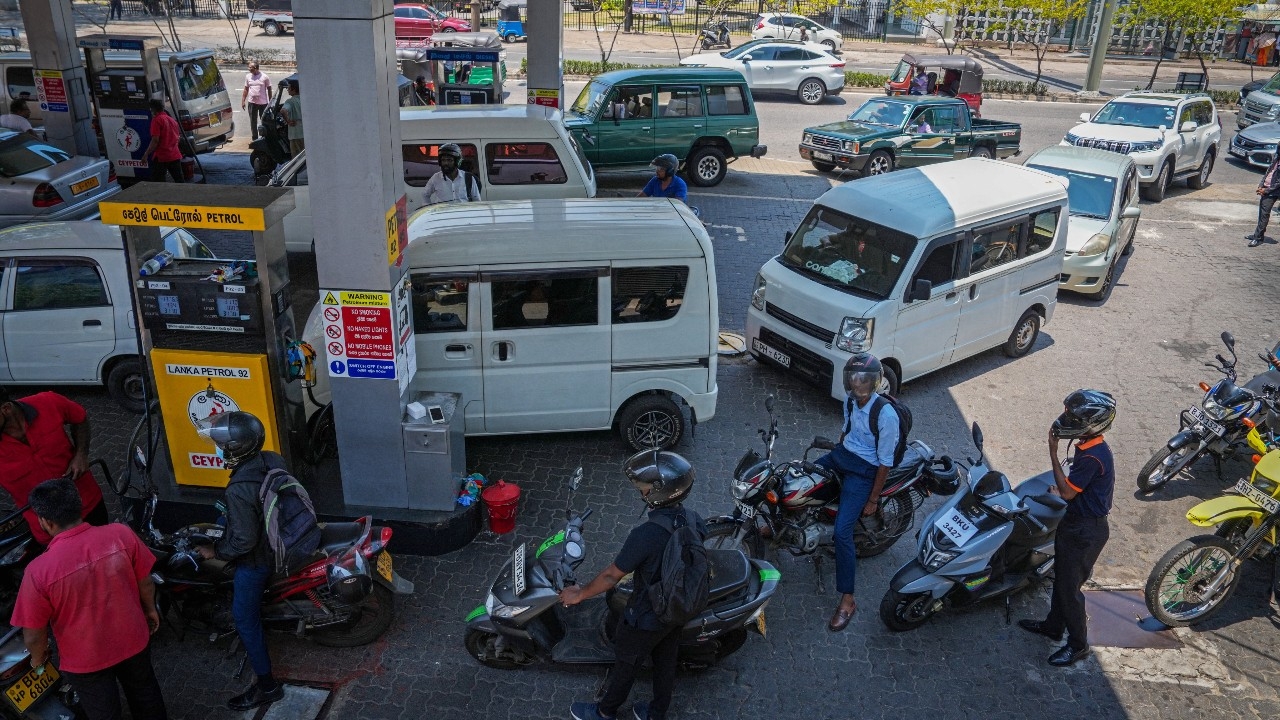
The Sri Lankan government announced a second major fuel price hike in two weeks, raising prices by another 25% after the prolonged Middle East war affected energy imports. The president mandated maximum energy-saving measures, including a 4-day workweek and reinstating work-from-home policies to help the economy avoid repeating the 2022 crisis.
The Sri Lankan government announced a 25% increase in retail fuel prices, marking the second hike within two weeks to cope with the escalating Middle East war. Gasoline prices rose to 398 rupees (about 41.95 baht) per liter, up from 317 rupees (around 33.42 baht). Diesel, vital for public transport, increased by 79 rupees to 382 rupees (roughly 40.27 baht) per liter.
Officials from Ceylon Petroleum Corporation stated that the goal of this steep price increase is to force a 15-20% reduction in domestic fuel consumption after the government had already implemented fuel rationing last week.
The crisis mainly stems from Iran's closure of the Hormuz Strait in retaliation against the ongoing war with the U.S. and Israel, now in its fourth week. This strait transports about 20% of the world's crude oil, directly impacting Sri Lanka, which imports 100% of its oil and coal needed for electricity production and economic activities.
President Anura Kumara Dissanayake issued urgent orders midweek to prepare for a potentially prolonged war. Measures include reducing the workweek to four days starting Wednesday, 18 Mar 2024 GMT+7, and encouraging employers to reinstate work-from-home arrangements where possible to cut fuel use in commuting.
The Sri Lankan government is deeply concerned that a prolonged Middle East war could undermine efforts to recover from the 2022 economic collapse, when the country defaulted on over 46 billion dollars of foreign debt due to foreign currency shortages, leading to a 2.9 billion dollar bailout from the International Monetary Fund (IMF) which continues to the present.
Source: AFP