

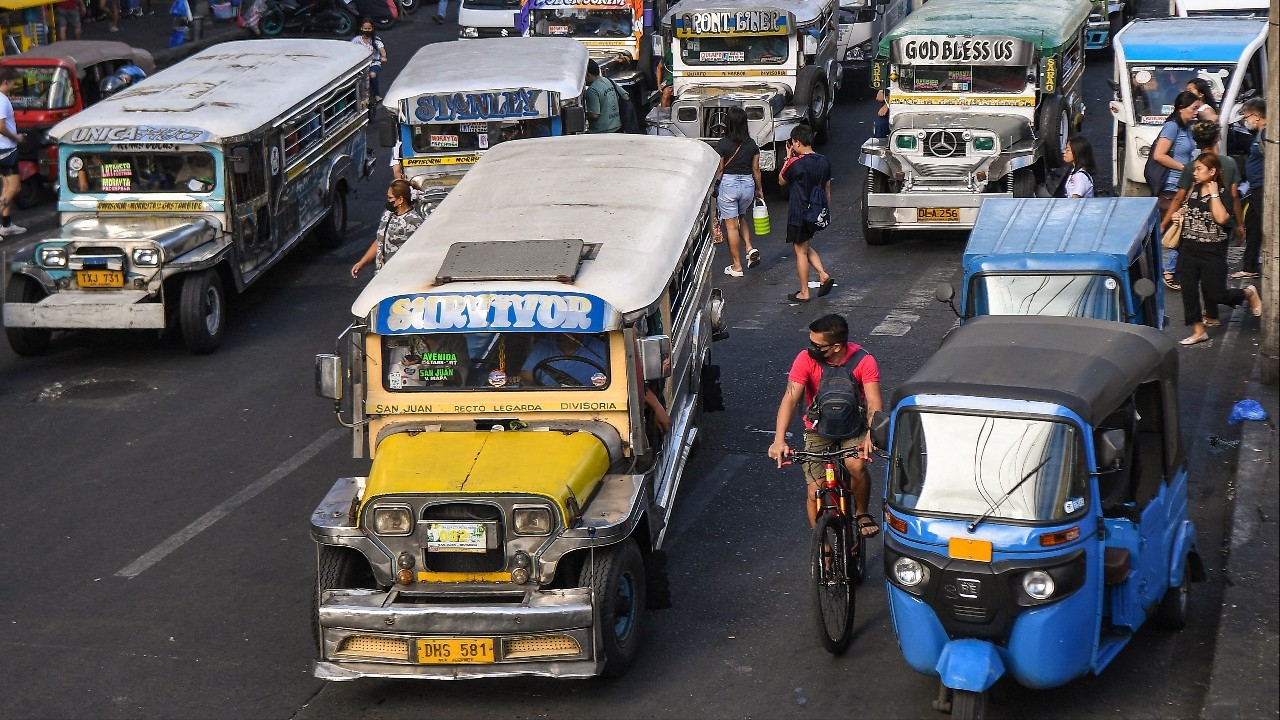
Motorists in the Philippines are queuing at gas stations ahead of another round of price increases caused by the war pushing global energy prices sharply higher, while jeepney drivers are struggling and may be forced to quit their jobs.
The conflict in the Middle East not only impacts ordinary motorists in the Philippines, who are alarmed by soaring fuel prices, but also heavily affects the country's public transportation system, especially jeepney drivers. These brightly colored public buses, known as the “Kings of the Road” in Manila, are a vital lifeline for low-income workers and provide livelihoods for tens of thousands of drivers.
Jeepney drivers, who operate diesel engines, report that rapidly rising fuel costs over recent weeks—at times nearly doubling—have severely eroded their earnings. Many say their net income has dropped by more than half, with some earning only a few hundred pesos per day.
For example, 34-year-old driver Sandy Rono, a father of three, revealed that if fuel prices continue to rise, he may have to quit this profession and find new employment, as he would be left with no income and only losses.
This energy crisis stems from tensions in the Middle East, which have disrupted key global oil shipping routes, tightening energy supply and causing international oil prices to spike rapidly.
Recent data shows diesel prices in the Philippines have been directly and significantly affected, while the weakening currency further increases import costs, placing the burden on consumers and transportation workers.
To mitigate the economic impact, the Philippine government has introduced several emergency measures including temporarily permitting lower-grade fuel use, providing fuel subsidies, and adjusting work practices such as promoting work-from-home arrangements or a four-day workweek to reduce overall energy consumption.
However, if fuel prices continue to rise, many jeepney drivers may have no choice but to quit, potentially triggering a chain reaction that disrupts public transportation and exacerbates the broader cost-of-living crisis.
Experts consider this crisis not merely an energy price issue but a grassroots economic emergency placing severe pressure on low-income workers, which could become a long-term challenge for many Asian countries if the conflict remains unresolved.
. Source:AP
Click to readInternational News