

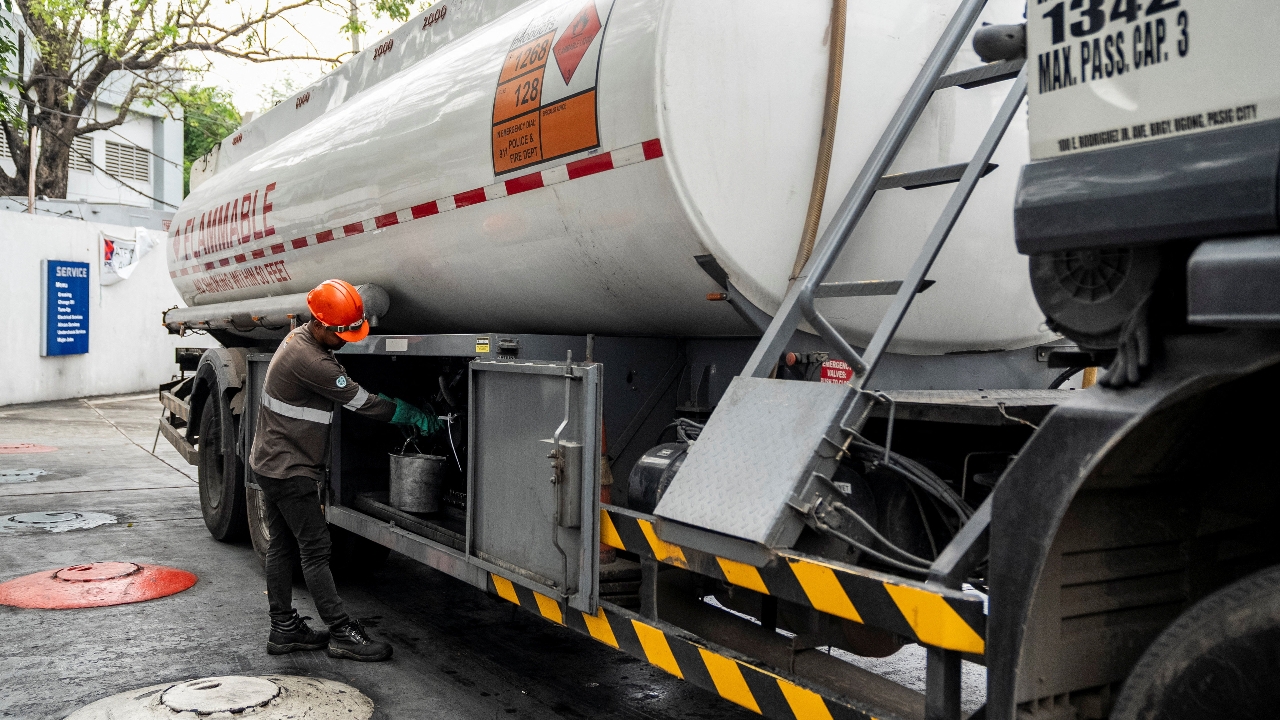
The Philippine government revealed it is in discussions with the United States to seek exemptions from sanctions, aiming to import oil from countries sanctioned by the U.S. to address energy issues caused by the ongoing conflict.
The Philippine government stated it is urgently negotiating with the United States to request relief from sanctions, hoping to enable oil imports from countries under U.S. sanctions to maintain the country’s energy stability amid the prolonged Middle East conflict.
This move follows the Philippines' declaration of a "national energy emergency" on 24 March to cope with volatility in the global energy market, especially oil supply issues directly impacted by tensions in the Middle East region.
Discussions with the U.S. seek sanctions exemptions to allow oil imports.
Jose Manuel Romualdez, the Philippine Ambassador to the U.S., revealed that Manila is currently working with the U.S. State Department to request a "waiver" or exemption to purchase oil from countries under U.S. sanctions. He noted that the process is ongoing with no definitive conclusion yet.
When asked whether the discussions include oil from Venezuela and Iran, the ambassador said all options are being considered, reflecting the urgent need to diversify energy sources.
As of 20 March, data showed the Philippines had oil reserves sufficient for about 45 days, prompting the government to urgently procure an additional 1 million barrels to bolster reserves and reduce shortage risks.
The declared energy emergency, effective for one year, also allows the government to quickly procure oil and petroleum products to ensure adequate supply for domestic demand.
Under energy pressures, the Philippine government has temporarily increased coal-fired electricity production to ease short-term impacts, despite environmental concerns.
Meanwhile, the Philippines is preparing to receive crude oil from Russia for the first time in five years after obtaining a 30-day waiver from the United States.
Additionally, the U.S. has issued a temporary 30-day waiver for purchasing Iranian oil currently in maritime transit, covering oil loaded onto ships before 20 March and requiring unloading by 19 April.
Analysts see this situation as highlighting the vulnerability of countries like the Philippines that depend on energy imports and face pressures from war, geopolitics, and volatile oil prices.
Requesting sanctions waivers from the U.S. is thus a key strategy to enable the Philippines to access more diverse energy sources and maintain economic stability during the crisis.
:Sourcechannelnewsasia
Click to read more about international news