

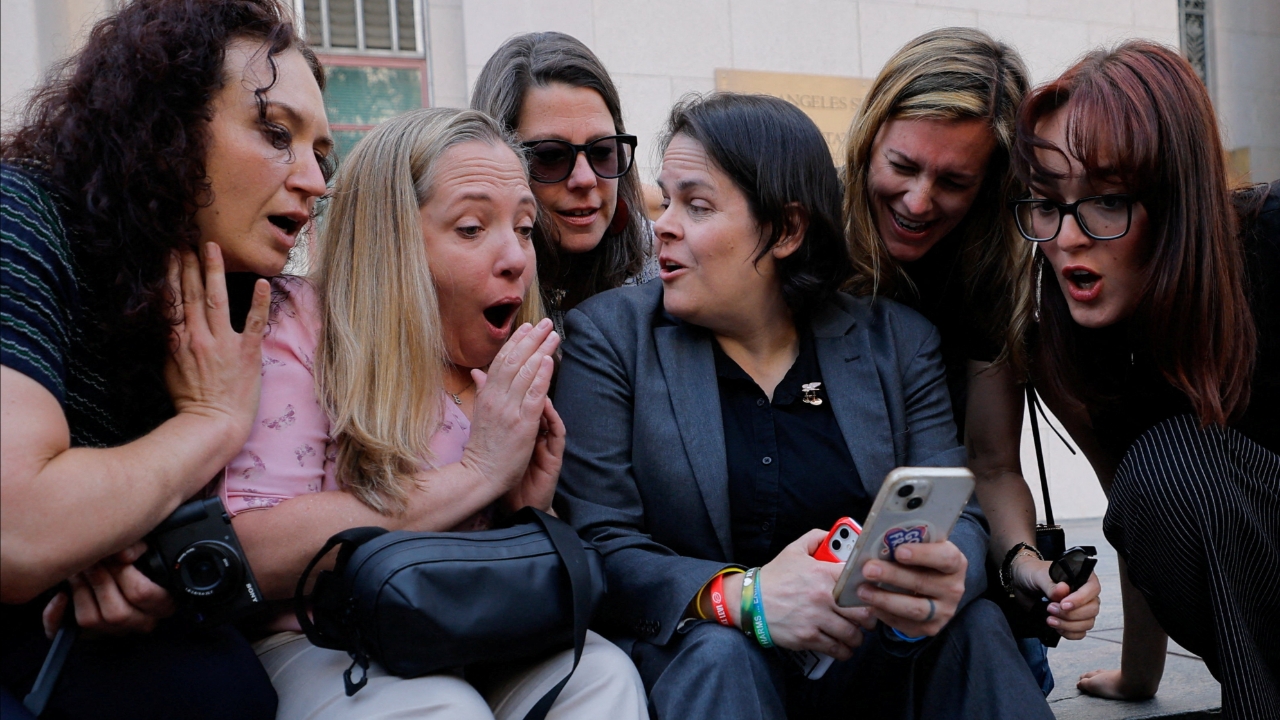
Meta and YouTube were found liable by a U.S. jury for causing a woman to become addicted to social media since childhood, in a historic case that could affect many other rulings.
On 25 Mar 2026 GMT+7, a Los Angeles jury delivered a groundbreaking verdict in favor of a young woman who sued Meta and YouTube, the world’s leading social media companies, over her childhood social media addiction.
The jury found that Meta (owner of Instagram, Facebook, and WhatsApp) and Google (owner of YouTube) deliberately designed their social media platforms to be addictive, harming the mental health of the 20-year-old woman, identified only as "Kayleigh."
The jury also awarded Kayleigh $3 million in damages (about 98 million baht). This verdict is likely to influence hundreds of similar ongoing social media addiction cases in U.S. courts.
Meta and Google each issued statements rejecting the verdict and announcing they will appeal. Meta said, "Teen mental health is very complex and cannot be linked to a single app."
Meta added, "We will vigorously defend ourselves because each case is different, and we remain confident in our track record of protecting youth online."
A Google spokesperson said, "This case reflects a misunderstanding of YouTube, which is a responsibly built streaming platform, not a social media site."
The jury assigned 70% of the damages to Meta and 30% to YouTube, meaning Meta will pay the majority of the compensation to Kayleigh.
Additionally, the court will consider "punitive damages," which under state law could reach up to $30 million (approximately 982 million baht).
This Los Angeles verdict came just one day after a jury in New Mexico found Meta liable for endangering children by exposing them to sexual content and threats from sexual predators on its platform.
Mike Proulx, research director at Forrester, said these consecutive rulings highlight a "breaking point" between social media companies and the public. "Negative feelings toward social media have been building for years and have now erupted," he said.
Although Google, as owner of YouTube, was also a defendant, the trial mainly focused on Instagram and Meta.
Snap and TikTok were initially defendants but reached confidential settlements with Kayleigh before the trial began.

Kayleigh said she started using Instagram at age 9 and YouTube at age 6, with no attempts to restrict her access despite age limits.
"I stopped interacting with my family because I spent all my time on social media," Kayleigh testified.
She said she began experiencing anxiety and depression at age 10, conditions later formally diagnosed by therapists. She also became obsessed with her appearance, using Instagram filters to alter her face—such as making her nose smaller and eyes larger—almost immediately after starting the platform as a child.
Kayleigh was later diagnosed with body dysmorphia, a condition causing excessive concern about appearance and a distorted self-image.
Kayleigh’s lawyers accused Meta and YouTube of creating an "addiction machine" and failing to protect children from accessing their platforms. They criticized Instagram features like the "infinite scroll" as intentionally designed to foster addiction.
Her lawyers further stated that Meta’s growth strategy targeted attracting young users, citing testimony from experts and former Meta executives. The company sought younger users because they tend to remain "hooked" on the platform longer term.
When Kayleigh’s lawyers told Instagram head Adam Mosseri that her peak daily use reached 16 hours, Mosseri denied this proved addiction. Instead, he said it was simply "concerning" that teens spent nearly the whole day on Instagram.
Kayleigh’s lawyers said on Wednesday that the jury’s verdict "sends a clear message that no company is above accountability when it comes to our children."
Follow international news:https://www.thairath.co.th/news/foreign
Source:bbc