

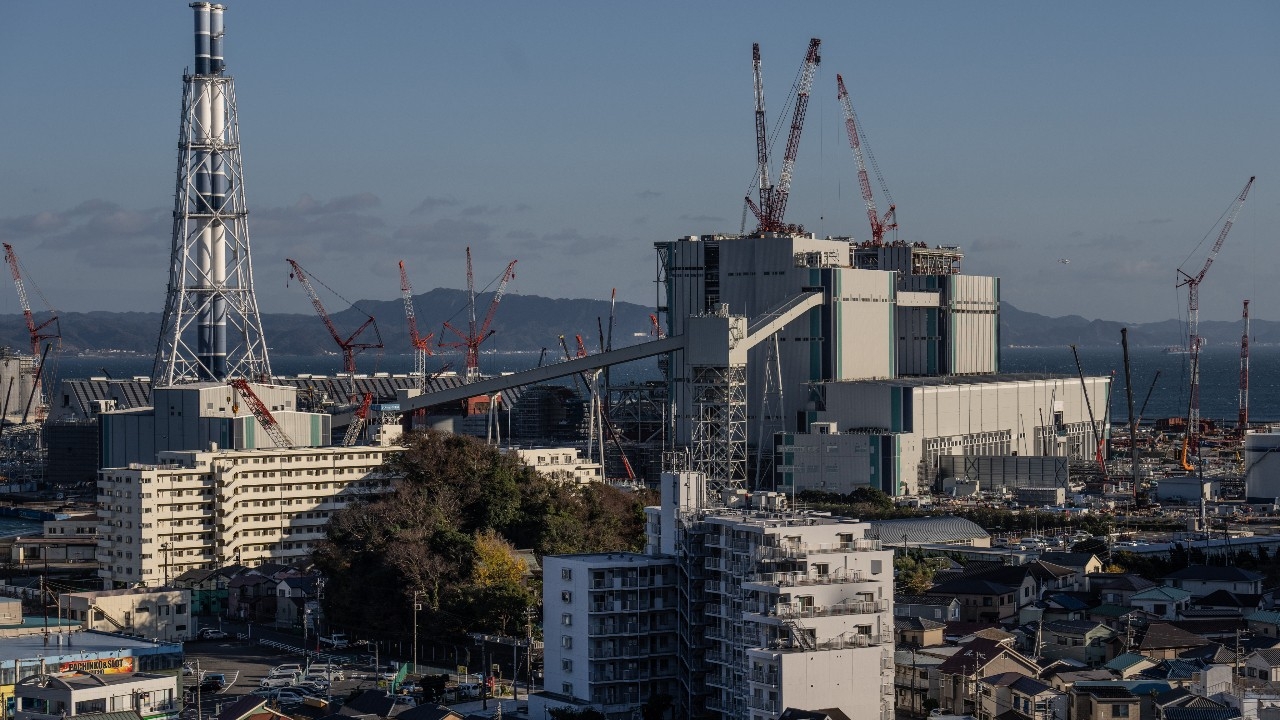
The Japanese government is preparing to temporarily relax restrictions on coal-fired power plants to support energy security after the Middle East war disrupted oil and gas transport routes, causing energy prices to soar across Asia.
Japanese government officials revealed plans to consider temporarily lifting operational limits on coal-fired power plants to alleviate the energy shortage crisis triggered by the Middle East war.
Takahide Soeda, an official from Japan's Ministry of Industry, confirmed to AFP that the ministry plans to propose this measure to an expert panel the same day. Previously, operators of older coal plants with high carbon dioxide emissions were limited to no more than 50% capacity. The new plan would allow full 100% operation for one year starting from the new fiscal year in April.
This move aligns with several Asian countries increasingly relying on coal after Iran partially closed the Strait of Hormuz, a key energy shipping route, severely impacting gas and oil imports.
South Korea plans to lift coal power generation caps and accelerate nuclear plant operations, while the Philippines announced increased coal power output to prevent electricity prices from rising too sharply.
Currently, Japan depends on thermal power plants for 70% of its electricity, with coal as the main fuel. Although Japan imports most crude oil from the Middle East, nearly 80% of its coal imports come from Australia and Indonesia, which currently provide a more stable supply.
Additionally, Japanese authorities have begun releasing strategic oil reserves to address challenges in oil imports, as over 90% of Japan’s usual oil imports rely solely on Middle Eastern sources.
Source: AFP