

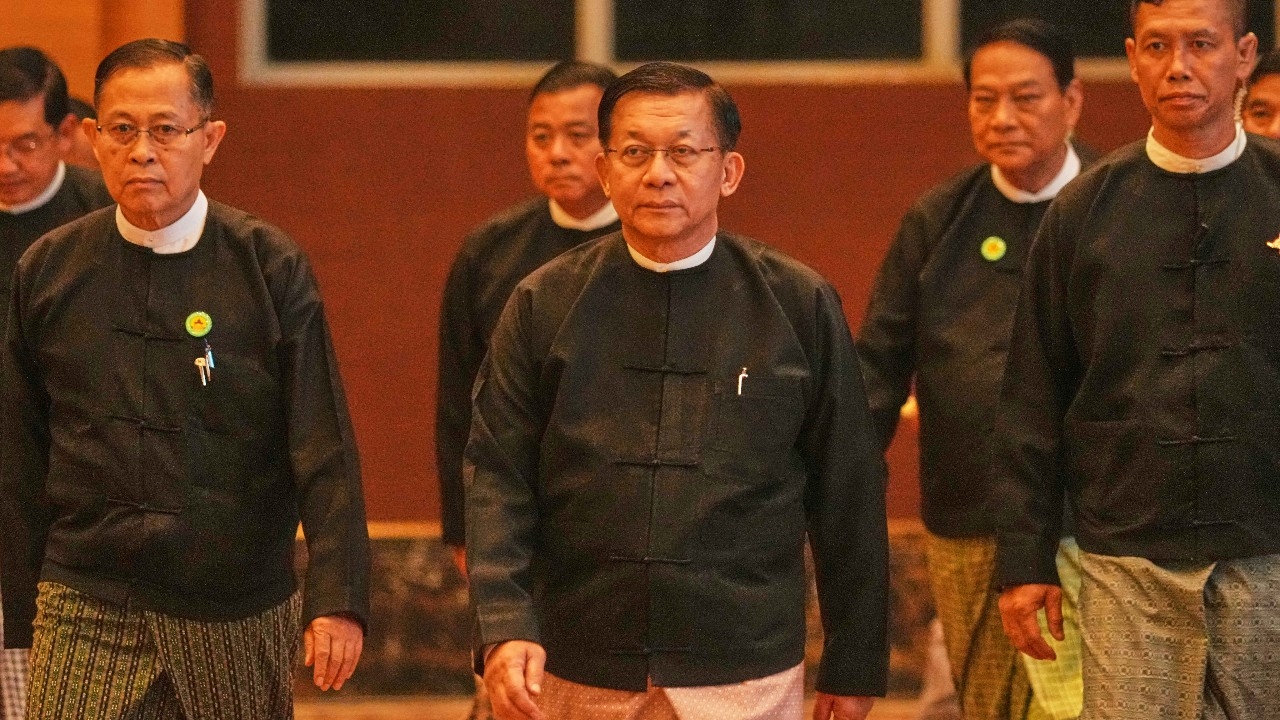
Myanmar's House of Representatives has nominated Senior General Min Aung Hlaing as Vice President, with plans for him to ascend to full presidency in a vote this Tuesday. Meanwhile, the military has reshuffled leadership by appointing General Ye Win Oo, a former intelligence chief and close ally, as the new Commander-in-Chief.
Under military-controlled Myanmar's House of Representatives, Senior General Min Aung Hlaing, the dictator, was unanimously selected as Vice President, marking a crucial step toward realizing his ambition to officially become an "elected president."
According to the 2008 military-drafted constitution, the presidential election process involves representatives from three groups: the House of Representatives, the Senate, and military appointees. Each group nominates one Vice President candidate, and the combined parliament then votes for the candidate with the highest votes to become President; the remaining two serve as the first and second Vice Presidents. This process is expected to conclude on Tuesday.
To prepare for his political role, Senior General Min Aung Hlaing must resign from his military post. On the same day, a key military handover ceremony took place in Naypyidaw, where General Ye Win Oo, former intelligence chief and Min Aung Hlaing's closest confidant, was appointed Commander-in-Chief, replacing Min Aung Hlaing.
Meanwhile, Lieutenant General Kyaw Swar Lin was appointed Deputy Commander-in-Chief, and Lieutenant General Ko Ko Oo was named Chief of Staff overseeing the army, navy, and air force.
General Ye Win Oo is closely watched as he has been Min Aung Hlaing's "eyes and ears," controlling intelligence operations, surveillance of opposition groups, and managing an interrogation center reported to have committed brutal torture against dissenters.
Critics view Min Aung Hlaing's transition from coup leader to president as merely a "facelift" to maintain power under a civilian government guise, following his 2021 coup that ousted Aung San Suu Kyi's government and sparked a prolonged civil war. Moreover, the early-year elections were condemned internationally as a staged effort to secure military-backed victory.
. AFP /The Irrawaddy