

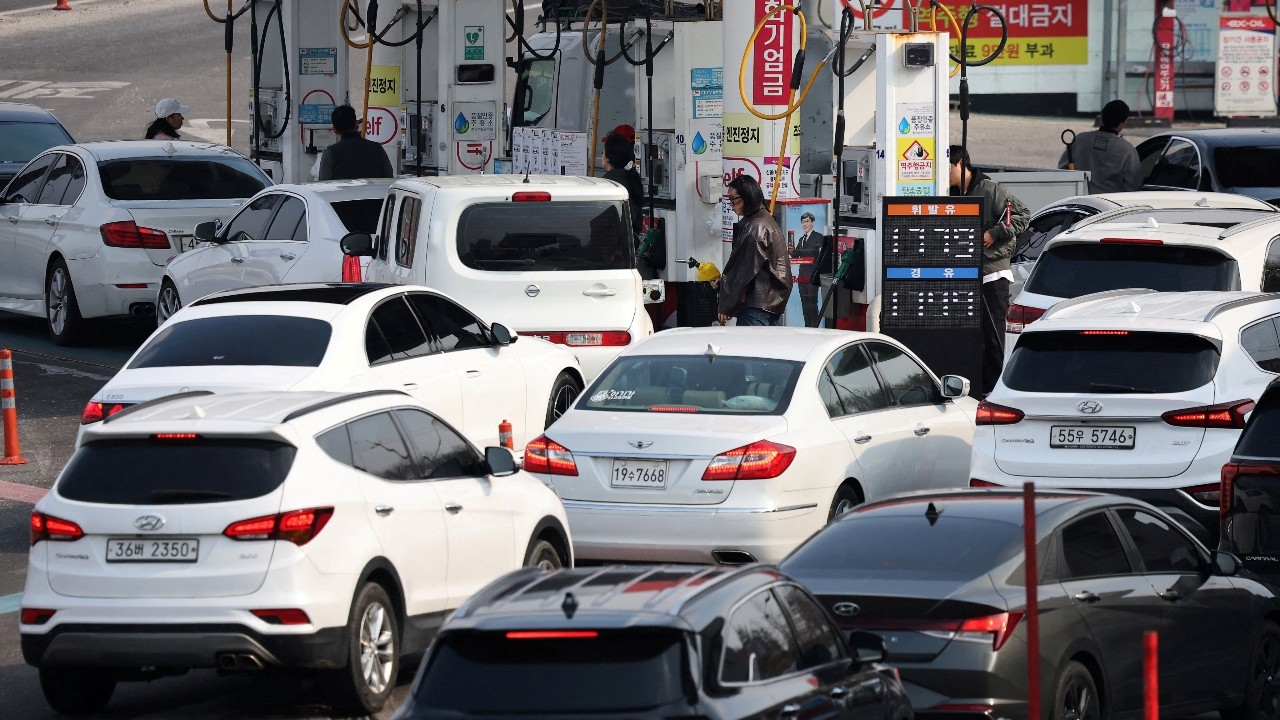
South Korea's Ministry of Finance revealed that the government is considering extending the "vehicle use rotation" measure to the private sector and the general public if global crude oil prices rise to between 120 and 130 U.S. dollars per barrel amid energy pressures from Middle East conflicts.
Finance Minister Koo Yun-chul stated that the government might have to enforce a "five-day vehicle rotation system" for the general public if crude oil prices reach 120-130 dollars per barrel, which would raise the energy security crisis alert to "warning" or level 3 out of 4, up from the current level 2.
Koo said, "If the situation in the Middle East worsens, we will need to raise the crisis alert level, and at that point, serious energy consumption controls will be necessary."
The "vehicle use rotation" measure limits each vehicle to one day off every five working days, determined by the last digit of the license plate. It is currently enforced for government agencies and voluntarily requested from the private sector, but if oil prices hit the specified threshold, it will become mandatory nationwide.
Besides controlling vehicle use, the government is preparing relief measures such as an additional 25 trillion won budget to support SMEs and vulnerable households affected by rising oil prices, as well as considering reducing fuel excise taxes to ease public expenses.
Currently, South Korea imports up to 70% of its crude oil from the Middle East, making it highly vulnerable to supply disruptions. Major companies like Samsung Electronics and SK Group have begun supporting the policy by encouraging employees to reduce private car use, while politicians and senior officials have posted images on social media showing themselves using public transport and bicycles as examples for the public.
However, the Ministry of Finance added that no final decision has been made regarding enforcement in the private sector, and officials will carefully assess energy supply conditions and broader economic factors before taking any measures.