

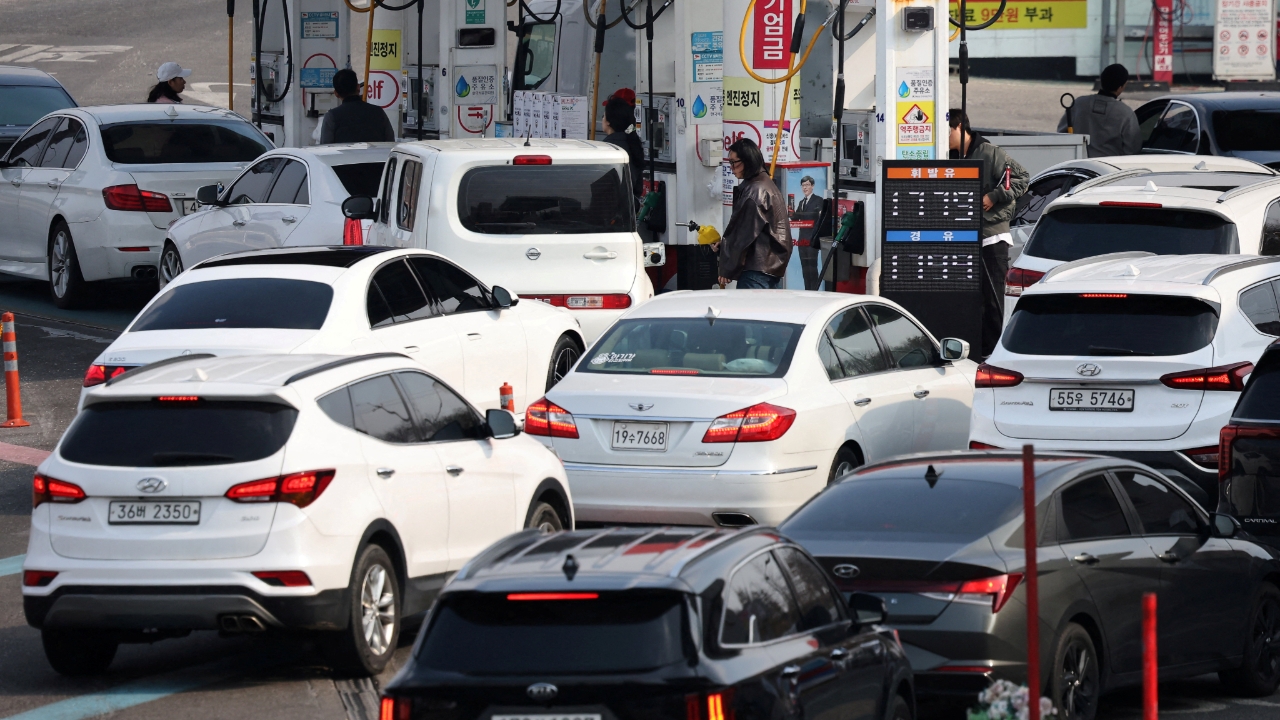
Several countries are beginning to adopt decisive measures to address their national energy crises after oil prices have surged continuously due to the war situation in the Middle East, and
since the conflict between the US, Israel, and Iran erupted one month ago, causing global oil prices to rise steadily, many nations are implementing strict actions to confront their increasingly severe domestic energy crises.
JPMorgan warned in a report last week that the Asian region will be the first to be affected, and this impact will spread broadly to Western countries.
Poland is the latest country following South Korea , China , Croatia and Hungary in announcing measures to set caps on oil prices.
Meanwhile, France's Minister of Finance announced on Friday that the government is implementing targeted oil price subsidies for the transportation, agriculture, and fishing sectors, along with policies to assist low-income households with energy costs.
In Jordan, the Prime Minister announced several energy-saving measures on Monday (30 Mar 2026), such as banning the use of air conditioners and heaters in government agencies and public institutions, prohibiting official vehicle use except for official duties, and suspending all official travel by government delegations.
Meanwhile, Italy , Australia and Ireland have recently implemented measures to reduce taxes on gasoline and diesel in an effort to keep prices lower.
The United Kingdom has allocated a budget of £50 million (approximately 1.124 billion baht) to assist low-income households using kerosene heaters, as this group is not covered under the existing energy price cap measures that protect most households in England.
In Japan, the government began releasing strategic oil reserves equivalent to 30 days of consumption last week and approved subsidies to try to maintain the average oil price at about 170 yen (approximately 34.9 baht) per liter.
Meanwhile, the Philippines became the first country to declare a national emergency due to the energy crisis last week, implementing oil price subsidies and other measures to reduce transportation costs, as well as taking legal steps to curb excessive profiteering and stockpiling.
In Egypt, the Prime Minister announced various temporary measures last Saturday to reduce energy consumption, including allowing some employees to work remotely, delaying high-fuel government projects, and ordering shops to close earlier. Currently, shops and cafes must close at 9 p.m. local time, marking a major change for Cairo, where businesses usually stay open late.
Follow international news at:https://www.thairath.co.th/news/foreign
Source:cnn