

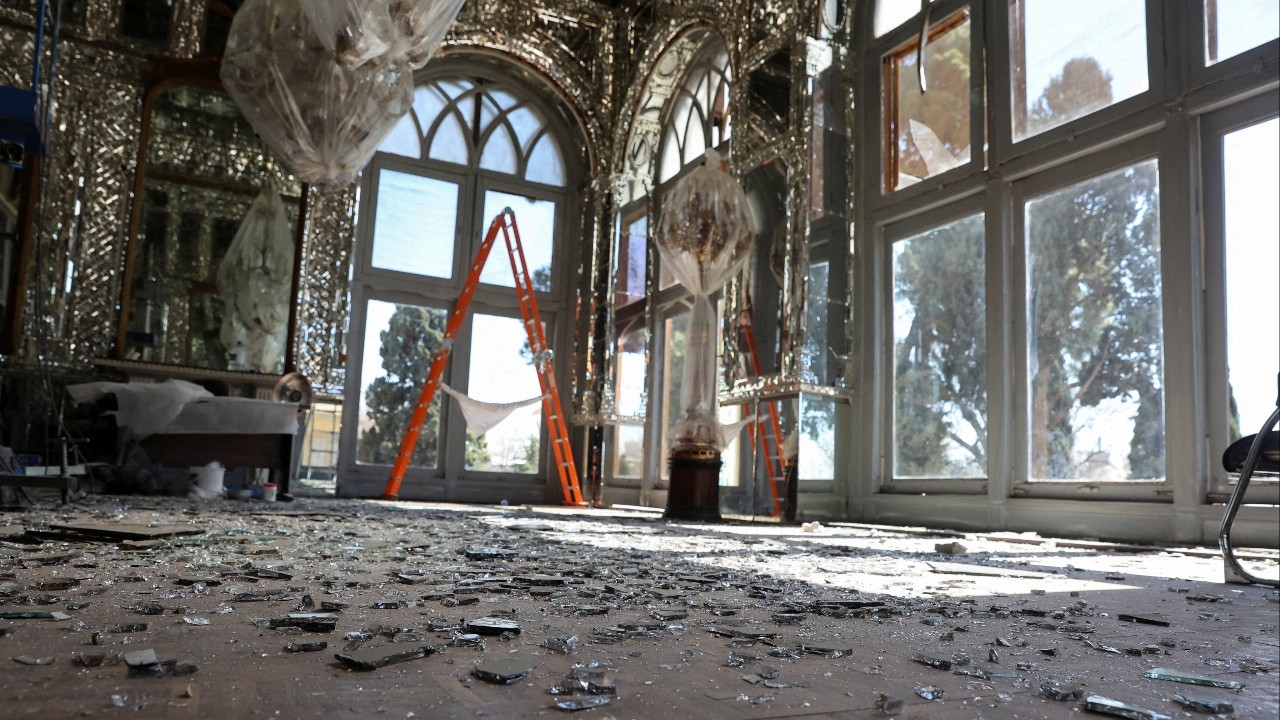
UNESCO revealed that military attacks by the United States and Israel in Iran have caused damage to at least 132 cultural and historical heritage sites, with concerns that the destruction may spread further.
Hassan Fartousi, Secretary-General of Iran's UNESCO National Commission, stated that the damage occurred rapidly and extensively, prompting Iran to request the addition of heritage sites that require special protection.
UNESCO confirmed damage to several key sites, including Golestan Palace, a luxurious Qajar dynasty palace in Tehran, where damage was found to stained glass ceilings, mosaic walls, and some structural elements.
This also includes Chehel Sotoun Palace, a 17th-century palace, and the Jameh Mosque of Isfahan, the country’s oldest ancient mosque.
Additionally, damage was reported near the Korramabad Valley, an important archaeological site with evidence of human habitation dating back approximately 63,000 years BCE.

Iranian officials said this damage is priceless and cannot be restored to its original state, accusing the attacks of being deliberate since both the US and Israel possess technology capable of precise targeting.
UNESCO clarified that it had provided all parties with the coordinates of heritage sites in advance, urging caution during military operations.
The impact on heritage sites is not limited to Iran but has spread to other countries in the Middle East, with UNESCO monitoring damage across multiple areas.

Source: AP
. Read related news aboutInternational news