

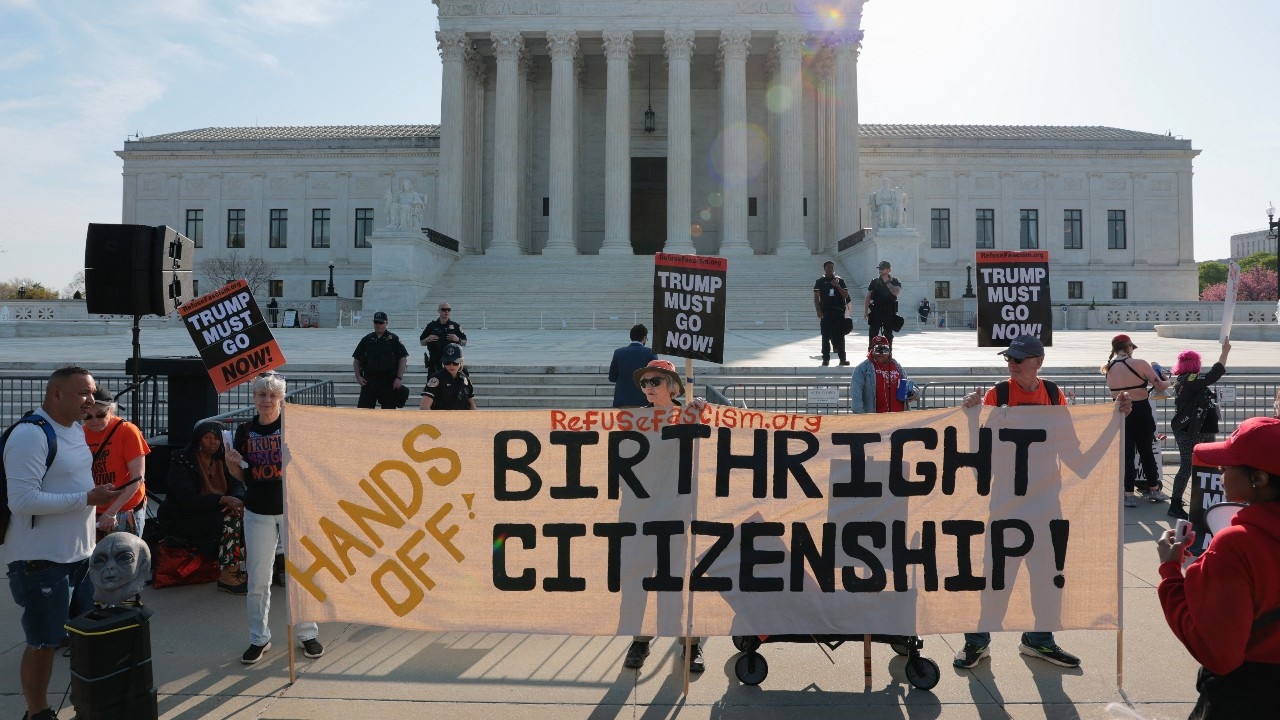
The U.S. Supreme Court expressed disagreement with President Donald Trump's executive order that seeks to restrict birthright citizenship for children born in the United States. The court noted that such a move could undermine a legal precedent established over a century ago. Trump personally attended the hearing, aiming to push forward his strict immigration policies.
The justices of the U.S. Supreme Court reviewed statements in a case concerning the administration led by President Donald Trump, which attempted to issue an executive order ending automatic U.S. citizenship for children of undocumented immigrants and temporary visitors.
During more than two hours of questioning, the majority of justices appeared unconvinced by the government's arguments. Chief Justice John Roberts, a pivotal swing vote, questioned the president’s authority to strip citizenship from such a large group of children.
Meanwhile, liberal Justice Elena Kagan stated that the government is trying to overturn a longstanding legal tradition inherited from English common law and clearly enshrined in the 14th Amendment of the U.S. Constitution.
The government's representatives argued that the constitutional provision granting citizenship to those "born in the United States and subject to its jurisdiction" should apply only to those loyal to the United States, excluding children of undocumented immigrants who remain connected to their countries of origin.
However, opponents and several justices cited the historic 1898 Supreme Court decision in United States v. Wong Kim Ark, which affirmed citizenship rights for children of Chinese immigrants born in the U.S. If the court follows this precedent, Trump is likely to lose the case.
President Trump’s personal attendance at the hearing is a rare occurrence and seen as an attempt to influence the court in a high-stakes case affecting his popularity and core policies. After the hearing, Trump harshly criticized the current system on social media, claiming the U.S. is "the only country in the world dumb enough to allow birthright citizenship," a statement that is factually inaccurate.
Legal experts anticipate that the court may issue a narrow ruling focusing on the 1952 Congressional statute rather than reinterpret the Constitution entirely, aiming to avoid a broader constitutional dispute.
If Trump loses this case, it would mark his second consecutive defeat in the Supreme Court following the blocking of his tariff wall policy, significantly limiting his administration’s expansion of executive power. The court is expected to issue a full ruling by June.
,BBC