

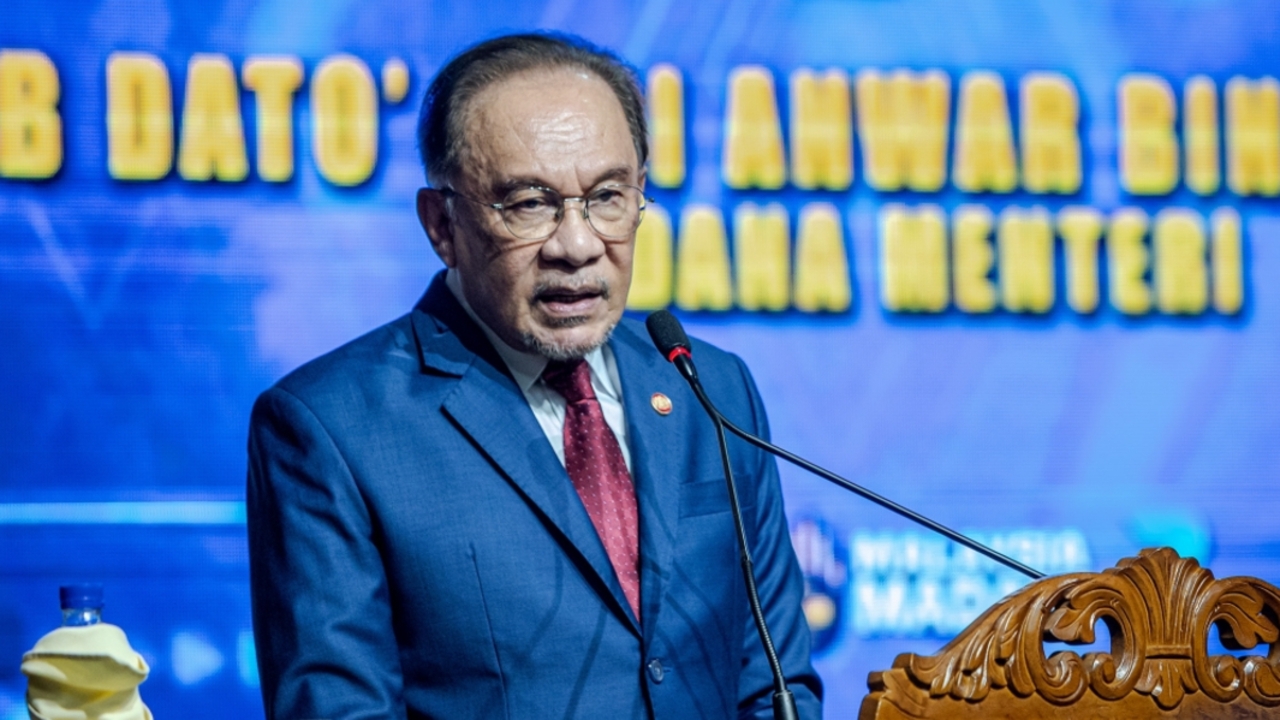
Prime Minister Anwar Ibrahim announced urgent measures requiring government officials and state enterprise employees to work from home starting 15 April to conserve fuel, following a surge in oil prices caused by the Middle East conflict and its impact on shipping through the Strait of Hormuz. He also ordered the fuel subsidy quota to be cut to 200 liters per month.
Malaysian Prime Minister Anwar Ibrahim issued a special statement late Wednesday night, announcing a policy for employees under ministries, government agencies, public organizations, and state enterprises to begin working remotely or "Work From Home" starting 15 April to mitigate the effects of the global energy crisis.
Prime Minister Anwar stated that the main objective of this measure is to reduce domestic fuel consumption and ensure that the nation's energy reserves are sufficient for sustainable use. Previously, he had advised the private sector to consider remote work policies as well, since the government bears a monthly subsidy cost of 4 billion ringgit (approximately 32.5 billion baht) to support fuel prices—a burden too heavy to sustain long term.
Following escalating conflicts in the Middle East since the US and Israel's attacks on Iran in late February, which led to the closure of the Strait of Hormuz—a critical oil shipping route—global crude oil prices have continuously risen. In response, the Malaysian government decided to reduce the fuel subsidy quota, enabling citizens to pay only 1.99 ringgit (about 16.18 baht) per liter for unleaded petrol. The subsidy quota will be cut from 300 liters to 200 liters per month, while fuel prices outside the subsidy scheme will be aligned with global market rates.
Foreign Minister Mohamad Hassan revealed that oil tankers from leading companies such as Petronas and Sapura Energy are awaiting safety clearance to transit the Strait of Hormuz. Meanwhile, Transport Minister Anthony Loke expressed confidence that Iran would allow Malaysian vessels to pass without imposing special fees, citing the strong diplomatic ties between the two countries.
Prime Minister Anwar also expressed gratitude to Iranian President Masoud Pezeshkian for permitting Malaysian oil tankers and their crews to return home safely. He concluded by noting that discussions with several world leaders, including Indonesian President Joko Widodo (Prabowo Subianto is a different political figure, so this is an ambiguity likely meaning Joko Widodo), suggest that the crisis may worsen before recovery begins and that the situation may last longer than initially anticipated.