

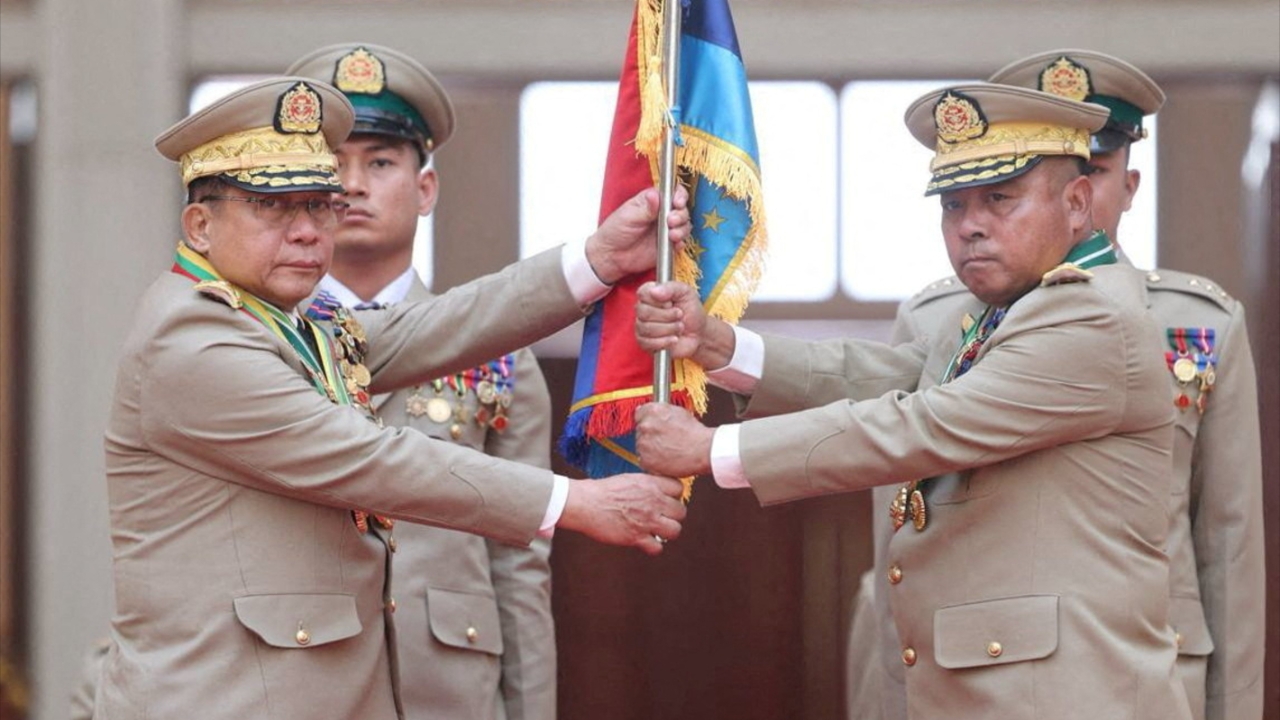
Senior General Min Aung Hlaing has officially assumed the presidency of Myanmar after winning a parliamentary vote, amid Western criticism that this is merely a continuation of authoritarian rule disguised as democracy.
Senior General Min Aung Hlaing, the leader of Myanmar's military coup, was elected by parliament to serve as president. AFP reported that he secured at least 293 votes out of 584 total, surpassing the required majority.
This victory occurred in a parliament dominated by the Union Solidarity and Development Party (USDP), backed by the military, along with the military's appointed parliamentary seats. His rise to this position formalizes his power after leading the 2021 coup against Aung San Suu Kyi’s government.
Analysts see the presidency as Min Aung Hlaing’s long-standing goal to gain international legitimacy. Previously, he strategically appointed General Yee Win Oo, former intelligence chief, as the new commander-in-chief to control the military and protect the interests of the armed forces that have ruled the country for over five decades.
Independent analyst Aung Jo So said, "He has long harbored ambitions to move from military commander to president, and it seems his dream has become reality today."
While parliamentary politics appear smooth, the battlefield situation is quite different. This week, anti-military groups, including former members of Suu Kyi’s party and ethnic armed forces, announced the formation of a new coalition called the "National Unity Government’s Federal Democratic Charter."
The opposition declared their intent: "Our strategic vision and objectives are to completely uproot all forms of dictatorship, including military dictatorship, to create a new political landscape together."
Analysts warn that the opposition may face increased pressure from harsh military crackdowns and from neighboring countries possibly strengthening ties with Min Aung Hlaing’s new government for economic stability.
Another analyst, Sai Ji Zin So, noted that amid global energy and oil shortages and economic downturns, maintaining unity and confidence among opposition groups will be challenging, which could affect long-term cooperation in armed resistance.
,ReutersAFP