

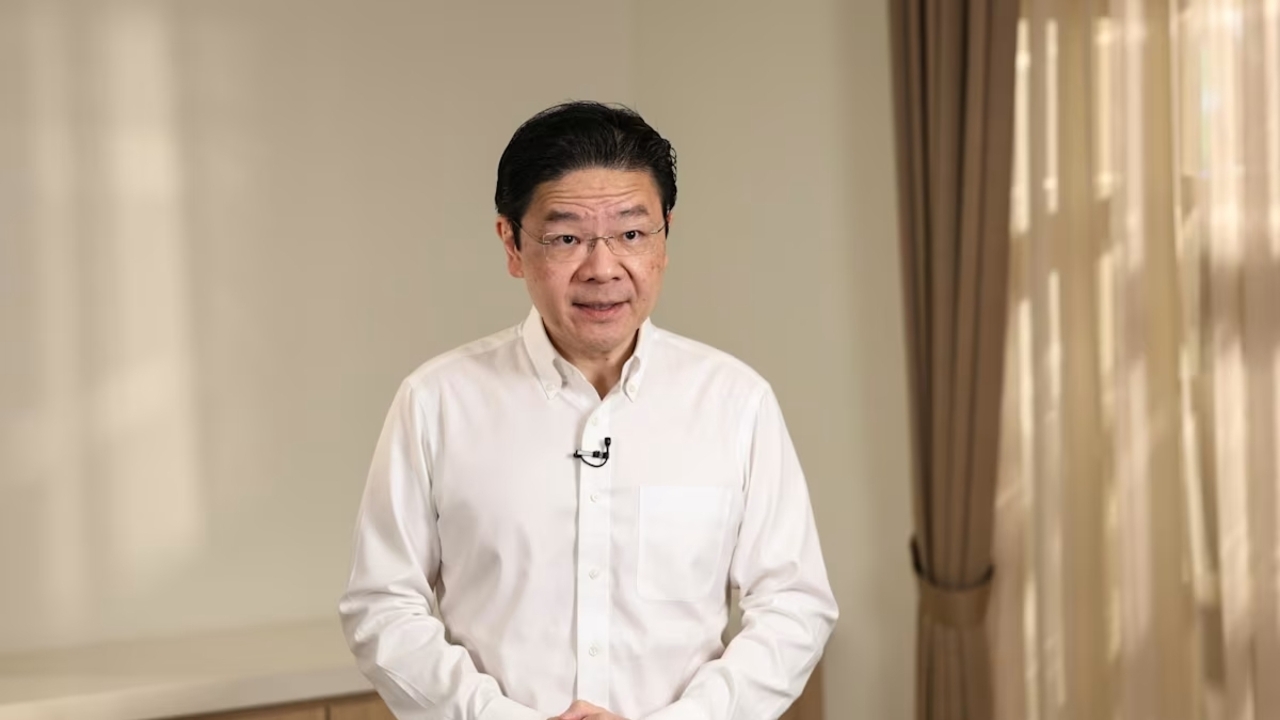
Mr. Lawrence Wong Singapore's Prime Minister has warned citizens to prepare for potentially severe impacts from the Middle East conflict that could lead to an energy crisis. The situation is unpredictable. He convened meetings to find ways to respond and outlined a three-point plan, emphasizing national unity in conserving energy to collectively overcome this uncertainty.
Lawrence Wong, Singapore's Prime Minister, released a video statement to the Singaporean public explaining the Middle East conflict situation, warning of the "severe impacts" from an energy crisis, and convening meetings to plan responses with the following key points.
"Dear fellow Singaporeans,
We are all deeply concerned about the ongoing conflict in the Middle East. Its impacts are severe, affecting not only the region but the entire world.
This conflict is escalating on multiple fronts. On one hand, the war itself involves increasingly intense military fighting with continuous attacks and counterattacks, causing widespread loss of life and property. On the other hand, there is a struggle for control over critical shipping routes, especially the Strait of Hormuz.
Currently, Iran has significantly obstructed maritime passage through this strait, leading to a sharp decline in overall shipping traffic. Deliveries of oil and liquefied natural gas (LNG) through this channel have greatly decreased. Other essential consumer goods, including fertilizers and helium, are also affected, causing broad negative impacts and threatening global food production.
We are already feeling these effects. Oil prices have risen over 60% since the war began. Supply chains are under strain, and countries worldwide are impacted, especially in Asia, which faces high risks because most energy passing through the Strait of Hormuz is destined for our region, including Singapore.
Despite recent diplomatic efforts, major differences remain between the conflicting parties. The United States has indicated plans to end the war soon, though no agreements have been reached. If no deal occurs, the U.S. is prepared to intensify military attacks before withdrawing.
We hope these negotiations succeed, but even if a ceasefire is declared tomorrow, we must anticipate ongoing impacts due to damage to energy production and distribution infrastructure, which may take months to fully restore. Therefore, oil prices are expected to remain high for some time.
Meanwhile, we must prepare for a possible escalation in the coming days or weeks. There remains a risk of additional attacks and the possibility that other groups, such as the Iranian-backed Houthi rebels, may join the fighting, creating new battlefronts and broadening the conflict.
In the long term, even if the U.S. ends its military mission, the geopolitical situation in the Middle East will inevitably be negatively affected. We are entering a period of increased uncertainty and instability that will broadly impact regional security and the global energy flow. In such an environment, the risk of disruptions is much higher, and worryingly, the Strait of Hormuz and other major regional shipping routes, like the Red Sea, could be closed for extended periods.
Industries worldwide have begun using fuel reserves and seeking alternative energy sources, but these are only temporary measures and cannot fully compensate for prolonged shortages.
If key energy sources and transport routes in the Middle East remain restricted for a long time, the consequences will be severe. It will not just be about higher prices; we could face a global energy crisis that disrupts daily life and production activities, putting heavy pressure on the global economy. Output could fall rapidly while prices continue rising—a condition economists call stagflation—which, if it occurs, would cause deep and difficult-to-control damage.
To coordinate the national response, I have established the Homefront Crisis Ministerial Committee, chaired by Coordinating Minister for National Security K. Shanmugam, with Deputy Prime Minister Heng Swee Keat as advisor. The team has begun work updating existing emergency plans and developing new ones to address this unprecedented situation.
First, we are proactively strengthening the energy system and supply chains. Currently, we can manage initial disruptions. Our refineries and chemical companies are adjusting by reducing production capacity and sourcing crude oil and raw materials from sources beyond the Middle East. Our LNG importers are securing alternative energy supplies from producers worldwide.
For long-term resilience, we are working with trusted partners, especially Australia, a major LNG supplier providing over a third of our usage, and we will deepen this cooperation. With New Zealand, we are collaborating closely to ensure essential goods and food transport routes remain open even during crises. These partners are vital to our long-term security. I recently spoke with both countries' prime ministers to strengthen coordination and ensure these agreements continue reliably.
Second, we will alleviate direct impacts on households and businesses. Assistance measures announced in this year’s budget are underway, including additional U-Save rebates to help ease higher electricity bills.
Given soaring oil prices and uncertain trends, the government will take further action. We will intensify existing measures and accelerate some assistance to provide urgent relief. Additionally, targeted support will be given to sectors more severely affected, with ministers providing further details in Parliament next week.
Third and most importantly, we must stand united. At times like these, our strength lies in unity. Government support is crucial, but so is the determination of the people—in caring for one another, fulfilling responsibilities conscientiously, and coming together as one society.
A nation’s strength does not rely solely on the government but on all of us. I therefore call on businesses and households to take appropriate actions to conserve energy, reduce consumption, and prevent unnecessary losses. For businesses, this means reviewing operations and improving energy efficiency; for households, being mindful of daily energy use. These may seem small, but if done collectively, they can create significant change. The government will support you, but our ability to respond will be stronger if each of us plays our part.
Fellow Singaporeans, I share all this information so we can prepare for what lies ahead. The situation is highly uncertain, and we cannot predict how events will unfold. But the risks are real, and the worst may yet come.
Singapore cannot isolate itself from the world’s profound changes—no country can, especially a small island nation like ours. But rest assured, we have plans, capabilities, and the strength to overcome this together.
We have succeeded before—in the Asian financial crisis, SARS outbreak, global financial crisis, and most recently the COVID-19 pandemic. Each time, we prevailed because we stood firm, resolute, and united.
And this time, we will do so again.
We have laid a strong foundation: sound financial standing, diversified supply chains, strong trilateral relationships, and a cohesive society. These are not intangible strengths but what will carry us through this crisis.
So let us be disciplined, focused, and maintain mutual trust.
Whatever happens next, we will face it as one people, one nation, and we will overcome it... together."