

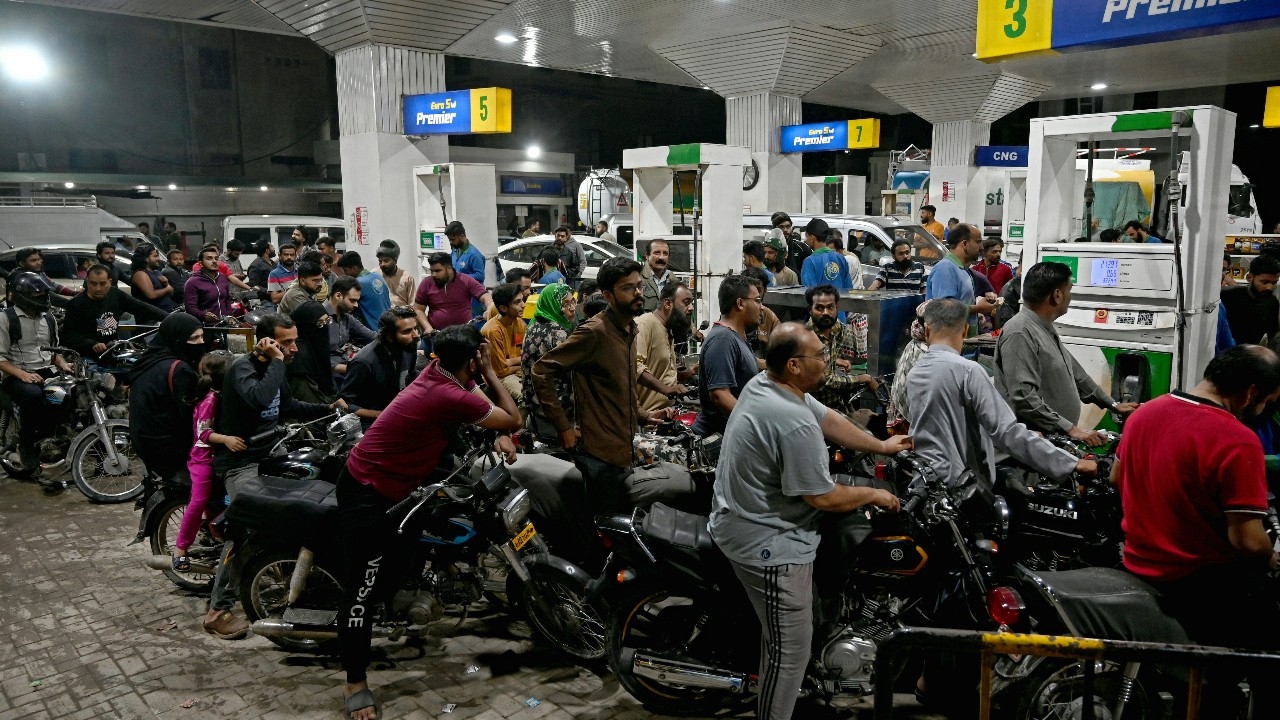
Global oil prices continued to soar as the Middle East war crisis threatens to drag on, disrupting a major energy shipping route through the Strait of Hormuz. Meanwhile, Donald Trump declared he was ready to strike Iranian power plants and bridges on 7 April if the shipping lane remains closed.
Crude oil prices rose in trading on Monday (6 April) amid fears of supply shortages caused by disruptions to oil transportation in the Middle East, resulting from the escalating war between the US-Israel alliance and Iran.
Brent crude rose $1.71, or 1.6%, to $110.74 per barrel, while West Texas Intermediate (WTI) crude increased $0.71, or 0.6%, to $112.25 per barrel. Earlier, on 2 April, both benchmarks hit their highest levels since 2020 after President Donald Trump confirmed he would continue to attack Iran.
The strategic shipping route, the Strait of Hormuz, a key channel for oil exports from Iraq, Saudi Arabia, Qatar, Kuwait, and the United Arab Emirates, has been blocked by Iranian attacks since the war broke out on 28 February. This forced global refiners to urgently seek alternative crude supplies from the US and the North Sea to compensate.
On 5 April, President Trump escalated tensions via social media, threatening to strike key Iranian power plants and bridges by 7 April if Iran does not reopen the Strait of Hormuz to normal commercial shipping.
“Tuesday will be the day for power plants and bridge construction in Iran, all at once. There will be no more of this!!! Open the strait, you crazy people, or you will go to hell. Just watch!” However, a few hours later on the same platform, he wrote, “Tuesday at 8:00 PM Eastern Time!”
Trump told Fox News there was a “good chance” to reach a deal on Monday but said he was considering “blowing everything up and seizing the oil” if no agreement was reached soon.
Iranian senior military officer General Ali Abdullahi Aliabadi dismissed Trump’s deadline as “useless and foolish,” adding that the “gates of hell will open” for the US leadership. However, shipping data shows Iran continues to allow vessels from countries it considers friendly, such as Oman, France, and Japan, to pass in some cases.
Hope for near-term peace dimmed after reports that Iran refused to send representatives to negotiate with US officials in Islamabad, Pakistan, stating that ceasefire talks had reached a dead end.
Meanwhile, OPEC+ agreed to a modest production increase of 206,000 barrels per day in May. Analysts view this decision as largely symbolic, since many key member countries cannot actually raise output amid wartime conditions.
In addition, the energy market faces further pressure from oil disruptions in Russia after Ukraine launched drone attacks on export facilities in the Baltic Sea, although recent reports indicate the Ust-Luga export terminal began resuming oil loading operations last Saturday.