

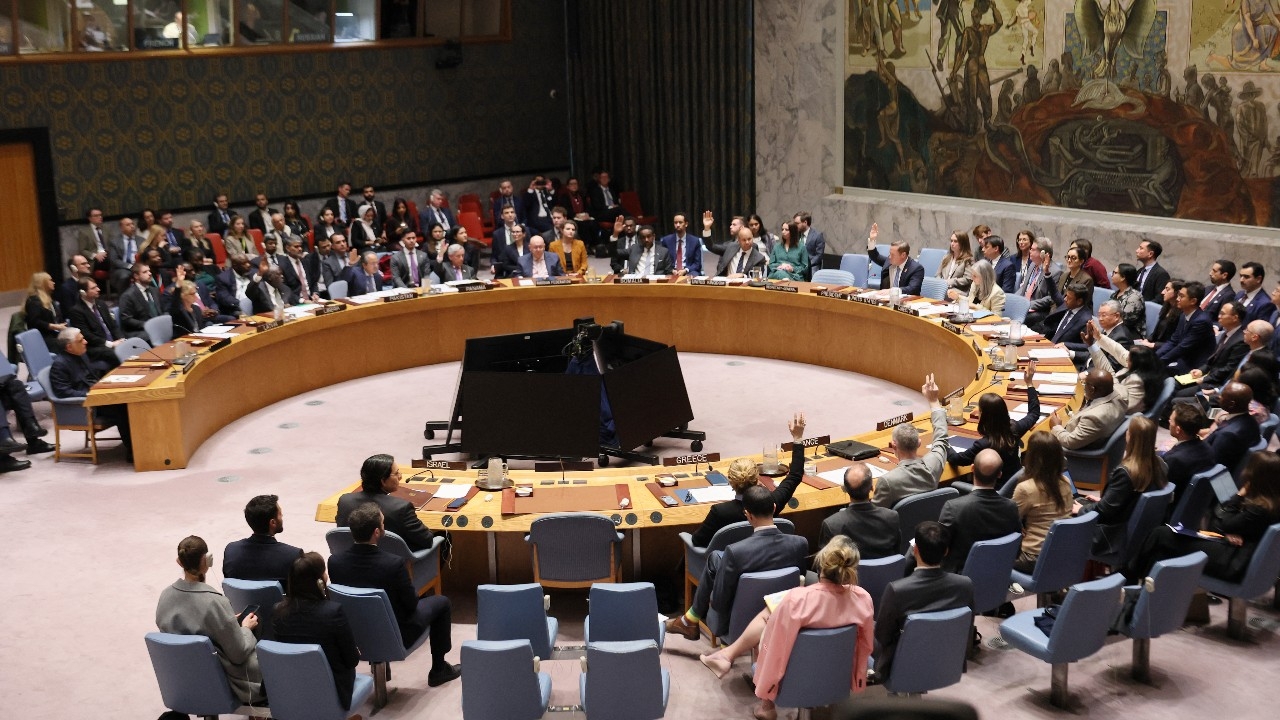
The United Nations Security Council (UNSC) is preparing to vote on a resolution to protect commercial shipping in the Strait of Hormuz after rising tensions pushed global oil prices higher. Diplomats revealed that the latest draft resolution was toned down by removing the phrase "authorization to use force" following strong opposition from China and Russia.
Diplomats disclosed that the UNSC is scheduled to vote today (7 Apr) on a draft resolution to protect commercial shipping in the Strait of Hormuz, a strategically vital energy route worldwide, which Iran has nearly completely closed following attacks from the U.S. and Israel in late February.
This development comes after Bahrain, serving as the rotating president of the council, has attempted to push several draft resolutions for approval by all 15 members, especially the veto-wielding countries China and Russia, both of which oppose granting authorization for military force in the area.
A Reuters report states that the latest draft resolution removes the phrase "authorization to use all necessary means" and replaces it with "strong support" for involved states to coordinate cooperation in the form of "appropriate defensive measures" to ensure maritime security. This includes escorting commercial vessels and preventing any attempts to obstruct international shipping routes.
Previously, China clearly stated that authorizing the use of force would "legalize illegal violence," leading to uncontrollable escalation. Chinese Foreign Minister Wang Yi emphasized that the most sustainable solution is a "ceasefire" as soon as possible, noting that China is the world’s largest oil importer via the Strait of Hormuz.
The regional situation remains uncertain as Iran insists it will not reopen the strait until the war permanently ends, while U.S. President Donald Trump has issued an ultimatum demanding Iran agree to conditions by Tuesday night, warning that failure to comply could lead to Iran being "eliminated."
For the resolution to pass, it must receive at least nine votes in favor and face no veto from any of the five permanent members: the U.S., the U.K., France, China, and Russia. Diplomats believe that the toned-down draft has a better chance of passing but continue to closely monitor the final stance of China and Russia.
. Reuters