

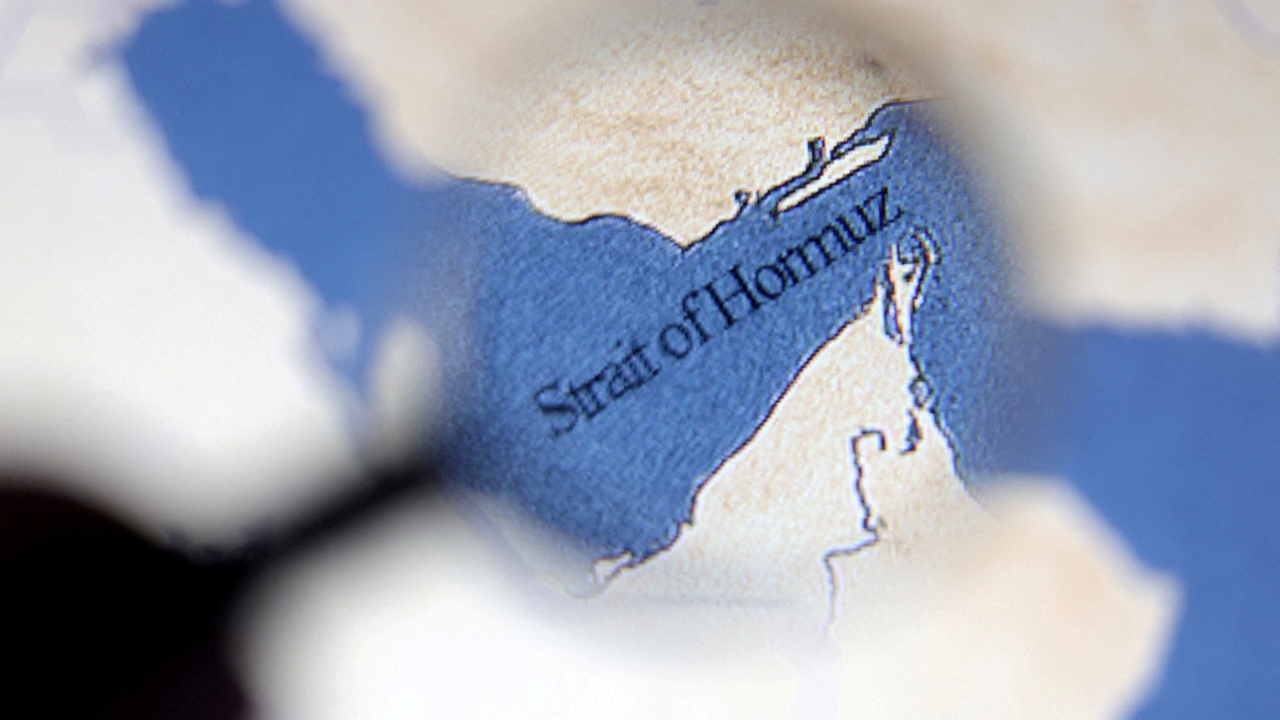
Iran's military has confirmed that oil tanker traffic through the Strait of Hormuz has stopped following Israel's attacks on Lebanon, which resulted in thousands of deaths and injuries. Iran views this as a violation of the ceasefire.
On 8 Apr 2026 GMT+7, Iran's Islamic Revolutionary Guard Corps (IRGC) claimed that maritime traffic through the Strait of Hormuz slowed significantly and ultimately stopped after Israel launched a major attack on Lebanon, which Iran described as violating a two-week ceasefire agreement.
Ship tracking data from MarineTraffic shows that currently no vessels are transiting the Strait of Hormuz. This aligns with earlier reports indicating that maritime traffic had resumed following the two-week ceasefire agreement between the U.S., Israel, and Iran that took effect last Tuesday.
Iran's accusations against Israel come as the White House insists Lebanon was not part of this fragile ceasefire deal. Meanwhile, Lebanese authorities reported that today Israel launched its largest attack on Beirut, causing 182 deaths and over 890 injuries.
The IRGC confirmed that a key condition of the plan is for Iran to continue managing the Strait of Hormuz prudently. They also claimed that President Donald Trump acknowledged that the strait would remain “under Iran’s control.”
The IRGC statement said only two confirmed Iranian oil tankers passed through the Strait of Hormuz on Wednesday morning, along with one Chinese oil tanker that also safely transited the strait.
However, the IRGC stated no other oil tankers followed, and “all ship traffic” through the strait ceased just minutes after Israel launched attacks on Lebanon.
Additionally, the IRGC claimed one vessel scheduled to transit the Strait of Hormuz at 22:00 GMT+7 changed course upon nearing the strait and eventually turned back.
Follow international news:https://www.thairath.co.th/news/foreign
Source:cnn