

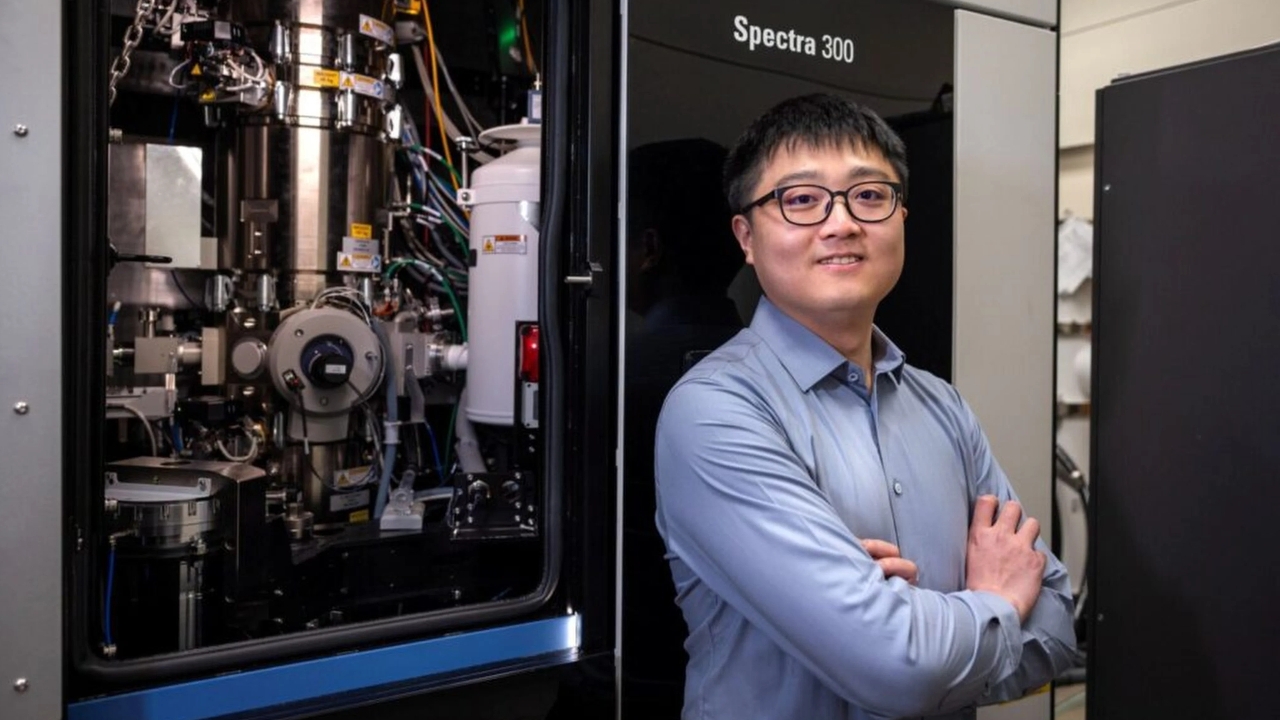
Chinese authorities have called on the United States to investigate the death of Wang Tanhau, a Chinese semiconductor researcher at the University of Michigan, after he was found dead from a fall just shortly after being summoned by U.S. law enforcement officials for what was described as "harassing" questioning.
U.S. media reported that the deceased was Wang Tanhau, a researcher from the University of Michigan, who died shortly after giving testimony to the Federal Bureau of Investigation (FBI). The university stated it is investigating the incident, which may have been a suicide, after the researcher’s body was found having fallen from a building on the campus on 19 Mar 2024 GMT+7.
Liu Pengyu, spokesperson for the Chinese Embassy in the United States, told the BBC that China is deeply shaken by this tragedy and has repeatedly submitted formal protests to U.S. government agencies and the university. He also urged Chinese students in the U.S. to exercise increased caution regarding their safety.
Meanwhile, the Chinese Ministry of Foreign Affairs stated that the researcher took his own life after being "harassed" during questioning by U.S. authorities, describing this as a serious violation of the legitimate rights of Chinese citizens and creating a "climate of fear and paralysis" affecting academic exchanges between the two countries.
According to information on the university’s website, Wang Tanhau held the position of assistant research scientist in electrical and computer engineering, focusing on research in "semiconductors" or chipsets—a critical technology that is a major point of dispute between China and the United States today.
This is not the first time Chinese academics have faced pressure in the U.S. In 2024, Jane Wu, a Chinese-American neuroscientist at Northwestern University, also took her own life after being scrutinized for years over alleged ties to China.
The United States has intensified scrutiny of Chinese students and researchers citing national security concerns, especially during the administration of former President Donald Trump, who issued orders to suspend visas for researchers linked to the Chinese military and attempted to revoke visas of students in sensitive technology fields, although some easing occurred later during trade negotiations.
Meanwhile, Mao Ning, spokesperson for China’s Ministry of Foreign Affairs, emphasized that China will take all necessary measures to fully protect the legitimate rights and interests of Chinese citizens abroad.