

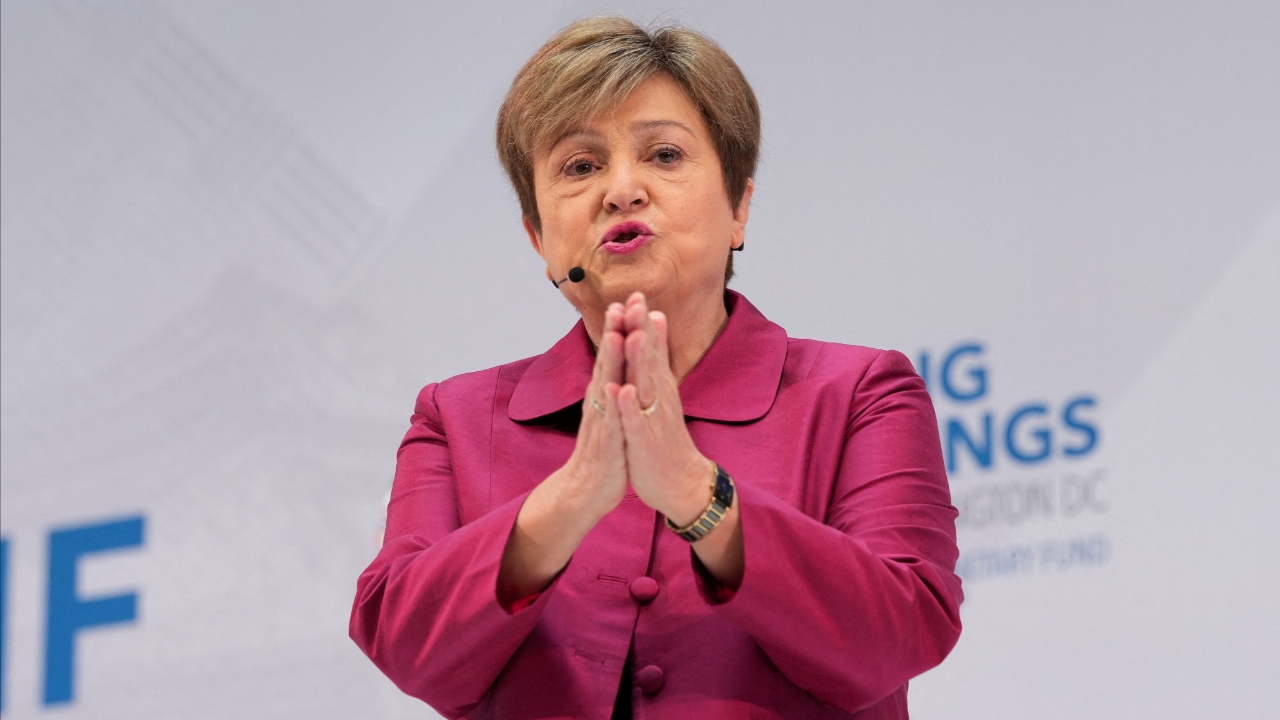
The IMF Director warned that the war with Iran has forced them to lower the global economic growth outlook for this year and that multiple ongoing impacts will persist for some time.
On 9 Apr 2026 GMT+7, Kristalina Georgieva, Director of the International Monetary Fund (IMF), issued a warning that the Middle East conflict has dramatically reversed the IMF's global economic outlook, and growth rates may fall below earlier forecasts.
"Had this shocking event not occurred, we would have announced an upward revision of the global economic growth forecast by now. But currently, even under our most optimistic scenario, we must lower the growth projections," Georgieva stated in a press release. "Why? Because of infrastructure damage, supply chain disruptions, lost confidence, and other negative effects that have left lasting scars."
The IMF is scheduled to release an updated World Economic Outlook report next week. In their previous report in January (one month before the outbreak of war), the IMF had projected global economic growth at 3.3% for this year and 3.2% for 2027.
Georgieva noted that even in the best case, "there will be no smooth or complete return to previous conditions." She cited as an example shipping through the Bab-el-Mandeb Strait in the Red Sea, which has yet to fully recover from attacks by the Houthi rebels that began in late 2023. She said, "Traffic volume remains stuck at about half the levels seen in 2023."
"We have no clear idea what the future holds for shipping through the Strait of Hormuz... but what we are certain of is that economic growth will slow down, even if the new peace holds steady," the IMF Director added, referring to the two-week ceasefire agreement between the U.S. and Iran.
Furthermore, she stated that the "ripple effects" of the war will persist for some time, including shortages of diesel and aviation fuel, worsening hunger affecting at least 45 million more people, and a soaring fertilizer price crisis that may exacerbate problems over time.
.cnn